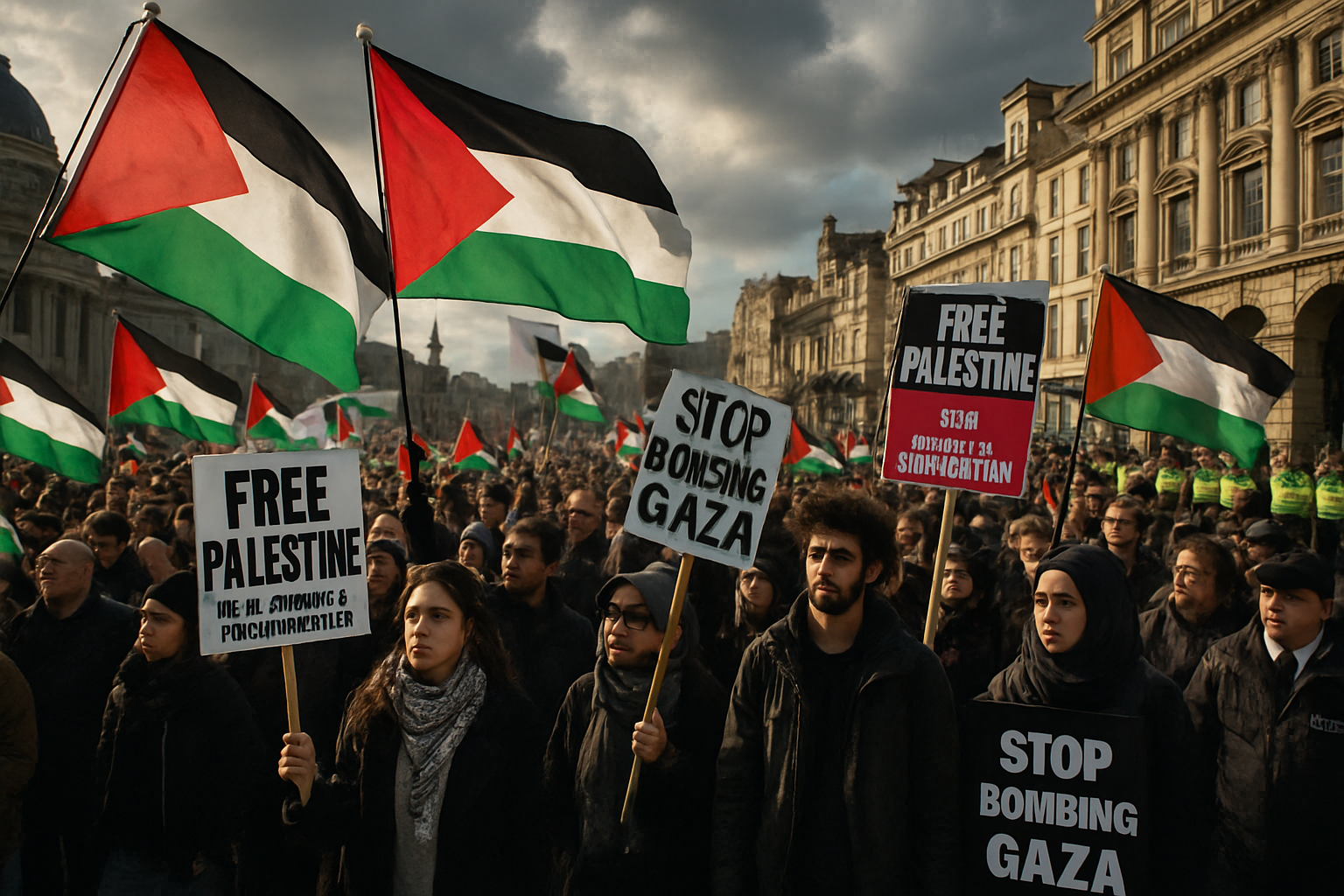
More than 500 people were arrested during large-scale pro-Palestinian demonstrations in central London on Saturday, marking the largest police operation targeting pro-Palestine activists since the government's controversial terrorism ban on Palestine Action last year.
The Metropolitan Police confirmed that 523 arrests were made during protests that took place primarily in Trafalgar Square, as demonstrators gathered to challenge the UK government's designation of Palestine Action as a terrorist organization and to show solidarity with Palestinian causes in Gaza.
Government Ban Under Legal Challenge
The protests occurred just two months after the London High Court ruled in February that the government's terrorism ban on Palestine Action was "unlawful" and "disproportionate," violating freedom of expression and assembly rights. The landmark ruling by a three-judge panel led by Dame Victoria Sharp found that while the group "promotes a political cause through criminality," the terrorism designation represented an excessive interference with democratic rights.
According to protesters and organizers, Saturday's demonstrations aimed to show that "resistance" to the ban remains "stronger than ever," despite the government's ongoing appeal of the High Court decision through Interior Minister Shabana Mahmood.
Palestine Action co-founder Huda Ammori, who brought the successful legal challenge against the ban, had previously called the February court ruling a "monumental victory for fundamental freedoms." The group represents the first successful challenge to a protest group proscription under modern anti-terrorism laws.
Escalation Despite Court Ruling
The scale of Saturday's arrests represents a significant escalation from previous protests, even exceeding the 212 arrests made during April 2026 demonstrations. Despite the High Court's findings that the government's response was "disproportionate to the threat posed," the Metropolitan Police returned to mass arrest policies as the ban remains temporarily in place pending the government's appeal.
Protest organizers accused the UK government of complicity in what they termed "Gaza genocide," highlighting the ongoing tensions over Middle East conflicts that have dominated British political discourse since the escalation of violence in the region.
"The scale of these arrests shows the government's complete disregard for the High Court's ruling and fundamental democratic principles."
— Civil Rights Advocate
Historical Context and Legal Implications
Palestine Action was banned under anti-terrorism legislation in July 2025 following a break-in at RAF Brize Norton, with the government accusing the group of complicity in Israeli war crimes in Gaza. Since its formation, the organization has accumulated over 3,000 total arrests and caused approximately £1 million in damage to facilities operated by Elbit Systems, an Israeli defense contractor.
The February High Court ruling established crucial precedents for protest movement regulation in the UK, strengthening freedom of expression protections and establishing boundaries for the application of anti-terrorism legislation to domestic political movements. Legal experts view the case as a critical test of democratic institutions' ability to balance security concerns with fundamental rights.
The current situation highlights the ongoing tension between the government's security agenda and judicial oversight, with the appeal outcome likely to influence protest rights in the UK and set precedents for how democratic nations approach the regulation of direct action movements worldwide.
International Attention and Democratic Concerns
The mass arrests have drawn international attention, with Middle Eastern media outlets providing extensive coverage of what they describe as a crackdown on pro-Palestinian activism. The events raise questions about the UK's commitment to democratic principles and freedom of assembly, particularly given the High Court's explicit finding that the terrorism ban was unlawful.
Civil rights organizations have expressed concern that the continued mass arrests despite the court ruling represent a dangerous precedent for the treatment of political dissent in the UK. The persistence of the government's hardline approach, even after judicial criticism, has prompted calls for greater accountability and respect for court decisions.
Ongoing Political and Legal Battle
As the government's appeal proceeds through the courts, Saturday's events demonstrate the continued intensity of feelings surrounding both Palestinian solidarity and the broader question of protest rights in Britain. The terrorism ban remains temporarily in place, creating a complex legal environment where activists continue to face arrest for activities that the High Court has deemed to be covered by fundamental democratic freedoms.
The outcome of the government's appeal will have far-reaching implications for the future of protest rights in the UK and could establish whether anti-terrorism legislation can be used to suppress domestic political movements that challenge government policy. The case represents one of the most significant tests of civil liberties and judicial independence in recent British history.
With over 600 political prisoners estimated to remain in various forms of detention related to pro-Palestinian activism, according to human rights organizations, the resolution of this legal and political crisis will likely determine the boundaries of acceptable dissent in modern Britain.