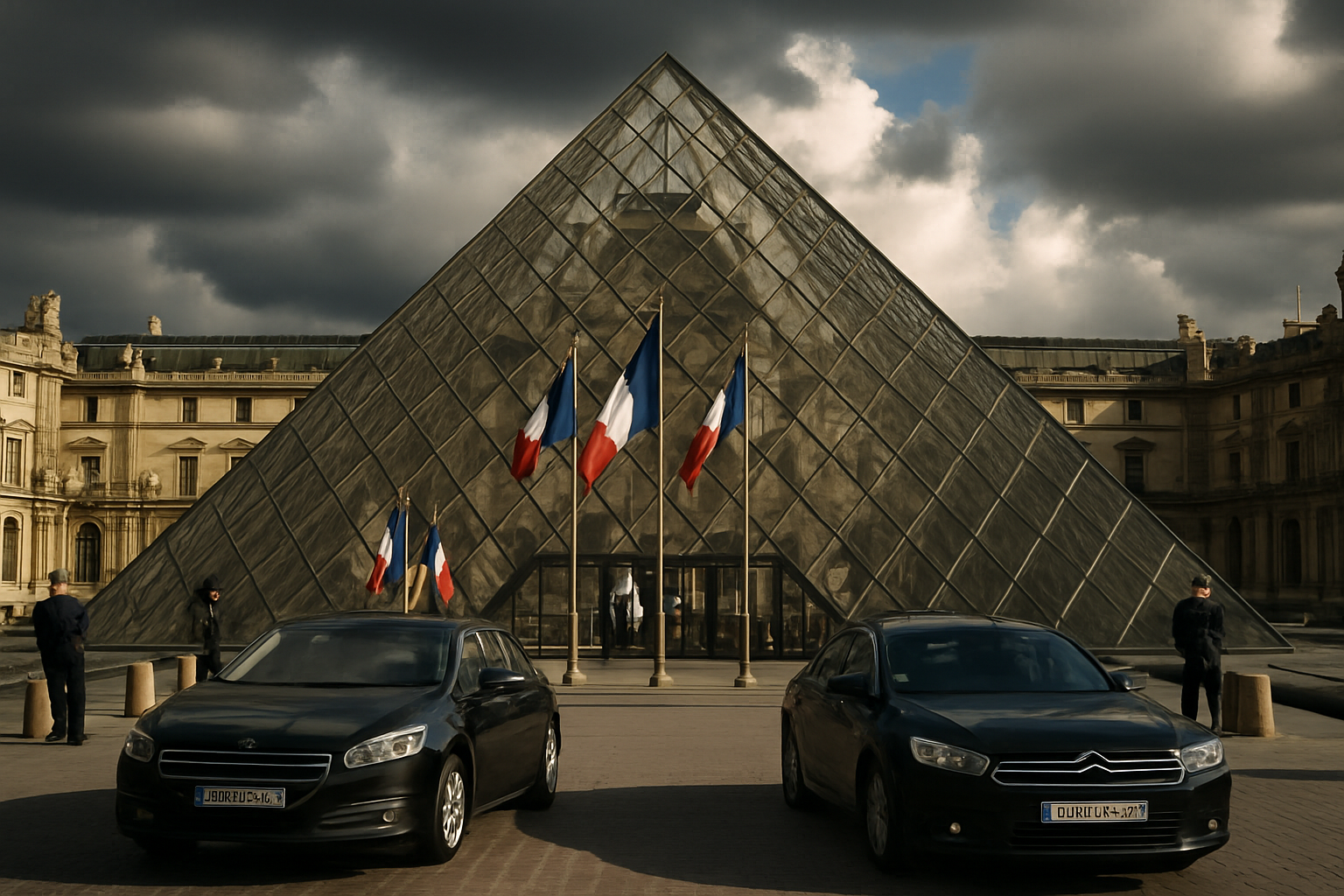
France has appointed Christophe Leribault, the current president of the Palace of Versailles, as the new director of the Louvre Museum, tasking him with leading a comprehensive institutional overhaul following an unprecedented series of crises that forced his predecessor's resignation.
President Emmanuel Macron announced the appointment on Wednesday, February 25, 2026, one day after accepting the resignation of Laurence des Cars, the first female director of the world's most visited museum. The decision represents a strategic choice to install proven cultural leadership at the helm of an institution in desperate need of reform.
"Leribault's priority will be to strengthen the safety and security of the building, the collections, and people, to restore a climate of trust, and to carry forward, together with all the teams, the necessary transformations for the museum," the Culture Ministry stated in announcing Macron's selection.
A Museum in Crisis
The Louvre's troubles began with a devastating €88 million crown jewels heist on October 19, 2025, when four thieves executed an eight-minute raid in the Apollo Gallery, demonstrating intimate knowledge of security systems that suggested inside assistance. The brazen theft exposed critical vulnerabilities at what should be one of the world's most secure cultural institutions.
But the October heist was only the beginning of a cascade of institutional failures that would ultimately make des Cars' position untenable. In December 2025, rolling staff strikes disrupted museum operations as employees expressed growing dissatisfaction with management. The strikes, known in French as "grève perlée," created persistent operational chaos during the crucial winter tourism season.
February 2026 brought a new wave of scandals. A massive ticket fraud investigation resulted in nine arrests, including two Louvre employees, exposing a decade-long scheme that cost the museum an estimated €10 million. The fraud primarily targeted Chinese tourists through a sophisticated network that exploited tourism infrastructure vulnerabilities.
"The chief of state accepted her resignation while praising an act of responsibility at a moment when the world's largest museum needs calm and a strong new impetus."
— Élysée Palace statement on des Cars' resignation
Infrastructure problems compounded the institutional crisis. Water damage in galleries 706 and 707 affected Renaissance masterpieces by Beato Angelico and Bernardino Luini, with a Charles Meynier fresco suffering potentially irreversible damage. The incident highlighted systemic maintenance issues across the historic palace complex.
The final blow came on February 23, 2026, when activists from the group "Everyone Hates Elon" breached security to hang a framed photograph of Prince Andrew during peak visiting hours. The successful infiltration demonstrated that security vulnerabilities persisted months after the crown jewels theft.
A Proven Cultural Leader
Christophe Leribault, 62, brings extensive experience from his current role as president of the Palace of Versailles, where he has successfully managed one of France's most challenging cultural institutions. An 18th-century art historian, he previously led Paris' Musée d'Orsay, demonstrating a track record of effective museum leadership.
His appointment represents continuity with France's tradition of appointing scholar-administrators to lead major cultural institutions, while his Versailles experience provides crucial insight into managing large-scale cultural operations under intense public scrutiny.
Government spokesperson Maud Bregeon confirmed that Leribault "will succeed Laurence des Cars, who resigned on Tuesday," emphasizing the urgency of institutional reform at the museum that attracts over 10 million visitors annually.
The Challenge Ahead
Leribault inherits an institution requiring comprehensive reform across multiple operational areas. Security protocols need complete overhaul following repeated breaches that exposed fundamental vulnerabilities. The recent incidents suggest problems extend beyond technology to include staff oversight, visitor management, and crisis response procedures.
Internal controls require strengthening after the ticket fraud scandal revealed systematic oversight failures spanning a decade. The scheme's success in targeting international tourists specifically points to vulnerabilities in cross-cultural customer service and payment processing systems.
Infrastructure maintenance has emerged as a critical challenge, with the water damage incident highlighting the difficulties of preserving priceless collections within a centuries-old palace complex. Modern conservation requirements must be balanced with historical preservation constraints.
Staff relations present another immediate challenge. The December strikes reflected deeper employee dissatisfaction with management approaches, working conditions, and institutional direction. Rebuilding staff confidence will be essential for operational stability.
International Implications
The Louvre crisis extends beyond French cultural policy to influence global museum practices and institutional governance standards. As the world's most visited museum, the Louvre's approaches to security, visitor management, and cultural stewardship serve as international benchmarks.
The successful resolution of the current crisis will establish precedents for how democratic institutions respond to cultural stewardship failures while maintaining essential public missions. The case represents a crucial test of whether enhanced security measures can be implemented without compromising the accessibility that makes cultural institutions vital to democratic society.
International museum professionals are closely monitoring the Louvre's reform efforts for lessons applicable to their own institutions facing similar pressures from security threats, evolving visitor expectations, and operational complexity.
A Template for Transformation
Leribault's success or failure will influence museum management approaches worldwide. The scope of reforms required—security enhancement, internal controls strengthening, infrastructure modernization, staff confidence rebuilding—represents one of the most comprehensive institutional overhauls in modern cultural history.
The appointment occurs within what cultural observers have termed the "February 2026 Cultural Renaissance," a period of heightened global attention to cultural institution governance and accountability. The Louvre's transformation will serve as a test case for balancing enhanced security with cultural accessibility.
The stakes extend well beyond Paris. Success will demonstrate that major cultural institutions can adapt to 21st-century challenges while preserving their essential democratic mission. Failure could undermine public confidence in cultural stewardship and provide arguments for restricting public access to irreplaceable heritage.
As Leribault begins his tenure, he faces the challenge of maintaining the Louvre's position as the world's most visited museum while implementing the comprehensive reforms necessary to restore institutional credibility. The coming months will determine whether the appointment marks the beginning of successful institutional renewal or merely another chapter in an ongoing crisis.
The international cultural community watches as France attempts to transform its crown jewel institution, knowing that the precedents established at the Louvre will influence museum practices and cultural policy worldwide for decades to come.