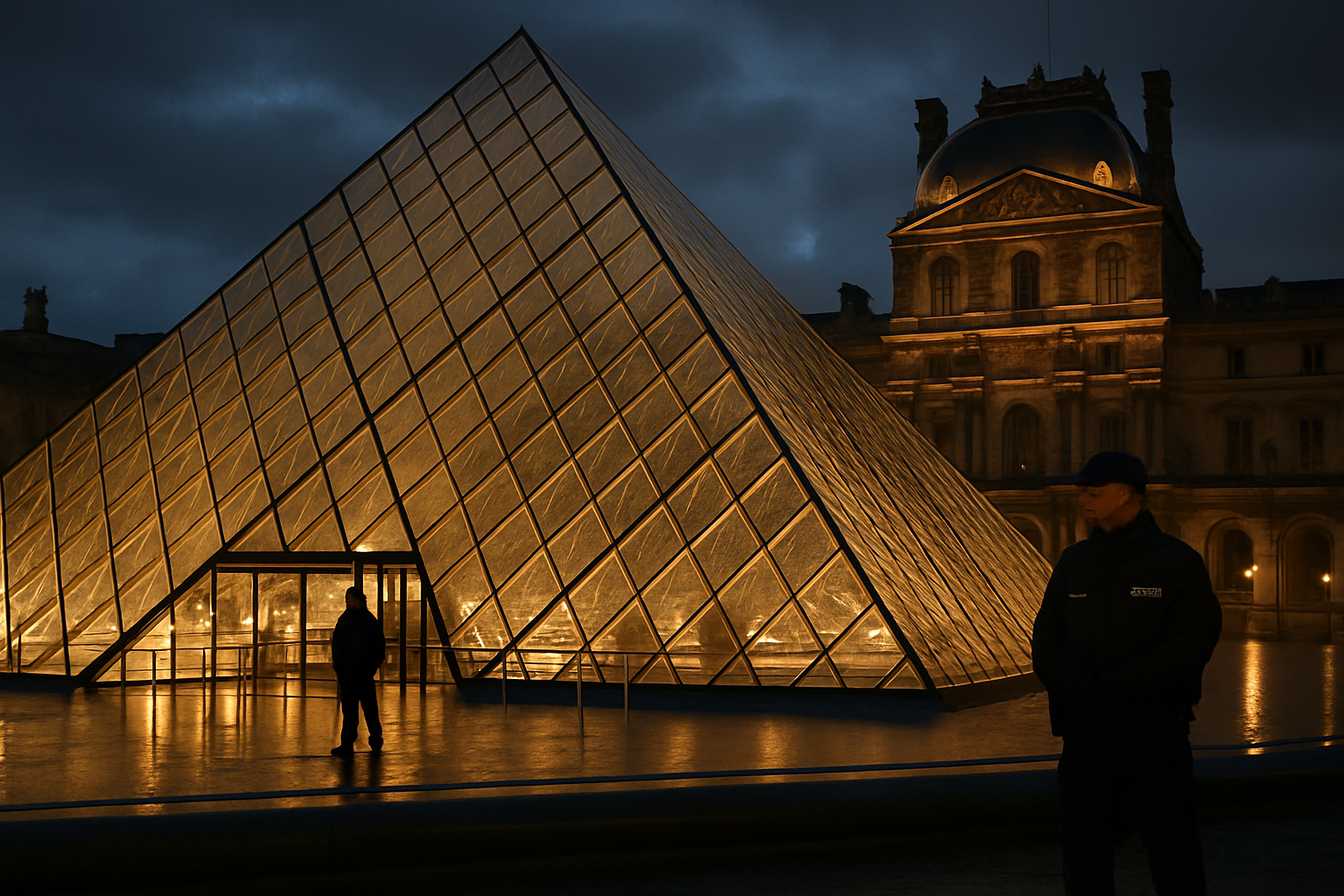
Laurence des Cars, director of the Louvre Museum, officially resigned on Tuesday following mounting pressure over a devastating series of institutional failures that culminated in October's spectacular €88 million crown jewels heist from the Apollo Gallery.
French President Emmanuel Macron accepted the resignation of des Cars, calling it "an act of responsibility at a time when the world's largest museum needs calm and a strong new impetus to carry out major projects involving security upgrades, modernisation" and other critical initiatives. The departure ends a bruising chapter for the institution, which has endured what critics describe as an unprecedented cascade of crises under her leadership.
The October Heist That Changed Everything
The brazen theft that ultimately sealed des Cars' fate occurred on October 19, 2025, when four thieves executed a meticulously planned raid that exposed critical security vulnerabilities at the world's most prestigious museum. In less than eight minutes, the perpetrators made off with French crown jewels valued at approximately €88 million ($96 million), including priceless historical artifacts that had survived the French Revolution.
The theft from the Apollo Gallery shocked the international art world and triggered immediate questions about how such a breach could occur at an institution that houses the Mona Lisa and welcomes over 10 million visitors annually. Sources close to the investigation revealed that the thieves demonstrated intimate knowledge of the museum's security protocols, suggesting possible inside assistance.
"It took thieves just eight minutes to steal $146 million worth of jewels from the renowned museum last October."
— 9News Report
Des Cars initially offered her resignation immediately following the heist, but Macron refused to accept it at the time. However, as subsequent crises mounted throughout late 2025 and early 2026, her position became increasingly untenable despite her extensive experience and previous success at the Musée d'Orsay.
A Cascade of Institutional Failures
The crown jewels theft proved to be merely the beginning of what became a systematic institutional breakdown. In December 2025, the museum faced rolling staff strikes described as "grève perlée" that disrupted operations and highlighted deep management dissatisfaction among employees. The labor disputes reflected broader concerns about working conditions and management priorities following the security failures.
February 2026 brought fresh disasters when a massive ticket fraud scandal erupted, resulting in nine arrests including two Louvre employees. The scheme, which had operated undetected for over a decade, primarily targeted Chinese tourists and resulted in an estimated €10 million in losses. The revelation of such extensive internal fraud further undermined confidence in the museum's oversight capabilities.
Perhaps most damaging to the museum's cultural reputation was the water damage incident that struck galleries 706-707 in February 2026. Broken pipes flooded exhibition spaces containing Renaissance masterpieces, with works by Beato Angelico, Bernardino Luini, and an irreplaceable 19th-century Charles Meynier fresco potentially suffering permanent damage.
Security Breaches Continue
In a final humiliation, activists from the British group "Everyone Hates Elon" successfully infiltrated the museum on February 23, 2026, hanging a photograph of Prince Andrew's recent arrest during peak visiting hours. The incident demonstrated that even after the October heist, fundamental security vulnerabilities remained unaddressed.
The timing proved particularly embarrassing as it occurred while des Cars was reportedly attending social events rather than addressing the ongoing crises. International media characterized her response to the mounting challenges as detached and insufficient for an institution of the Louvre's stature.
Presidential Intervention and Reform Mandate
Macron's statement accepting the resignation emphasized the need for "new impetus" to implement comprehensive reforms. The challenges facing the next director are unprecedented, ranging from fundamental security overhauls to rebuilding staff morale and public confidence in the institution's stewardship of France's cultural heritage.
The crisis has broader implications for cultural institutions worldwide, highlighting vulnerabilities in traditional security approaches and internal oversight mechanisms. The Louvre's experience serves as a cautionary tale about the intersection of cultural preservation, public access, and modern security threats.
International Cultural Sector Context
Des Cars' resignation occurs amid broader challenges facing French cultural leadership. Jack Lang recently stepped down from the Arab World Institute amid an unrelated scandal, while infrastructure aging affects multiple institutions across Europe. The successive crises reflect deeper issues about resource allocation and modernization needs in the cultural sector.
The departure also represents a significant setback for gender representation in museum leadership. Des Cars, who became the Louvre's first female director in 2021 with a mandate for modernization and increased accessibility, leaves behind an institution requiring comprehensive reform across all operational areas.
Looking Forward: Challenges for New Leadership
The incoming director will inherit an institution that, despite its global prestige, faces fundamental questions about its operational effectiveness. Security protocols require complete overhaul following repeated breaches, while internal controls need strengthening to prevent fraud and improve staff relations.
The water damage incident highlights infrastructure maintenance needs that extend beyond cosmetic improvements to core building systems. Additionally, the museum must rebuild public trust while maintaining its position as the world's most visited cultural institution.
"The world's biggest museum needs calm and a strong new impetus to carry out major projects involving security upgrades, modernisation."
— President Emmanuel Macron's Office
International observers view the crisis as a test case for how democratic institutions respond to operational failures while maintaining cultural accessibility and preservation standards. The resolution will establish important precedents for cultural institution accountability in the 21st century.
Legacy and Lessons
Des Cars brought extensive curatorial experience from her successful tenure at the Musée d'Orsay, where she modernized operations and increased public engagement. However, her legacy at the Louvre will be defined primarily by crisis management failures rather than the ambitious modernization agenda she initially pursued.
The unprecedented nature of the challenges she faced—from sophisticated criminal threats to internal fraud and infrastructure failures—reflects broader vulnerabilities facing cultural institutions in an era of evolving security threats and resource constraints.
As the search begins for her replacement, the international museum community will watch closely to see how one of the world's premier cultural institutions adapts to 21st-century challenges while preserving its mission of cultural stewardship and public access. The outcome will influence museum security protocols and governance structures globally, with implications extending far beyond the glass pyramid that has become synonymous with cultural achievement and accessibility.