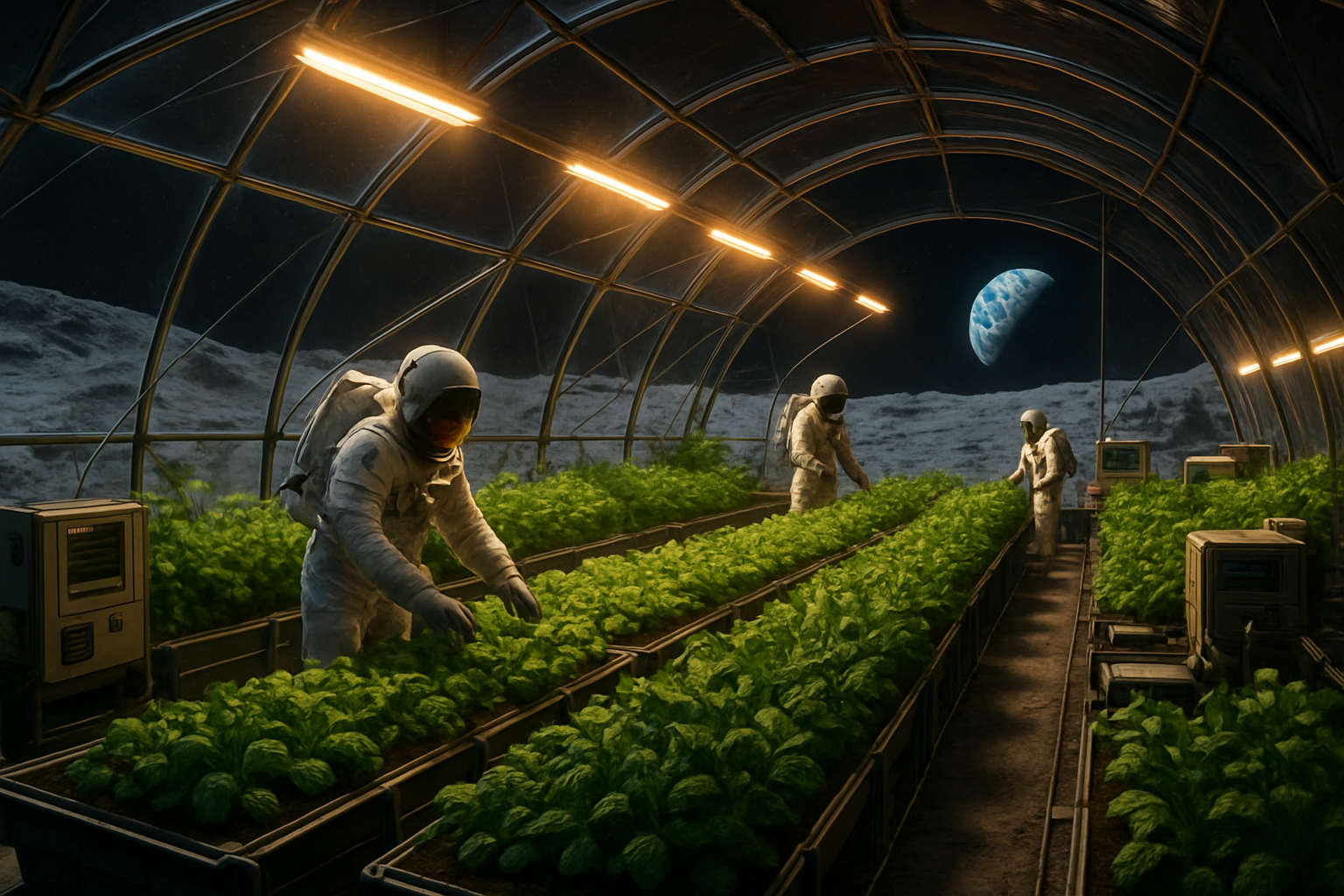
Scientists have achieved a groundbreaking advancement in space agriculture, successfully developing methods to grow edible crops in the harsh lunar environment using innovative composting techniques and astronaut waste as fertilizer.
The revolutionary research demonstrates how worm compost combined with specialized fungi can transform inhospitable moon dust into a viable growing medium for food production. This breakthrough represents a critical milestone for future long-duration space missions and permanent lunar settlements, where food security will be essential for human survival.
The study specifically focuses on cultivating chickpeas and other legumes on the lunar surface, utilizing a closed-loop agricultural system that maximizes resource efficiency while minimizing waste. Researchers have discovered that human excrement, when properly processed through vermiculture composting, can provide essential nutrients needed for plant growth in the otherwise sterile lunar regolith.
Transforming Moon Dust Into Fertile Soil
The most significant challenge in lunar agriculture has been the complete absence of organic matter and beneficial microorganisms in moon dust. The lunar regolith consists primarily of fine particles created by billions of years of meteorite impacts, containing no water, atmosphere, or biological components necessary for traditional farming.
Scientists addressed this challenge by introducing earthworms and specialized fungi that can break down organic waste materials, including human excrement, into nutrient-rich compost. This biological processing creates the foundation for a sustainable growing medium when mixed with lunar regolith.
The vermiculture system not only provides essential nutrients but also introduces beneficial microorganisms that create a living soil ecosystem. These microbes help plants absorb nutrients more effectively while protecting against potential pathogens in the harsh space environment.
Chickpeas: The Ideal Lunar Crop
Researchers selected chickpeas as a primary focus for their lunar agriculture experiments due to several advantageous characteristics. As legumes, chickpeas have the unique ability to fix nitrogen through symbiotic relationships with rhizobia bacteria, reducing the need for external fertilizers.
Chickpeas also provide excellent nutritional value for astronauts, offering high protein content, essential amino acids, vitamins, and minerals necessary for maintaining health during extended space missions. Their relatively compact growth habit makes them suitable for enclosed growing environments where space is at a premium.
The crop's drought tolerance and adaptability to varying growing conditions make it particularly well-suited for the controlled environment agriculture systems that will be necessary on the lunar surface.
Closed-Loop Life Support Systems
The lunar agriculture system represents a crucial component of closed-loop life support systems necessary for long-term human presence in space. By recycling human waste into agricultural inputs, the system maximizes resource utilization while minimizing the need for supply shipments from Earth.
This approach builds upon previous space agriculture research conducted aboard the International Space Station, where astronauts have successfully grown various crops in microgravity conditions. The lunar system extends this research to address the unique challenges of partial gravity and complete isolation from Earth's biosphere.
The integration of waste processing, composting, and crop production creates a sustainable cycle that supports human life while reducing mission costs and logistical complexity.
Building on Previous Space Agriculture Success
This lunar agriculture breakthrough builds upon significant previous achievements in space-based food production. Recent research from Wageningen University in the Netherlands demonstrated successful potato cultivation in Mars-like soil conditions, proving that Earth crops can adapt to extraterrestrial growing environments.
NASA's ongoing research aboard the International Space Station has produced successful harvests of lettuce, radishes, tomatoes, and other crops in microgravity conditions. These experiments have provided valuable data on plant behavior in space environments and informed the development of life support systems for future missions.
The convergence of space agriculture research with advanced manufacturing technologies, including 3D printing for habitat construction, creates a comprehensive framework for sustainable human settlements beyond Earth.
Technical Challenges and Solutions
Developing functional agriculture systems for the lunar environment required overcoming numerous technical challenges. The extreme temperature variations on the moon, ranging from over 120°C during lunar day to -170°C during lunar night, necessitate sophisticated environmental control systems.
Researchers developed pressurized growing environments with precise temperature, humidity, and atmospheric composition control. LED lighting systems provide the full spectrum of light necessary for photosynthesis, while automated irrigation and nutrient delivery systems ensure optimal growing conditions.
Radiation shielding protects both plants and human operators from harmful cosmic radiation and solar particles that constantly bombard the lunar surface. The growing facilities incorporate regolith-based shielding and specialized materials to create safe working environments.
Economic and Strategic Implications
The development of lunar agriculture capabilities has profound implications for the economics of space exploration and settlement. By reducing dependence on Earth-based food supplies, lunar settlements become more economically viable and operationally independent.
Food shipments from Earth represent one of the highest costs in space missions, with estimates suggesting that every kilogram of food sent to the lunar surface costs hundreds of thousands of dollars. Local food production dramatically reduces these costs while improving food quality and freshness for astronauts.
The agricultural systems also contribute to psychological well-being by providing astronauts with fresh food options and opportunities for meaningful work related to cultivation and food preparation.
Future Applications and Expansion
The successful development of lunar agriculture systems provides a foundation for expanding human presence throughout the solar system. Similar systems could be adapted for Mars colonies, asteroid mining operations, and generation ships for interstellar travel.
Researchers are already investigating applications of these technologies for Earth-based agriculture, particularly in extreme environments such as deserts, polar regions, and areas affected by climate change. The closed-loop systems could provide sustainable food production in challenging terrestrial conditions.
The integration of space agriculture with other emerging technologies, including artificial intelligence for crop monitoring and automated harvesting systems, promises continued advancement in the field.
International Collaboration and Investment
The lunar agriculture research represents part of broader international collaboration in space exploration and settlement technologies. European Space Agency contributions to life support system development, Chinese lunar program agricultural experiments, and private sector investments in space technologies create a comprehensive global effort.
This collaborative approach accelerates technological development while distributing costs and risks among multiple stakeholders. The sharing of research results and best practices benefits all participants while advancing humanity's collective capability for space settlement.
Investment in space agriculture technologies also drives innovation in terrestrial agriculture, creating economic benefits that extend far beyond space applications.
Path Forward to Implementation
The transition from laboratory research to operational lunar agriculture systems will require continued testing, refinement, and integration with broader lunar settlement infrastructure. Upcoming lunar missions will provide opportunities to test these systems in actual lunar conditions.
NASA's Artemis program and other international lunar initiatives provide frameworks for implementing agricultural systems as part of permanent lunar bases. The integration of food production capabilities with habitat construction, power generation, and life support systems creates comprehensive settlement packages.
Success in lunar agriculture will provide confidence and experience necessary for more ambitious agricultural projects on Mars and other destinations throughout the solar system, establishing humanity as a truly spacefaring species with sustainable life support capabilities beyond Earth.