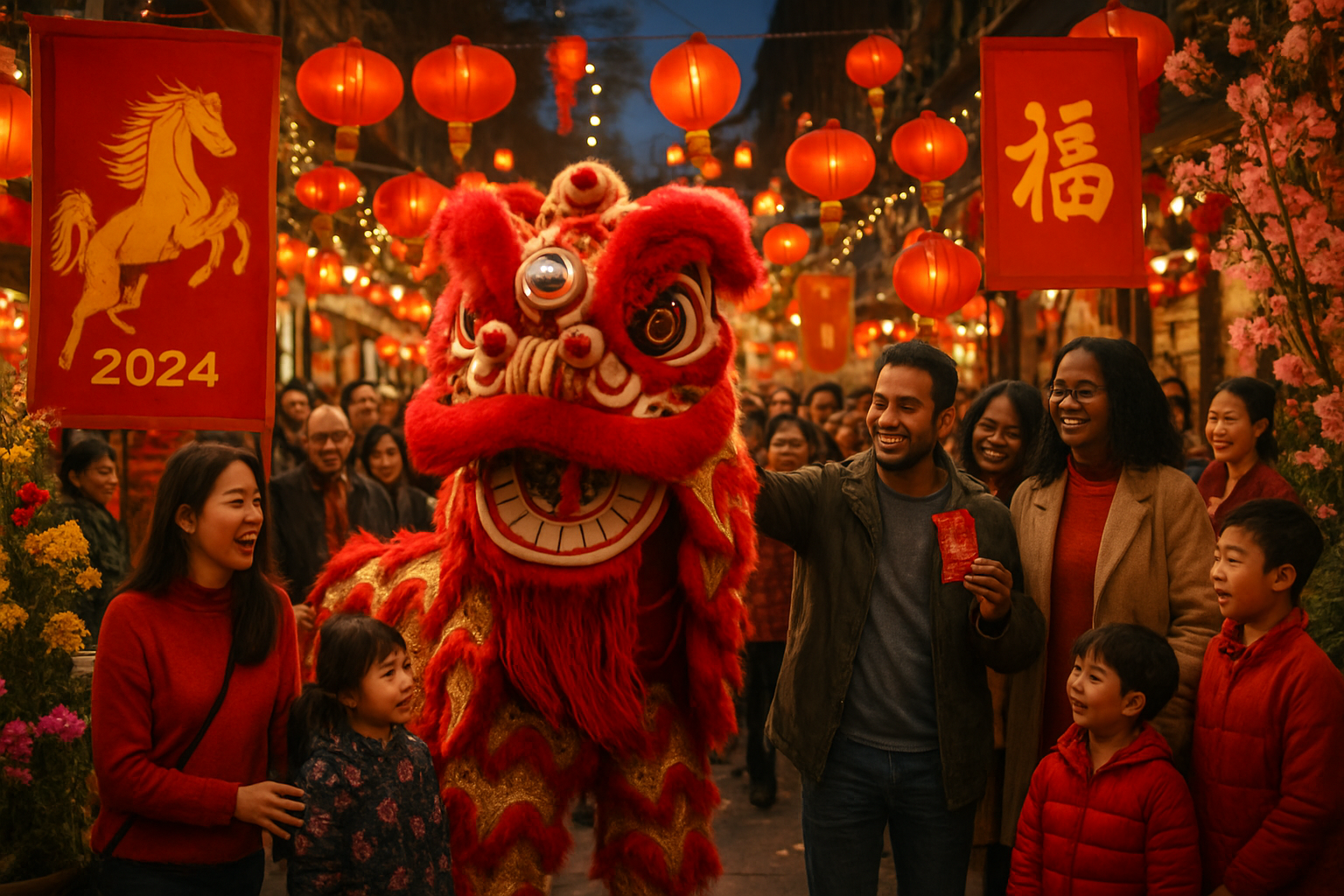
As the world welcomed the Year of the Fire Horse on February 17, 2026, Lunar New Year celebrations reached unprecedented global scale, with communities across five continents demonstrating remarkable cultural unity while preserving authentic traditions in an increasingly interconnected world.
From the bustling streets of Hong Kong to the diverse neighborhoods of Sydney, from the peaceful temples of Kuching to the vibrant cultural centers of Lima, the rare Fire Horse year—occurring only once every 60 years—inspired celebrations that transcended ethnic and national boundaries, creating a powerful testament to humanity's shared capacity for renewal and hope.
Record-Breaking Travel and Tourism Surge
The celebration began with extraordinary movement of people across Asia. Hong Kong's Immigration Department reported over 1.7 million residents making outbound trips from February 13-16, surpassing the 1.47 million recorded during the same period last year. The city simultaneously welcomed massive inbound tourism, with crowds filling airports and cross-border rail terminals as visitors sought to experience Hong Kong's renowned festive atmosphere, culinary traditions, and mild weather.
China experienced unprecedented domestic travel, with preliminary reports suggesting the highest passenger volumes on record across highways, railways, and civil aviation. Nicaragua's state media confirmed China's record-breaking mobility figures, emphasizing the global significance of the celebration.
In Southeast Asia, Vietnam's major cities prepared for the influx of celebrants, while Malaysia's unique circumstance of hosting both Chinese New Year and the approaching Ramadan created extraordinary cultural convergence, with hotels in Penang reporting 60% occupancy rates.
Political Leadership Emphasizes Unity
Political leaders across multiple nations used the occasion to reinforce messages of national unity and international cooperation. Malaysian Prime Minister Datuk Seri Anwar Ibrahim delivered particularly powerful remarks at a Chinese New Year gathering in Kuala Lumpur, declaring that Malaysia had "ushered in the Year of the Horse with impressive economic growth, reflecting the resilience, stamina, confidence and agility the animal represents."
"The Chinese New Year, celebrated with various races, accentuates the spirit of unity among Malaysians. I want to remind Malaysians that the country cannot succeed without everyone pulling their weight, guided by the principles of unity and tolerance when facing shared challenges."
— Datuk Seri Anwar Ibrahim, Prime Minister of Malaysia
In Sarawak, Deputy Premier Datuk Amar Awang Tengah Ali Hasan emphasized that the state's "greatest strength lies in its unity in diversity," while officials from Parti Bersatu Sabah conducted festive walkabouts visiting markets and engaging with diverse communities throughout Kota Kinabalu.
Philippines President Ferdinand Marcos Jr. invited Filipinos to move with "purposeful haste," reflecting the dynamic energy associated with the Fire Horse zodiac sign, while Nicaragua's Vice President Rosario Murillo recognized China's global leadership and reaffirmed her country's commitment to peace.
Cultural Authenticity Meets Global Integration
The 2026 celebrations demonstrated remarkable success in maintaining traditional authenticity while embracing multicultural participation. In Malaysia's Sarawak state, lion dance performances brought together youth from multiple ethnic backgrounds, with performers from non-Chinese communities actively participating in traditional troupes—a powerful symbol of cultural integration that respects heritage while building bridges.
At the Kuching Buddhist Society temple, traditional religious observances marked the New Year's beginning as devotees lit candles bearing family names and participated in ceremonies seeking prosperity. Chairman Kho Kak Hee explained the significance of lotus-shaped arrangements and community prayers that have anchored celebrations for generations.
In Australia, Sydney and Melbourne's Asian communities organized spectacular lion dances and distributed traditional red packets (hongbao), with local media noting the celebration's role in educating broader Australian society about zodiac significance and Chinese cultural values.
Technological Innovation Enhances Traditional Celebrations
Finland's state broadcaster YLE reported on China's Spring Festival Gala, which showcased increasingly sophisticated humanoid robots alongside traditional performances, representing the successful integration of cutting-edge technology with millennia-old customs. The program, China's most-watched television show, served as a window into the nation's technological advancement ambitions while preserving cultural authenticity.
Social media platforms facilitated unprecedented global sharing of celebrations, with communities creating virtual bridges that connected diaspora populations worldwide. Digital platforms enabled real-time participation in celebrations across time zones, demonstrating technology's role in preserving rather than diminishing traditional cultural practices.
Fire Horse Symbolism Resonates Globally
The rare Fire Horse year carries particular significance that resonated beyond traditional Chinese communities. Described in astrological traditions as symbolizing energy, determination, transformation, and progress, these themes proved especially meaningful for communities worldwide still recovering from recent global challenges.
Mauritius media emphasized the Fire Horse configuration's rarity—not occurring since six decades ago—and its association with rapid movement, individual freedom, and abundant vitality. El Salvador's Chinese Embassy highlighted how the Fire Horse symbolism of strength and advancement found particular resonance in Latin American communities with growing Chinese cultural influence.
Romania's coverage noted the Year of the Fire Horse's association with dynamism, transformation, and courage, themes that appealed to international audiences through universal messages of renewal and positive change.
International Diplomatic Significance
The celebrations occurred against the backdrop of significant diplomatic developments, including China's February 17 announcement of visa-free travel policies for British and Canadian nationals—a strategic goodwill gesture timed to coincide with the most important day in the Chinese cultural calendar.
The timing demonstrated sophisticated cultural diplomacy, as traditional festivals increasingly serve broader geopolitical and economic objectives. The convergence of cultural celebration with policy announcements illustrated how heritage traditions function as vehicles for international cooperation and relationship building.
Economic Impact and Community Building
Beyond cultural significance, the celebrations generated substantial economic activity across multiple sectors. Tourism industries reported significant increases in hotel occupancy, restaurant revenue, and retail sales during celebration periods. The festivities created lasting cultural infrastructure including performance groups, cultural organizations, and community networks that remain active year-round, serving as bridges between Chinese and non-Chinese communities.
In Peru, coverage focused on the spiritual transformation aspects of Fire Horse symbolism, with traditional renewal rituals attracting participants seeking personal and professional progress in the coming year. Local businesses reported strong sales of traditional gifts and celebration materials during what media described as a "double festive season."
Quiet Reflection Amid Celebration
Vietnam's major cities, including Hanoi and Ho Chi Minh City, experienced notably peaceful first-day celebrations, with residents enjoying early morning strolls through tranquil streets—a contemplative counterpoint to the exuberant festivities elsewhere. This quieter celebration style demonstrated the diverse ways communities choose to honor traditional observances while maintaining their essential meaning.
The contrast between bustling international celebrations and Vietnam's serene observances illustrated the flexibility of traditional festivals to accommodate different cultural expressions while preserving their spiritual and community-building core.
Looking Forward: Templates for Cultural Globalization
The success of Lunar New Year 2026 celebrations established new templates for how traditional festivals can thrive in contemporary multicultural contexts. The events demonstrated that authentic cultural preservation and inclusive global participation need not be contradictory goals, but can instead reinforce each other through thoughtful community engagement and respectful cultural education.
The Fire Horse year celebrations represented more than festive observances—they embodied humanity's capacity for cultural sharing, international cooperation, and collective renewal through shared experiences that unite diverse communities. As the world faces continuing challenges requiring international collaboration, the model of respectful cultural exchange demonstrated during these celebrations offers valuable lessons for building understanding across boundaries while honoring the authenticity that makes traditions meaningful.
The unprecedented global participation in Lunar New Year 2026 marked not just the beginning of a new zodiacal cycle, but a watershed moment in cultural globalization that successfully balanced tradition with innovation, local authenticity with international accessibility, creating a foundation for sustained cross-cultural understanding in the years ahead.