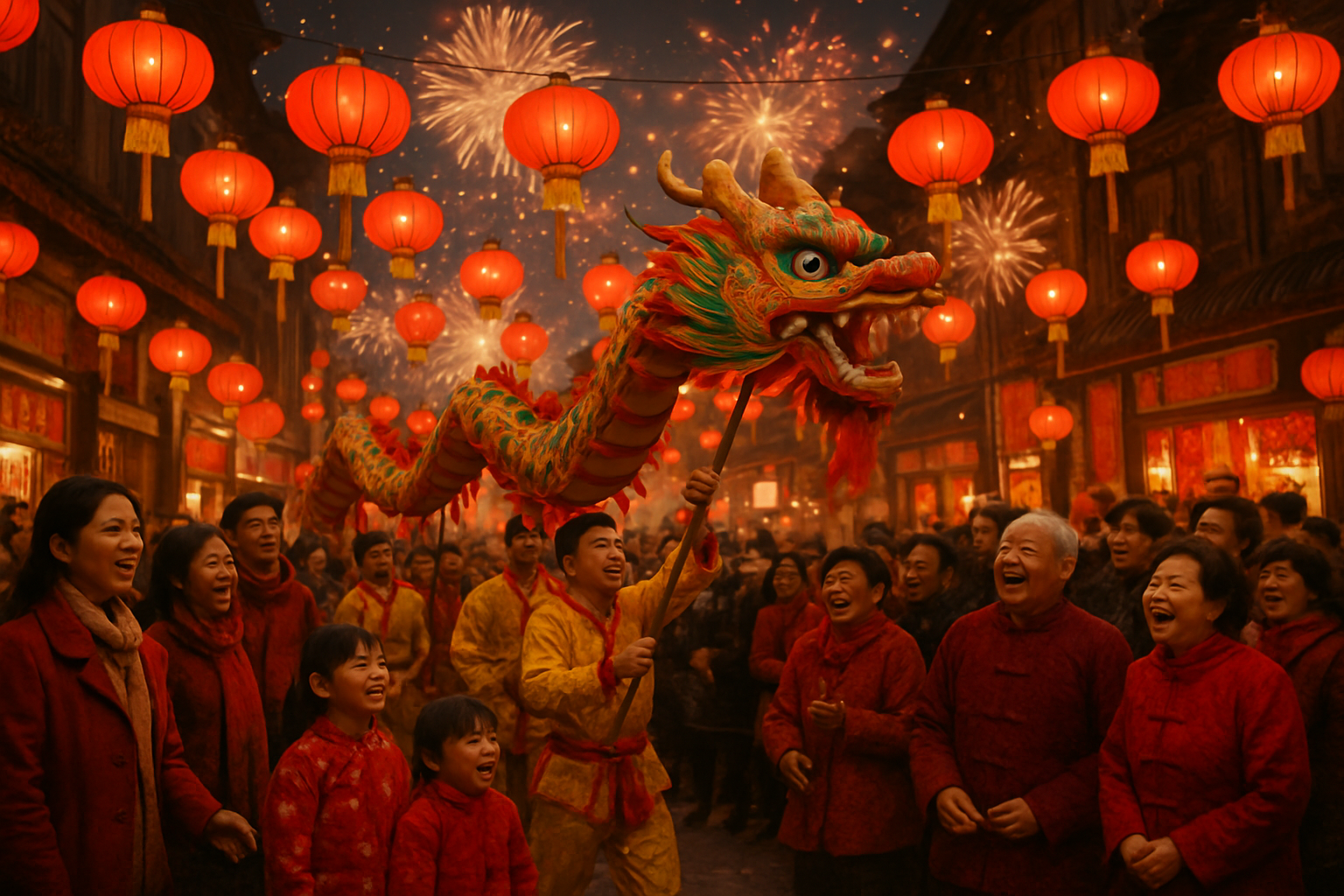
Hundreds of millions of people across five continents celebrated the arrival of Chinese New Year 2026 on February 17, marking the beginning of the Year of the Fire Horse with spectacular festivities that blended ancient traditions with cutting-edge technology, creating the most globally distributed Lunar New Year celebration in modern history.
The rare Fire Horse year, occurring only once every 60 years in the Chinese zodiac cycle, has captured international attention with its symbolism of energy, transformation, and progress—themes that resonated powerfully with communities recovering from recent global challenges and looking toward a dynamic future.
China Showcases Technological Prowess
In China, the celebration reached new heights of technological sophistication as the annual Spring Festival Gala, watched by an estimated 600 million viewers globally, featured humanoid robots performing alongside traditional artists. Four rising robotics companies—Unitree Robotics, Galbot, Noetix, and MagicLab—demonstrated their latest innovations during the televised event, which serves as China's equivalent to America's Super Bowl in cultural significance.
The integration of artificial intelligence and robotics into China's most cherished cultural celebration represents a bold statement about the nation's technological ambitions while maintaining respect for traditional values. The performance showcased robots executing intricate kung fu routines and traditional dances, symbolizing the harmony between innovation and heritage that defines modern China.
"This is not just about showing off our technology—it's about demonstrating how innovation can enhance rather than replace our cultural traditions,"
— Cultural Ministry Official, Beijing
Global Celebrations Span Continents
The festivities extended far beyond China's borders, with significant celebrations documented across multiple continents. In Manila, Philippines, the Chinatown district came alive with fire performances and traditional displays, drawing crowds who gathered to witness the spectacle of cultural celebration that has become increasingly inclusive of non-Chinese participants.
France reported extensive coverage of the celebrations, emphasizing how the holiday has evolved into a truly international phenomenon that brings communities together regardless of cultural background. The global reach of Chinese New Year has expanded dramatically in recent years, with cities from New York to London organizing major public celebrations.
South Korea experienced significant domestic travel as families gathered for traditional reunions, with highways reporting heavy congestion as millions of people traveled to be with loved ones—a testament to the enduring importance of family bonds during this auspicious time.
Fire Horse Symbolism Resonates Globally
The significance of the Fire Horse extends beyond traditional Chinese astrology, with international observers noting how its themes of movement, independence, and passionate energy align with global aspirations for renewal and progress in 2026. According to Chinese tradition, those born in Fire Horse years are believed to possess exceptional drive, creativity, and leadership qualities.
Venezuela's coverage emphasized how the Fire Horse represents a cycle of transformation and abundant energy, particularly meaningful for the millennial generation and those seeking new beginnings. The symbolism has found particular resonance in Latin American communities, where the concepts of personal freedom and dynamic change align with cultural values of self-determination and progress.
The celebrations also highlighted the deep historical roots of the tradition, with some sources noting that Chinese New Year festivals date back to the Xia Dynasty, demonstrating the remarkable continuity of cultural practices across millennia while adapting to contemporary contexts.
International Diplomatic Significance
The timing of this year's celebrations coincided with significant diplomatic developments, including China's announcement of visa-free travel for British and Canadian nationals, effective February 17—a strategic gesture of goodwill timed to coincide with the most important day in the Chinese cultural calendar.
This diplomatic initiative, allowing 30-day stays for tourism, business, and cultural exchanges, demonstrates how traditional festivals increasingly serve as vehicles for international cooperation and soft-power diplomacy. The policy notably leaves the United States as the only Five Eyes alliance member without such privileges, highlighting China's selective engagement approach.
Cultural Bridge-Building Success
Across the globe, the celebrations demonstrated remarkable success in building cultural bridges between Chinese and non-Chinese communities. Reports from multiple countries highlighted how local populations have embraced the festivities, participating in dragon dances, sharing traditional foods, and learning about Chinese cultural values.
The inclusive nature of modern Chinese New Year celebrations has created new models for cultural exchange, where authentic preservation of traditional practices coexists with welcoming participation from diverse backgrounds. This evolution reflects the holiday's transformation from an ethnic celebration to a truly global festival of renewal and community unity.
Economic and Tourism Impact
The celebrations generated substantial economic benefits for host cities and tourism industries worldwide. Hotels in major celebration cities reported high occupancy rates, restaurants experienced increased demand for traditional foods, and retail sectors saw significant sales of festive decorations and gifts.
The economic multiplier effects extend throughout the year, as the infrastructure built for these celebrations—including performance groups, cultural organizations, and community networks—remains active year-round, serving as bridges between Chinese and international communities while supporting local economies.
Technology Enhances Traditional Practices
This year's celebrations demonstrated how digital technology can enhance rather than replace traditional cultural practices. Social media platforms enabled unprecedented global sharing of celebrations, allowing diaspora communities to participate virtually while maintaining authentic cultural connections across vast distances.
The success of technology integration during the celebrations provides a template for how traditional festivals can thrive in contemporary digital environments while preserving their essential spiritual and community-building functions.
Looking Forward
As the Year of the Fire Horse begins, the global celebrations of Chinese New Year 2026 have established new benchmarks for international cultural cooperation and inclusive community building. The festival's success in balancing authentic tradition with innovative contemporary expression offers valuable lessons for cultural preservation in an increasingly interconnected world.
The unprecedented international participation documented across 18 countries demonstrates humanity's capacity for cultural sharing and mutual understanding while respecting the authenticity of traditional practices. This achievement provides a foundation for sustained cross-cultural dialogue and cooperation in addressing the challenges and opportunities that lie ahead in the dynamic Year of the Fire Horse.