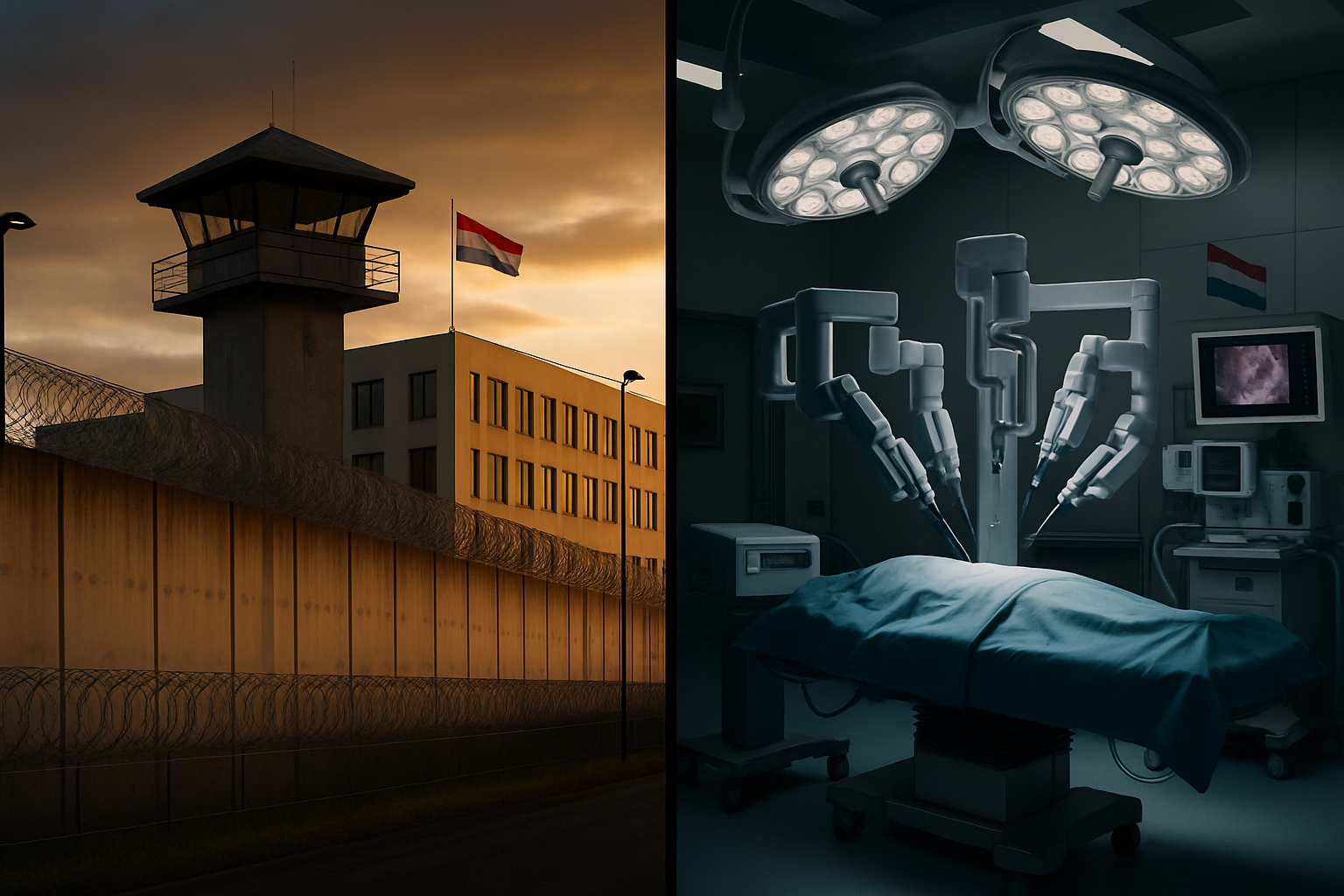
Luxembourg authorities have uncovered significant drug trafficking and contraband smuggling at the Uerschterhaff penitentiary in Sanem, while across the border, CHRU Nancy hospital celebrates a major technological leap in neurosurgery capabilities.
The dual developments highlight contrasting aspects of regional news - institutional security failures alongside remarkable medical advances - that underscore both challenges and achievements in Luxembourg's broader administrative and healthcare landscape.
Prison Security Breach Exposed
Judicial and police authorities revealed Monday that an extensive investigation by the anti-drug section of the judicial police uncovered systematic trafficking of narcotics and prohibited objects within the Uerschterhaff correctional center. According to a prosecutor's office statement, the investigation exposed how drugs and contraband items have been circulating throughout the facility.
The case represents a significant breach of institutional security at Luxembourg's primary correctional facility. Sources familiar with the investigation indicate that a prison guard allegedly played a central role in introducing both narcotics and mobile phones into the secure environment, compromising the safety and rehabilitation objectives of the institution.
"The investigation has revealed how prohibited substances and objects have systematically entered our correctional facilities through internal channels."
— Prosecutor's Office Statement
This security failure occurs within a broader European context of prison system challenges. Recent incidents across the continent have highlighted vulnerabilities in correctional facilities, including violent confrontations in Netherlands and Sweden, as well as healthcare crises in correctional institutions from Sierra Leone to Malta.
International Context of Prison Security
The Luxembourg incident reflects systemic challenges facing European correctional systems. In early March, similar security breaches were documented across multiple jurisdictions, suggesting coordinated criminal networks may be exploiting institutional vulnerabilities.
Previous investigations have revealed how correctional staff can become conduits for contraband introduction, often through coercion, financial incentives, or personal relationships with inmates. The Uerschterhaff case appears to follow this pattern, with authorities investigating potential connections between the alleged guard involvement and organized criminal activities.
The prosecutor's office has not yet disclosed the full extent of the smuggling operation, the quantities of narcotics involved, or the specific mobile phone equipment that circumvented security protocols. However, the investigation's scope suggests a substantial operation requiring sustained cooperation between internal and external actors.
Medical Innovation Across the Border
In stark contrast to Luxembourg's institutional challenges, neighboring France achieved a significant medical milestone. The CHRU Nancy neurosurgery department confirmed its position among Europe's leading epilepsy treatment centers through acquisition of revolutionary surgical equipment designed to improve patient safety and surgical precision.
The hospital recently acquired advanced robotic implantation systems that significantly reduce operation duration while enhancing the accuracy of complex neurological procedures. This technological leap represents a substantial investment in cutting-edge medical capabilities that position the facility as a regional reference center for treating complex epilepsy cases.
These developments are part of the broader "Therapeutic Revolution of 2026" that has seen unprecedented international cooperation in healthcare innovation. Despite funding challenges facing traditional multilateral health organizations, bilateral partnerships and regional collaboration continue driving medical breakthroughs across Europe.
Regional Healthcare Transformation
The CHRU Nancy advances exemplify successful healthcare infrastructure investment during a period of global medical system transformation. The facility's enhanced capabilities reflect broader European trends toward specialized medical centers that combine technological innovation with human-centered care approaches.
This medical progress occurs alongside significant healthcare developments throughout the region. Cyprus is establishing its first national cancer institute, Ireland is completing major hospital infrastructure projects, and multiple African nations are implementing prevention-first healthcare strategies that emphasize early intervention over reactive treatment.
The technological integration at CHRU Nancy represents sophisticated understanding that medical advancement should enhance rather than replace clinical judgment and personal medical relationships. This balanced approach avoids the "wellness paradox" where technological solutions might create healthcare inequality rather than improving access and outcomes.
Economic and Social Implications
The prison security failure carries significant economic and social costs beyond immediate law enforcement concerns. Contraband circulation undermines rehabilitation programs, compromises facility safety, and erodes public confidence in correctional system integrity. The investigation will likely require extensive resources while potentially exposing broader institutional vulnerabilities requiring systematic reforms.
Conversely, the medical advances at CHRU Nancy represent substantial economic opportunities through enhanced healthcare capabilities, potential medical tourism development, and reduced need for international medical referrals. Prevention-focused healthcare strategies demonstrate superior cost-effectiveness through decreased crisis interventions while improving population health outcomes.
The contrasting developments highlight fundamental challenges facing European institutions in the 21st century. While medical innovation accelerates through international cooperation and technological advancement, institutional security requires sustained vigilance and comprehensive oversight to maintain public trust and safety.
Future Implications
The Luxembourg prison investigation will likely prompt comprehensive security reviews across European correctional systems. Similar cases in Netherlands, Sweden, and other jurisdictions suggest coordinated responses may be necessary to address systemic vulnerabilities that criminal networks are exploiting.
Meanwhile, the medical achievements at CHRU Nancy provide templates for healthcare transformation that balance technological innovation with human-centered care principles. These advances contribute to growing evidence that prevention-first approaches offer superior outcomes while building more resilient healthcare systems.
Both developments underscore the importance of sustained institutional investment, professional training, and international cooperation. Success in addressing security challenges while advancing medical capabilities depends on political commitment, adequate resource allocation, and coordinated action that prioritizes public welfare above all else.
The investigation into the Uerschterhaff trafficking operation continues, with authorities expected to release additional details as the case progresses. The prosecutor's office has indicated that multiple suspects may be involved, suggesting the security breach extends beyond individual misconduct to potential systematic corruption requiring comprehensive institutional reform.