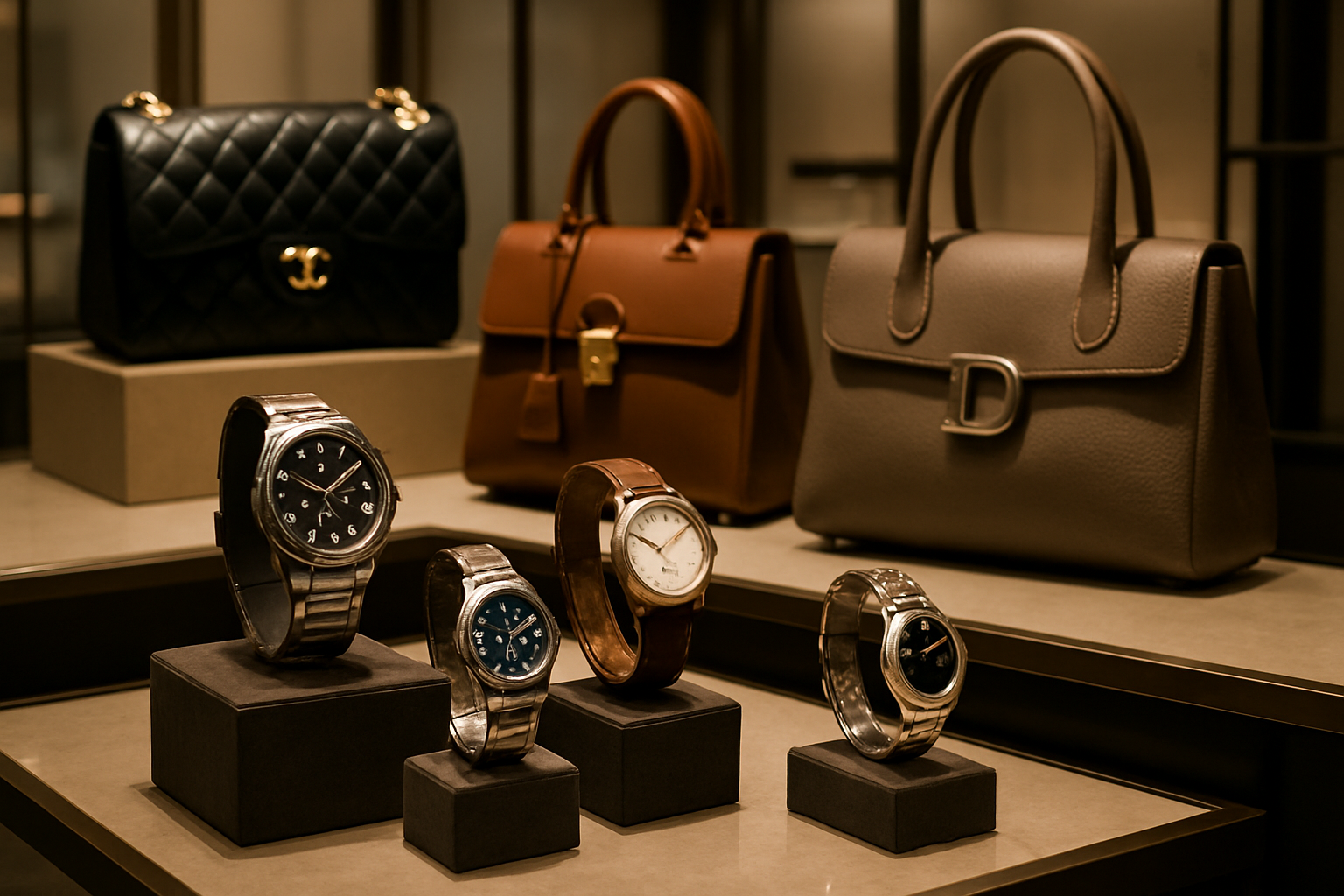
The luxury goods industry is experiencing a profound transformation as the post-pandemic consumption boom gives way to a more challenging market environment, forcing brands to fundamentally rethink their growth strategies while consumers increasingly embrace the secondary market for high-end timepieces and luxury goods.
From slowing Chinese demand to war-related disruptions and rising consumer resistance to premium pricing, the luxury sector faces mounting pressure to adapt to a new reality where traditional models of expansion and pricing power are no longer guaranteed. This shift coincides with explosive growth in the pre-owned luxury market, particularly in timepieces, as consumers seek value and authenticity in their purchases.
The End of Easy Growth
Recent market data reveals the extent of the luxury industry's challenges. Kering, parent company of Gucci, reported mixed signals with the flagship brand showing a 10% revenue decline in Q4 2025, though this represented a significant improvement from the 22% decline in the first nine months of the year. Despite continued negative growth, investor sentiment improved dramatically, with Kering shares rising double digits and benefiting the broader European luxury sector.
The challenges facing luxury brands extend far beyond individual company performance. Chinese travelers, who once drove airport luxury spending with rates 100% above regional averages, are showing more selective purchasing patterns. This shift represents a fundamental change in the behavior of what had become the industry's most crucial demographic.
"The luxury industry is being forced to rethink how it grows. We're seeing a fundamental shift from the easy expansion of the past decade to a more challenging environment where brands must prove their value proposition."
— Industry Analyst, European Luxury Sector
Secondary Market Revolution
As traditional luxury retail faces headwinds, the pre-owned market is experiencing unprecedented growth. The secondary luxury watch market, in particular, has become a sophisticated ecosystem offering both opportunities and risks for consumers seeking to enter the world of high-end timepieces.
Experienced collectors emphasize the importance of understanding the complexities of the pre-owned market. While it offers access to rare pieces and potential value appreciation, buyers must navigate authentication challenges, condition assessment, and provenance verification. The secondary market has developed its own infrastructure of specialized dealers, authentication services, and digital platforms that facilitate transactions while attempting to minimize risks.
The Authentication Challenge
The growth of the pre-owned luxury market has elevated the importance of authentication and quality verification. Professional services now employ advanced imaging technology and blockchain provenance tracking to combat counterfeits, while buyers increasingly rely on specialized authentication services to ensure their purchases are genuine.
This focus on authenticity extends beyond simple verification to encompass the entire consumer experience. Modern luxury consumers, particularly younger demographics, prioritize authentic brand stories, transparent supply chains, and sustainable practices over pure prestige markers.
Technology Integration and Market Access
Digital transformation has democratized access to luxury goods markets previously available only to insiders. AI-powered curation, virtual try-on capabilities, and social media integration are normalizing luxury consumption while making it more accessible to diverse demographics.
Online platforms have revolutionized how consumers discover, evaluate, and purchase luxury goods. Virtual showrooms, detailed condition reports, and sophisticated matching algorithms help bridge the gap between traditional in-person luxury shopping experiences and the convenience of digital commerce.
Regional Variations and Market Dynamics
The luxury market's evolution varies significantly by region. European markets maintain strong appreciation for craftsmanship and heritage, while Asian markets increasingly value innovative design and technological integration. The Middle East shows continued appetite for traditional luxury symbols, though with growing emphasis on sustainability credentials.
In emerging markets, the luxury sector faces unique challenges related to economic volatility, currency fluctuations, and evolving consumer preferences. Brands are adapting by offering region-specific products, localized service experiences, and flexible pricing strategies.
Sustainable Luxury and Circular Economy
Environmental consciousness is reshaping luxury consumption patterns. The circular economy model, where goods retain value through multiple ownership cycles, aligns perfectly with luxury items' inherent durability and craftsmanship. This trend supports both environmental objectives and economic accessibility.
Luxury brands are responding with comprehensive sustainability initiatives, including take-back programs, refurbishment services, and certified pre-owned offerings. These initiatives help brands maintain control over their secondary markets while addressing consumer demand for environmentally responsible options.
Investment Perspectives and Value Retention
High-end timepieces and luxury goods increasingly function as alternative investments, with certain pieces appreciating significantly over time. This investment aspect attracts new categories of buyers who view luxury purchases through both emotional and financial lenses.
The most successful luxury items in the secondary market combine exceptional craftsmanship, brand heritage, and relative scarcity. Limited editions, discontinued models, and pieces with historical significance command premium prices while offering potential appreciation.
Future Outlook and Strategic Adaptations
As the luxury industry navigates this transformation, successful brands are emphasizing quality over quantity, sustainable practices over rapid expansion, and authentic customer relationships over transactional interactions. The integration of digital tools enhances rather than replaces traditional luxury service standards.
The pre-owned market will likely continue growing as consumers become more sophisticated about value, authenticity, and sustainability. This growth creates opportunities for new business models that bridge traditional luxury retail with secondary market dynamics.
Industry experts predict that brands embracing this new reality—where consumers are more discerning, sustainability matters, and the secondary market is legitimate—will emerge stronger. Those clinging to pre-pandemic assumptions about endless growth and pricing power may struggle to adapt to the evolving landscape.
The luxury goods sector's current transformation represents more than a cyclical downturn; it signals a fundamental shift toward more conscious consumption, greater market sophistication, and sustainable business practices that could define the industry for decades to come.