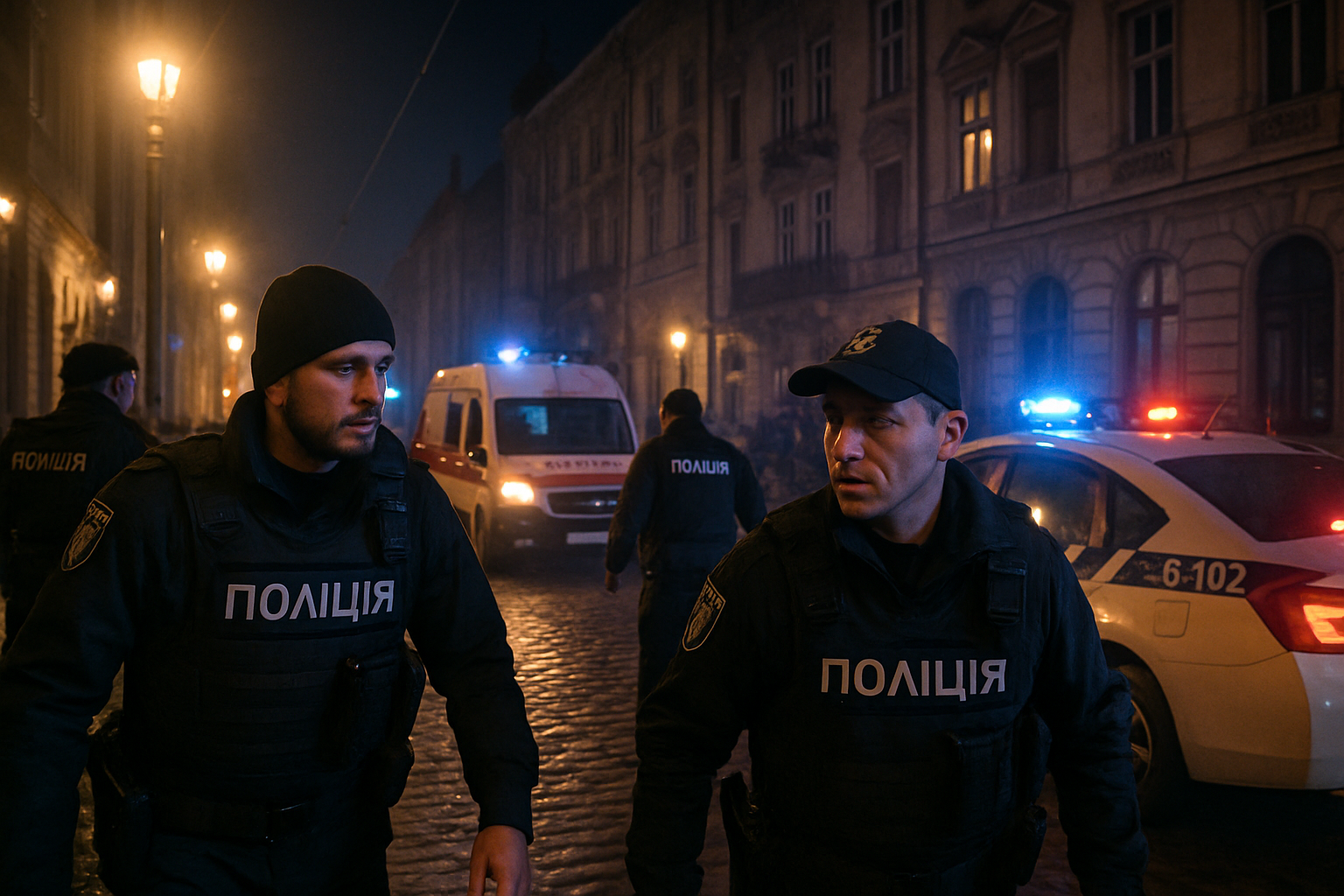
A coordinated terrorist attack in Lviv, Ukraine early Sunday morning killed a 23-year-old female police officer and injured 25 others when improvised explosive devices exploded during what appeared to be a routine police response to a reported store burglary, marking a significant escalation of violence in western Ukraine.
The attack occurred at approximately 12:30 AM on February 22, 2026, when Ukrainian National Police officers responded to a call about a break-in at a store on Danylyshyna Street near the Magnus shopping center. What patrol officers believed to be a standard burglary call became a deadly trap when the first explosion targeted the initial police unit, followed by a secondary blast that struck backup officers arriving at the scene.
Lviv Mayor Andriy Sadovyi confirmed the incident as a terrorist attack, stating simply: "Lviv. This was a terrorist attack." The sophisticated dual-explosive tactic—using a secondary device to target first responders—represents a calculated ambush that demonstrates advanced knowledge of police response protocols.
Details of the Attack
According to multiple sources, Ukrainian police received a report of a break-in at a commercial establishment and dispatched patrol units to investigate. When officers arrived at the scene, the first improvised explosive device detonated, immediately followed by a second explosion designed to maximize casualties among responding personnel.
The attack killed a 23-year-old female police officer and wounded between 24-25 others, according to varying reports from Ukrainian and international sources. The casualty count represents one of the most significant attacks targeting law enforcement personnel in western Ukraine, a region that has generally experienced fewer security incidents compared to eastern territories.
A suspect, identified as a Ukrainian citizen, was detained following the explosions. Authorities have confirmed the suspect is in custody, though details about his identity, motivation, or potential connections to larger terrorist networks have not been disclosed.
Strategic Significance and Location
The choice of Lviv as a target carries particular significance given the city's strategic importance to Ukraine's war effort and international relations. Located near the Polish border, Lviv serves as a crucial logistics hub for Western aid deliveries and houses hundreds of thousands of internally displaced persons who have fled conflict zones in eastern Ukraine.
The city's proximity to NATO territory—approximately 70 kilometers from the Polish border—and its role as a refuge for civilians makes this attack especially concerning for both Ukrainian authorities and international observers. Lviv has largely been spared from the systematic targeting that has characterized attacks on cities in eastern and central Ukraine.
The terrorist incident occurred just hours after Russia launched one of its largest coordinated missile and drone attacks of 2026, targeting energy infrastructure across multiple Ukrainian regions. However, authorities have treated the Lviv attack as a separate incident, distinct from the broader military conflict.
Investigation and Response
The Lviv Regional Prosecutor's Office has taken charge of the investigation, with authorities treating the incident as a terrorist attack rather than a conventional crime. The use of multiple improvised explosive devices and the deliberate targeting of law enforcement personnel meets the criteria for terrorism under Ukrainian law.
The investigation will focus on determining whether the suspect acted alone or was part of a larger network, examining the construction and placement of the explosive devices, and understanding how the perpetrator gained advance knowledge of police response protocols to execute such a coordinated ambush.
Emergency services responded immediately to the scene, with medical teams treating wounded officers and civilian bystanders. The area around the Magnus shopping center was secured and evacuated as investigators began processing the crime scene.
Broader Security Context
This attack represents a concerning development in Ukraine's security landscape, demonstrating the emergence of domestic terrorist threats even as the country continues to face external military pressure. Unlike the missile and drone attacks that have characterized much of the conflict, this incident involved locally-executed terrorism targeting civilian law enforcement.
The sophistication of the attack—including the use of secondary devices specifically designed to target first responders—suggests either advanced planning by the perpetrator or potential training and support from external sources. The tactic of using fake emergency calls to lure police officers into ambushes is a hallmark of terrorist operations worldwide.
For Ukrainian authorities, the incident highlights the complex security challenges facing the country beyond conventional military threats. Law enforcement agencies must now contend with potential domestic terrorism while continuing to operate under the strains of an ongoing conflict.
International Implications
The attack in Lviv carries implications beyond Ukraine's borders, given the city's role in facilitating international aid and its proximity to European Union territory. NATO and EU officials monitoring the situation have expressed concern about the potential for terrorism to spread beyond traditional conflict zones.
The targeting of civilian police officers rather than military personnel represents a shift toward attacking the civilian infrastructure that maintains order and governance in Ukrainian cities. This tactical evolution could signal an attempt to undermine civilian morale and government authority in regions previously considered relatively secure.
International security experts note that such attacks, if they become more frequent, could complicate efforts to provide humanitarian aid and support to Ukraine, as Lviv serves as a critical transit point for international assistance programs.
Community Impact
The attack has sent shockwaves through Lviv's community, particularly among the large population of internally displaced persons who sought refuge in the city expecting greater safety than in eastern regions. The realization that terrorism can strike even in western Ukraine has psychological implications for civilian morale.
Local businesses and residents expressed concern about security measures, with many questioning whether additional protection protocols need to be implemented for police officers and emergency responders. The attack occurred in a commercial area that typically sees significant foot traffic, highlighting vulnerabilities in civilian spaces.
Community leaders have called for enhanced security measures while emphasizing the importance of maintaining normal life and not allowing terrorism to achieve its goal of spreading fear and disrupting society.
Law Enforcement Challenges
The incident exposes the difficult operational environment facing Ukrainian police officers, who must balance routine law enforcement duties with heightened security threats. The use of a fake burglary report to lure officers into a trap demonstrates how terrorists can exploit standard police procedures.
Ukrainian law enforcement agencies will likely review their response protocols and consider implementing additional security measures for officers responding to calls in sensitive areas. The challenge lies in maintaining effective policing while protecting personnel from targeted attacks.
The successful detention of the suspect demonstrates the professionalism and training of Ukrainian security forces, even under difficult circumstances. However, the incident underscores the need for enhanced intelligence gathering and threat assessment capabilities to prevent similar attacks.
Historical Context
While Ukraine has experienced various forms of violence since 2014, terrorist attacks specifically targeting law enforcement personnel in western regions have been relatively rare. The incident represents a potential escalation in tactics and geographic scope of internal security threats.
The attack's sophistication and planning suggest this was not a spontaneous act of violence but rather a calculated terrorist operation requiring advance preparation and surveillance of police response patterns. This level of planning indicates either individual radicalization or potential connections to organized terrorist networks.
For investigators, determining the suspect's motivation and any potential external connections will be crucial for understanding whether this represents an isolated incident or the beginning of a new terrorist campaign within Ukraine.
Moving Forward
As the investigation continues, Ukrainian authorities face the challenge of maintaining public confidence while addressing legitimate security concerns. The attack demonstrates that terrorism remains a persistent threat even as the country deals with conventional military challenges.
The international community's response to this incident will be closely watched, as support for Ukraine includes not only military aid but also assistance with domestic security and counter-terrorism efforts. The attack in Lviv serves as a reminder that Ukraine's security challenges extend beyond battlefield boundaries.
The resilience of Ukrainian society and institutions will be tested not only by external military pressure but also by the potential for internal terrorism to disrupt civilian life and governance. How effectively authorities respond to and prevent such attacks will be crucial for maintaining stability in regions serving as refuges for displaced populations.
The courage and sacrifice of the 23-year-old police officer who lost her life, along with the 25 others wounded in the attack, exemplifies the dedication of Ukrainian law enforcement personnel who continue to serve their communities despite facing unprecedented dangers. Their commitment to protecting civilians represents the front line of resistance against those who would use terror to undermine Ukrainian society.