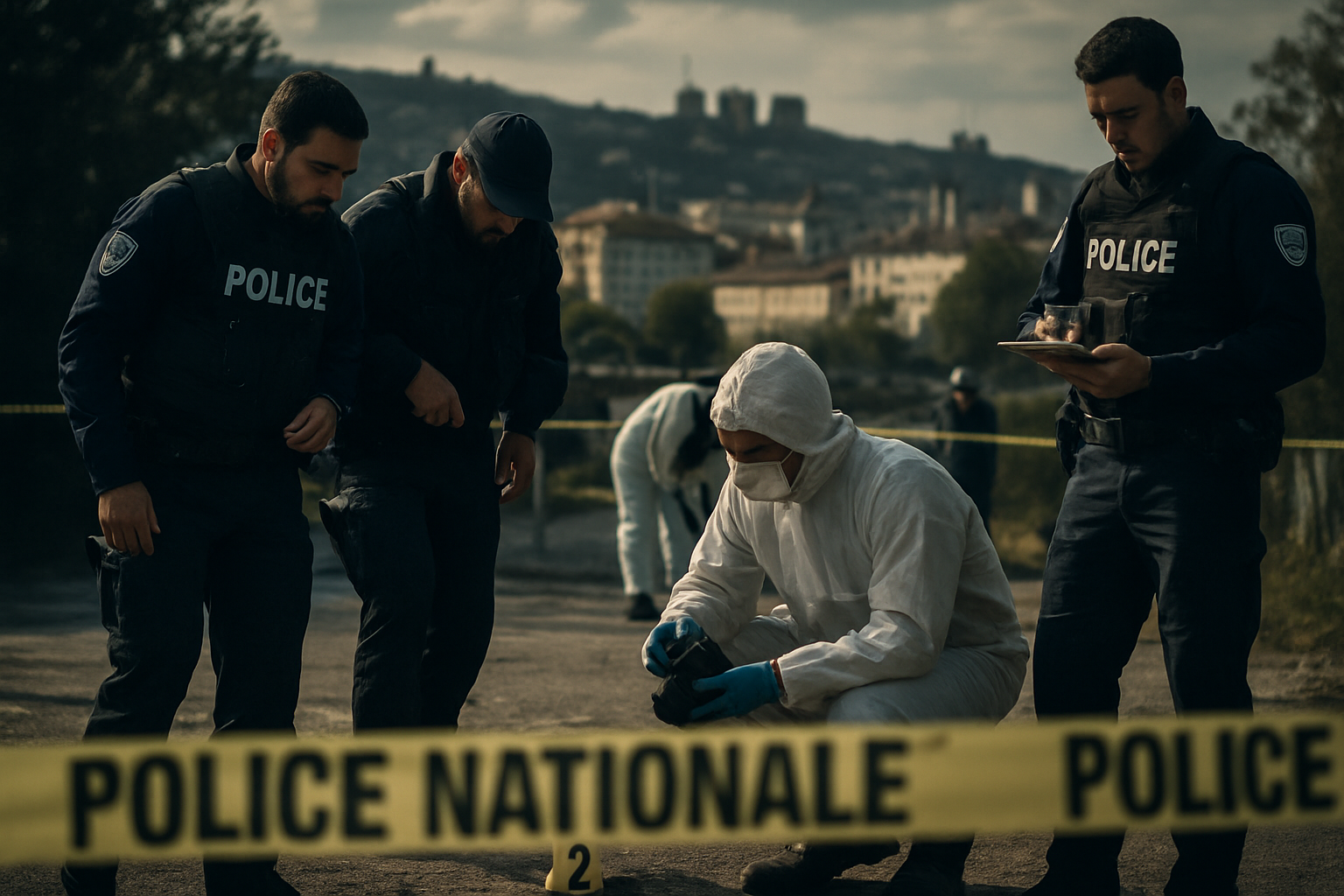
French authorities have arrested 11 suspects in connection with the killing of 23-year-old far-right activist Quentin Deranque, a case that has intensified political tensions between France's far-right and hard-left movements ahead of crucial municipal elections in March and the 2027 presidential race.
The investigation into Deranque's death took a dramatic turn when authorities detained Jacques-Elie Favrot, parliamentary assistant to Raphaël Arnault, a member of parliament from the hard-left France Unbowed (LFI) party. The arrests have transformed what began as a violent street confrontation into a national political crisis exposing deep divisions in French society.
The Fatal Confrontation
Quentin Deranque, a 23-year-old mathematics student and neo-fascist militant, died on Saturday after being beaten and kicked in the head by a group of masked young men during clashes on the sidelines of a protest in Lyon. The violence erupted outside a venue where Rima Hassan, a member of the European Parliament from France Unbowed, was scheduled to speak.
According to Lyon prosecutor Thierry Dran, the confrontation began when far-right feminists organized a demonstration outside the university venue. Videos of the deadly encounter were widely shared on social media, showing the brutal nature of the attack that would claim Deranque's life two days later in hospital.
Escalating Arrests and Political Implications
The investigation has expanded rapidly, with initial arrests of nine suspects on Tuesday followed by two additional detentions on Wednesday. Among those arrested, six are suspected of directly participating in the fatal beating, while three others are accused of aiding the attackers, according to AFP sources familiar with the case.
The detention of Jacques-Elie Favrot has sent shockwaves through French politics. LFI lawmaker Raphaël Arnault confirmed his parliamentary assistant's arrest, stating that Favrot had "stopped all parliamentary work" and emphasizing that "it is now up to the investigation to determine responsibility."
The arrests have drawn immediate condemnation from across the political spectrum. Rima Hassan and other France Unbowed members have publicly condemned the killing, despite their ideological opposition to Deranque's far-right views.
False Accusations and Media Controversy
The case has also highlighted the dangers of misinformation in politically charged situations. A young woman from Lyon was publicly named by several far-right figures and media outlets as a participant in the attack, despite being in South America at the time of the incident.
The falsely accused woman, associated with the anti-fascist group La Jeune Garde, has filed a defamation complaint. Her supporters fear for their safety as far-right media continues to circulate her name and photograph, demonstrating how political violence can spiral beyond its immediate victims.
Broader Political Context
The killing has occurred at a particularly sensitive moment in French politics. With municipal elections scheduled for March 2026 and the presidential election approaching in 2027, political tensions have reached fever pitch. The case has become a rallying cry for Marine Le Pen's National Rally and other far-right groups, who have seized on Deranque's death to attack what they characterize as violent left-wing extremism.
Justice Minister Gérald Darmanin has blamed the "ultra-left" for the killing, while National Rally leader Jordan Bardella has declared Jean-Luc Mélenchon bears "immense moral responsibility" for creating an atmosphere of political hatred. The government has announced new restrictions on political meetings at universities in response to the incident.
These accusations have left LFI increasingly isolated, with even the Socialist Party distancing itself from Mélenchon's movement. The party faces what observers describe as its most serious crisis since its formation, as it struggles to maintain its position in France's fragmented political landscape.
European Context of Political Violence
The Lyon killing reflects broader concerns about political extremism and violence across Europe. Similar incidents have occurred in other European capitals, where confrontations between far-right and far-left groups have occasionally turned deadly. The case has drawn international attention, with media outlets across Europe covering the investigation and its political ramifications.
The incident represents what many observers see as a dangerous escalation of political confrontation that has marked recent years in France and across Europe. It raises fundamental questions about how democratic societies should address political violence and extremism while protecting freedom of assembly and expression.
Investigation Continues
Lyon prosecutors are conducting their investigation under intense political pressure, with both sides of the political spectrum demanding justice while interpreting the case through their own ideological lenses. The investigation remains ongoing, with authorities indicating that the level of each suspect's involvement in the fatal attack is still being determined.
The case has become a test of France's ability to address political violence through legal rather than violent means. As the investigation continues, it will likely serve as a defining moment for how French institutions respond to the intersection of political extremism and criminal violence.
With France facing crucial elections in the coming months, the outcome of this investigation and the political crisis it has generated will have lasting implications for the country's democratic institutions and the future of political discourse in one of Europe's most influential democracies.