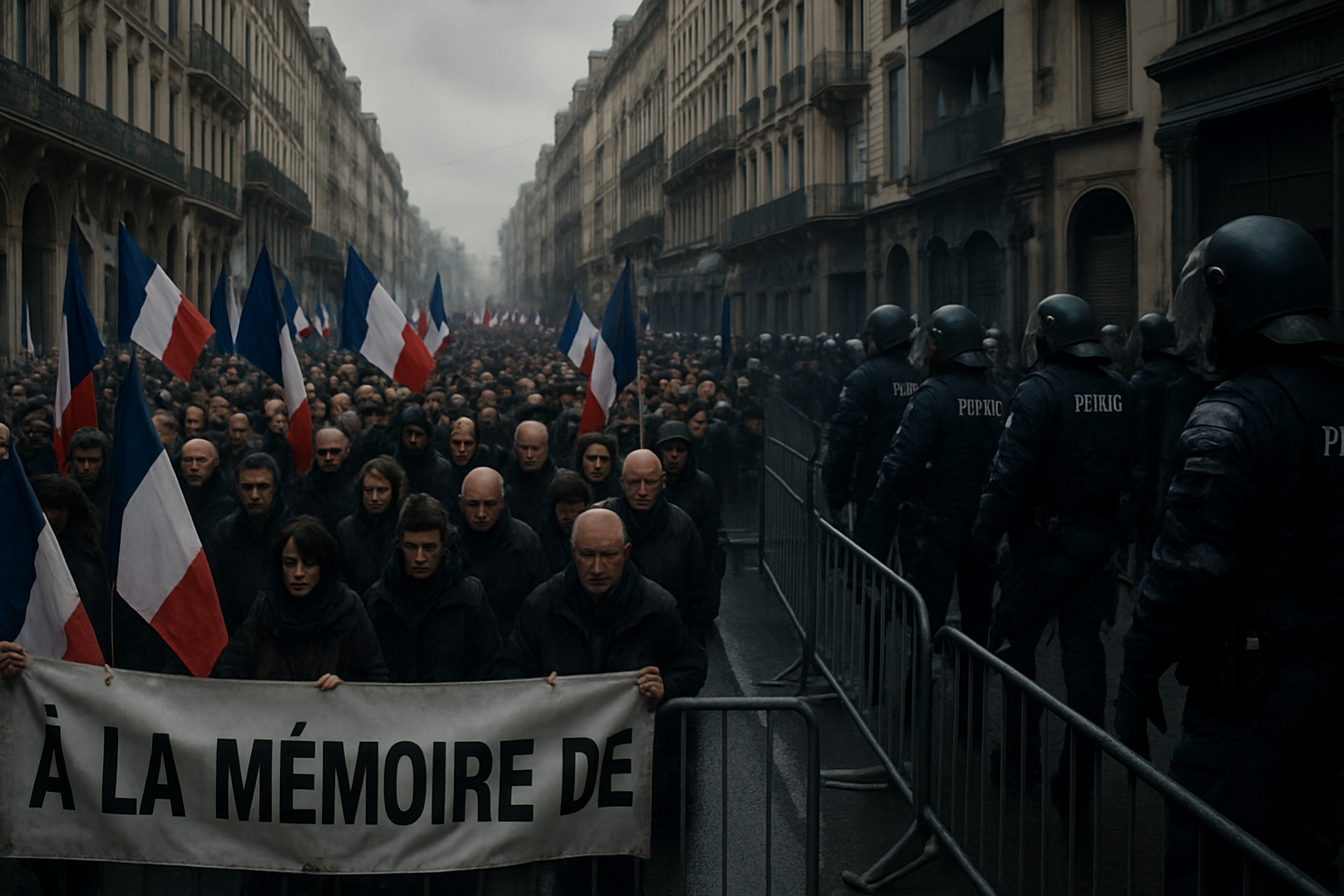
More than 3,200 people marched through Lyon on Saturday in a heavily secured memorial rally for Quentin Deranque, the 23-year-old far-right activist whose brutal killing has plunged France into its deepest political crisis in decades and sparked international diplomatic tensions.
The demonstration, authorized despite security concerns from Lyon's mayor, proceeded under the watchful eyes of hundreds of police officers as mourners gathered to honor Deranque, who died February 12 following a beating by masked attackers during violent clashes between far-right and far-left groups.
Extremist Displays Mar Solemn Ceremony
What began as a memorial quickly turned controversial when authorities documented Nazi salutes, racist chants, and homophobic slurs during the march, according to the Rhône prefecture. Officials announced they would pursue legal action against those captured on video making extremist gestures, highlighting the volatile atmosphere surrounding the case.
France 24's Olivia Bizot, reporting from Lyon, described the atmosphere as "heavy, sad and increasingly intense," noting the presence of "several young men carrying wooden sticks" at the rally. The scene underscored the dangerous escalation of political confrontations that have alarmed French authorities and international observers.
"We are witnessing a dangerous moment for French democracy when political disagreement turns violent,"
— President Emmanuel Macron, calling for calm and restraint
International Diplomatic Crisis Emerges
The killing has triggered unprecedented diplomatic tensions between France and Italy, with President Macron delivering a sharp rebuke to Italian Prime Minister Giorgia Meloni after she characterized Deranque's death as a "wound for all of Europe." Macron's direct challenge for Italy to stop "commenting on what is happening in other people's countries" represents one of the most public diplomatic spats between the EU partners in recent years.
The Trump administration has also weighed in, with officials denouncing what they termed "terrorism" and left-wing political violence in France, adding an international dimension to what began as a domestic political crisis.
Seven Charged in Fatal Attack
Prosecutor Thierry Dran has formally charged seven suspects with intentional homicide in connection with Deranque's death, including Jacques-Elie Favrot, a parliamentary assistant to La France Insoumise deputy Raphaël Arnault. The high-profile arrest has intensified political pressure on Jean-Luc Mélenchon's left-wing movement, with Justice Minister Gérald Darmanin blaming the "ultra-left" for the killing.
The case has become increasingly complex, with false accusations on social media complicating the investigation. A Lyon woman from La Jeune Garde who was wrongly accused while actually in South America has filed a defamation complaint, demonstrating how misinformation has inflamed an already volatile situation.
Political Fallout Accelerates
The incident has created a political earthquake ahead of France's March 2026 municipal elections and the 2027 presidential race. The Socialist Party has begun distancing itself from La France Insoumise, isolating Mélenchon's movement as National Rally leader Marine Le Pen uses the case as a rallying cry for her far-right party.
Jordan Bardella of the National Rally declared Mélenchon bears "immense moral responsibility" for the death, while the government announced restrictions on political meetings at universities in response to the violence.
"This tragedy becomes a symbol of the threats to French democracy when political disagreement turns violent,"
— Interior Minister Laurent Nuñez, defending the decision to allow Saturday's rally
Counter-Demonstrations and Tensions
As the memorial march proceeded, anti-fascist groups organized counter-demonstrations with chants opposing the rally. The competing demonstrations created additional security challenges for authorities, who deployed massive police resources to maintain order while balancing free expression rights with public safety concerns.
Italian media reported tensions in Lyon with "antifascist slogans against the march," while participants in the memorial rally chanted "Adieu camarade" at the site where Deranque was fatally beaten.
Democratic Institutions Under Pressure
The crisis represents a critical test for French democratic institutions' ability to manage political violence through legal channels rather than allowing it to spiral into broader civil conflict. The case has drawn comparisons to historical periods of political extremism that have threatened European democratic stability.
European observers are monitoring the situation closely, viewing France's response as potentially setting precedents for how democratic nations handle the intersection of political extremism and criminal violence during crucial electoral periods.
Background to the Violence
Deranque, a mathematics student and devout Catholic, was attacked during counter-protests against a conference featuring pro-Palestinian MEP Rima Hassan. The 23-year-old died from severe cranial injuries after being beaten by at least six attackers, according to prosecutors.
The killing occurred against a backdrop of broader political fragmentation in France following recent budget crises and repeated use of constitutional Article 49.3 to bypass parliamentary approval. The incident has highlighted the dangerous escalation of confrontations between extremist groups across the political spectrum.
Looking Ahead
As France grapples with the aftermath of Saturday's memorial rally and the ongoing investigation, the case has become a defining moment for the country's democratic resilience. The government's announcement of university political meeting restrictions signals authorities' recognition that the crisis extends beyond a single criminal case to broader questions about political discourse and democratic norms.
The investigation continues under Lyon prosecutors amid intense political pressure, with authorities working to determine the full extent of the conspiracy while managing the volatile political atmosphere the case has created. Whether France can successfully address this crisis through legal mechanisms while preserving democratic freedoms will likely influence political stability across Europe as the continent faces rising extremism and polarization.