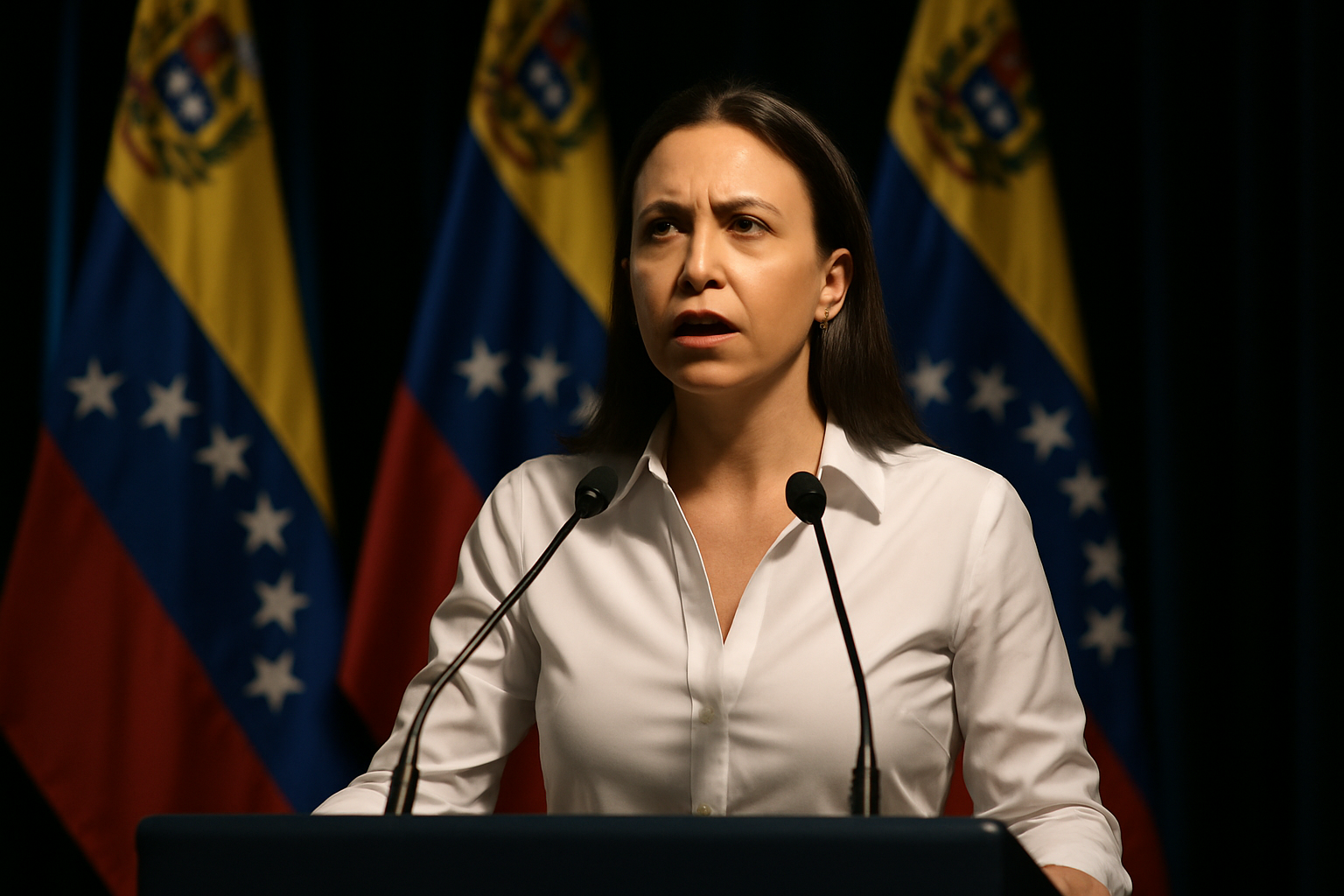
Venezuelan opposition leader and Nobel Peace Prize laureate María Corina Machado announced from an undisclosed location that she will return to Venezuela "within weeks" to help guarantee a democratic transition, marking a dramatic escalation in the country's political transformation following the removal of Nicolás Maduro in January 2026.
The announcement, made through a video distributed on social media, comes during what observers describe as Venezuela's most promising democratic opening in over two decades. Under Acting President Delcy Rodríguez's interim government, more than 750 political prisoners have been released since January 2026 through a comprehensive amnesty program covering political offenses from 1999-2026.
Strategic Timing of Return
Machado's planned return represents a calculated strategic move during a period of unprecedented political transformation. The announcement follows the implementation of Venezuela's most comprehensive political prisoner amnesty in recent Latin American history, with the National Assembly unanimously passing legislation that spans the entire 27-year Chávez-Maduro era.
"This is a historic moment for Venezuela," said former Spanish Prime Minister José Luis Rodríguez Zapatero, who has been mediating peace talks in Caracas since February. "The conditions for democratic participation have fundamentally changed."
The timing coincides with significant international diplomatic breakthroughs. Oil exports have surged 60% to 800,000 barrels daily, with the United States displacing China as Venezuela's top customer following the lifting of 2019 sanctions. Energy Secretary Chris Wright's February visit to Caracas resulted in comprehensive cooperation agreements that ended the oil embargo.
Democratic Transition Progress
The interim government under Delcy Rodríguez has implemented what international observers consider the most ambitious political reconciliation effort in recent regional history. The 13-article amnesty law passed unanimously by the National Assembly, with releases occurring at multiple facilities including the infamous Helicoide prison and El Rodeo penitentiary.
"Over 400 political prisoners have been released, representing a decisive step toward peace and reconciliation."
— Jorge Rodríguez, National Assembly President
Recent releases have included prominent opposition figures such as Juan Pablo Guanipa, a close Machado ally and former National Assembly vice-president, though he remains under house arrest with electronic monitoring. Journalist Rory Branker and NGO director Javier Tarazona were also freed after years of detention on terrorism and treason charges.
International Mediation Efforts
The return announcement comes amid sustained international mediation efforts. Cardinal Baltazar Porras has organized nationwide prayer vigils, while high-level U.S.-Venezuela diplomatic engagement continues with unprecedented meetings at Miraflores Palace. The Dominican Republic has reopened relations, and Brazil and the European Union have expressed cautious support for the transition.
These diplomatic developments occur within the broader context of what analysts describe as the "Corolario Trump" strategy—a 21st-century update to the Monroe Doctrine combining military pressure with economic incentives and selective engagement to counter Chinese influence in Latin America.
Implementation Challenges Remain
Despite the progress, significant challenges persist in the amnesty implementation. Article 7 of the legislation requires prisoners to "present themselves to justice," creating delays as the opposition argues this criminalizes persecution victims. Over 600 political prisoners remain detained according to Foro Penal, a Venezuelan human rights organization tracking political detentions.
Article 9 excludes those who "promoted attacks on national territory by foreign states," while families of political prisoners have maintained vigils and hunger strikes at detention centers, demanding inclusive rather than selective amnesty coverage.
"Amnesty hasn't reached our home yet," said María Constanza Cipriani, wife of detained Argentine gendarme Nahuel Gallo, highlighting the conditional nature of many releases.
Economic Recovery Context
Machado's return strategy unfolds against a backdrop of economic transformation. American companies have doubled operations in Venezuela, with Chevron, BP, Shell, Eni, and Repsol receiving Treasury authorization for expanded activities. American Airlines has requested authorization for Miami-Caracas flights, while over 6 tons of U.S. medical supplies have been delivered to Venezuelan hospitals.
However, structural challenges remain formidable. Oil production stands at 700,000 barrels daily compared to a historical peak of 3 million. Hyperinflation, infrastructure decay, and power outages continue to affect daily life, requiring sustained international investment and technical assistance.
Regional and International Implications
The Venezuelan transition has broader implications for Latin American democracy and U.S. foreign policy. President Trump has announced his intention to visit Venezuela, which would make him the first U.S. president to do so since 1997, potentially capping what observers describe as the most dramatic foreign policy transformation in recent history.
The success or failure of Venezuela's democratic transition could serve as a template for similar processes elsewhere in the region. Regional observers are monitoring whether the changes represent genuine democratic reform or cosmetic adjustments designed to maintain authoritarian control under different leadership.
Opposition Strategy Evolution
Machado's approach represents a shift from confrontational resistance to constructive participation in the democratic process. Her Nobel Peace Prize status provides significant moral authority, while the demonstrated government commitment to prisoner releases has created more favorable conditions for opposition engagement.
"This transition must be based on truth and recognition of electoral results," stated Juan Pablo Guanipa upon his release, referencing the disputed July 28, 2024, election results that contributed to Maduro's eventual downfall.
The opposition's strategy emphasizes four fundamental pillars: electoral system reconstruction, legal security guarantees, safe return facilitation for exiles, and complete political prisoner liberation. This comprehensive framework has gained international support and legitimacy.
Critical Test Ahead
Machado's successful return and reintegration would represent a critical test of the government's genuine commitment to democratic principles. Any restrictions or persecution would raise serious questions about the authenticity of the democratic transition and could undermine international support for the process.
The coming weeks will be decisive for what many consider Latin America's most significant political transformation in recent memory. Success could establish Venezuela as a model for peaceful democratic change, while failure might highlight the persistent challenges of building sustainable democratic institutions after decades of authoritarian rule.
As families of political prisoners continue their vigils and hunger strikes outside detention centers, and as international mediators work to ensure complete implementation of the amnesty law, Venezuela stands at a crossroads between its authoritarian past and a potentially democratic future. María Corina Machado's return may well determine which path the nation ultimately takes.