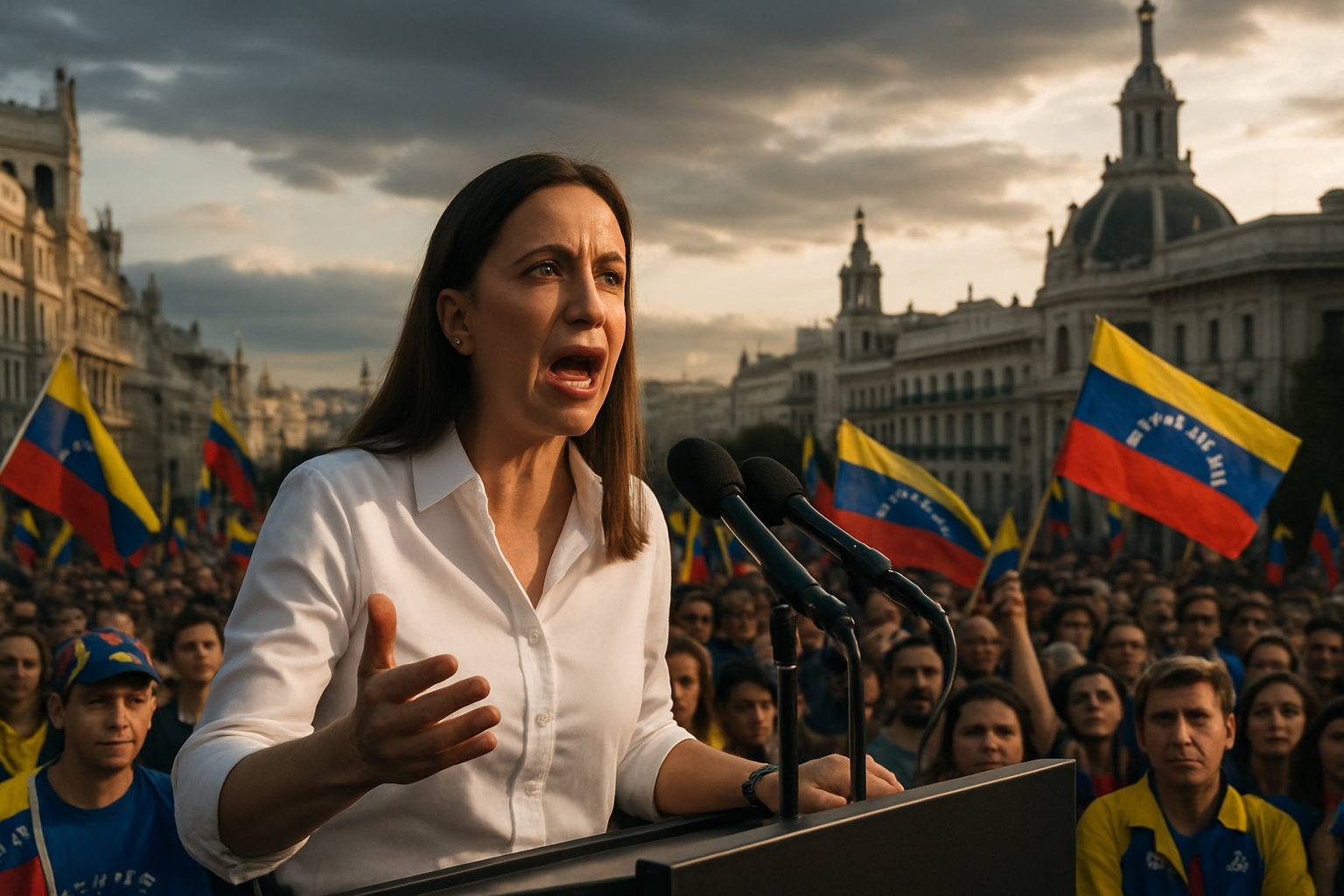
Venezuelan opposition leader and Nobel Peace Prize laureate María Corina Machado has issued critical warnings about Venezuela's electoral future from Madrid, declaring that "not holding elections carries greater risk" while revealing she maintains contacts with sectors of the public administration to facilitate an orderly government transition.
Speaking from the Spanish capital, where she has been conducting high-profile political activities, Machado addressed the ongoing debate over postponing elections in Venezuela. Her comments come as Acting President Delcy Rodríguez's interim government faces mounting pressure to establish a clear democratic timeline following the dramatic political changes that began with Nicolás Maduro's capture in January 2026.
Electoral Timeline Warnings
Machado's stark warning about the risks of delaying elections reflects growing international and domestic pressure for Venezuela to establish a clear democratic roadmap. The Nobel laureate's statement carries significant weight given her status as the country's most prominent opposition figure and her recent international recognition.
The opposition leader has been preparing for her announced return to Venezuela "within weeks," which would mark a crucial test of the interim government's commitment to genuine democratic reform. Her presence in Madrid represents final preparations before what many observers consider a pivotal moment in Venezuela's transition process.
"Not holding elections carries greater risk than proceeding with the electoral process."
— María Corina Machado, Nobel Peace Prize Laureate
Government Sector Contacts Revealed
In a significant disclosure, Machado revealed that she maintains contacts with various sectors within Venezuela's public administration to facilitate what she termed an "orderly change of government." This revelation suggests behind-the-scenes dialogue between opposition figures and government officials, indicating potential pathways for peaceful transition that extend beyond public political discourse.
These contacts represent a pragmatic approach to Venezuela's complex political situation, where over 750 political prisoners have been released under the interim government's comprehensive amnesty program since January 2026, yet approximately 600 remain detained according to human rights organizations.
Madrid Activities and International Context
Machado's time in Madrid has included meetings with Spanish leaders, national television appearances, and institutional ceremonies with Madrid City Hall. The Venezuelan diaspora has converted these appearances into what observers describe as "acts of hope," demonstrating the continued international attention on Venezuela's democratic transition.
Her activities in Spain coincide with broader international engagement on Venezuela's future. Former Spanish Prime Minister José Luis Rodríguez Zapatero continues his mediation efforts in Caracas, while Cardinal Baltazar Porras has organized prayer vigils supporting reconciliation throughout the crisis.
Democratic Progress and Challenges
The current political landscape in Venezuela reflects unprecedented changes since the dramatic events of January 2026. Venezuelan oil exports have surged 60% to 800,000 barrels daily, with the United States displacing China as the top customer following comprehensive energy cooperation agreements.
However, significant challenges remain. Despite the historic prisoner releases under the 1999-2026 amnesty program—described as the most comprehensive Latin American political reconciliation in recent history—implementation has been selective. Some releases involve restrictive conditions including house arrest and electronic monitoring, raising questions about the genuineness of democratic reforms.
The case of Juan Pablo Guanipa, a close ally of Machado and former National Assembly vice-president, illustrates these complexities. While released under the amnesty program, Guanipa remains under house arrest with electronic monitoring, highlighting the conditional nature of many prisoner releases.
Regional and International Implications
Machado's statements from Madrid carry implications far beyond Venezuela's borders. The country's transition is being closely monitored throughout Latin America as a potential template for post-authoritarian democratic change. The success or failure of Venezuela's democratic consolidation could influence international approaches to similar challenges in the region.
The United States has restored full diplomatic relations with Venezuela after a seven-year break, marking a complete transformation from "maximum pressure" to strategic partnership. This shift includes the formal recognition of Delcy Rodríguez's interim government and significant sanctions relief affecting the country's banking system and oil sector.
The Path Forward
As Machado prepares for her return to Venezuela, several critical factors will determine the success of the democratic transition. The interim government faces the challenge of demonstrating genuine commitment to democratic governance while managing complex institutional changes and ongoing economic challenges.
Infrastructure problems persist, with the country still experiencing power outages affecting millions of citizens. The inflation rate reached 475% in 2025—the world's highest according to Central Bank data—and oil production remains at 700,000 barrels daily compared to the historical peak of 3 million barrels.
International observers emphasize that sustained democratic progress requires comprehensive institutional reforms beyond prisoner releases, including judicial independence, press freedom, and robust opposition rights protection.
Looking Ahead
Machado's activities in Madrid and her warnings about electoral timelines reflect the critical juncture Venezuela faces. The country's ability to conduct free and fair elections will serve as the ultimate test of whether the political changes represent genuine democratic transformation or cosmetic adjustments to authoritarian governance.
Her announcement of maintaining contacts with government sectors suggests potential for negotiated solutions to the electoral timeline debate. However, the success of any such negotiations will depend on the interim government's willingness to provide concrete guarantees for opposition participation and international oversight.
As Venezuela approaches this crucial phase, the international community continues to watch closely. The country's democratic transition has become a test case for peaceful political change in Latin America, with implications that extend far beyond the region's borders. Machado's role as both Nobel laureate and opposition leader positions her as a key figure in determining whether Venezuela can successfully complete its transformation from authoritarianism to democracy.