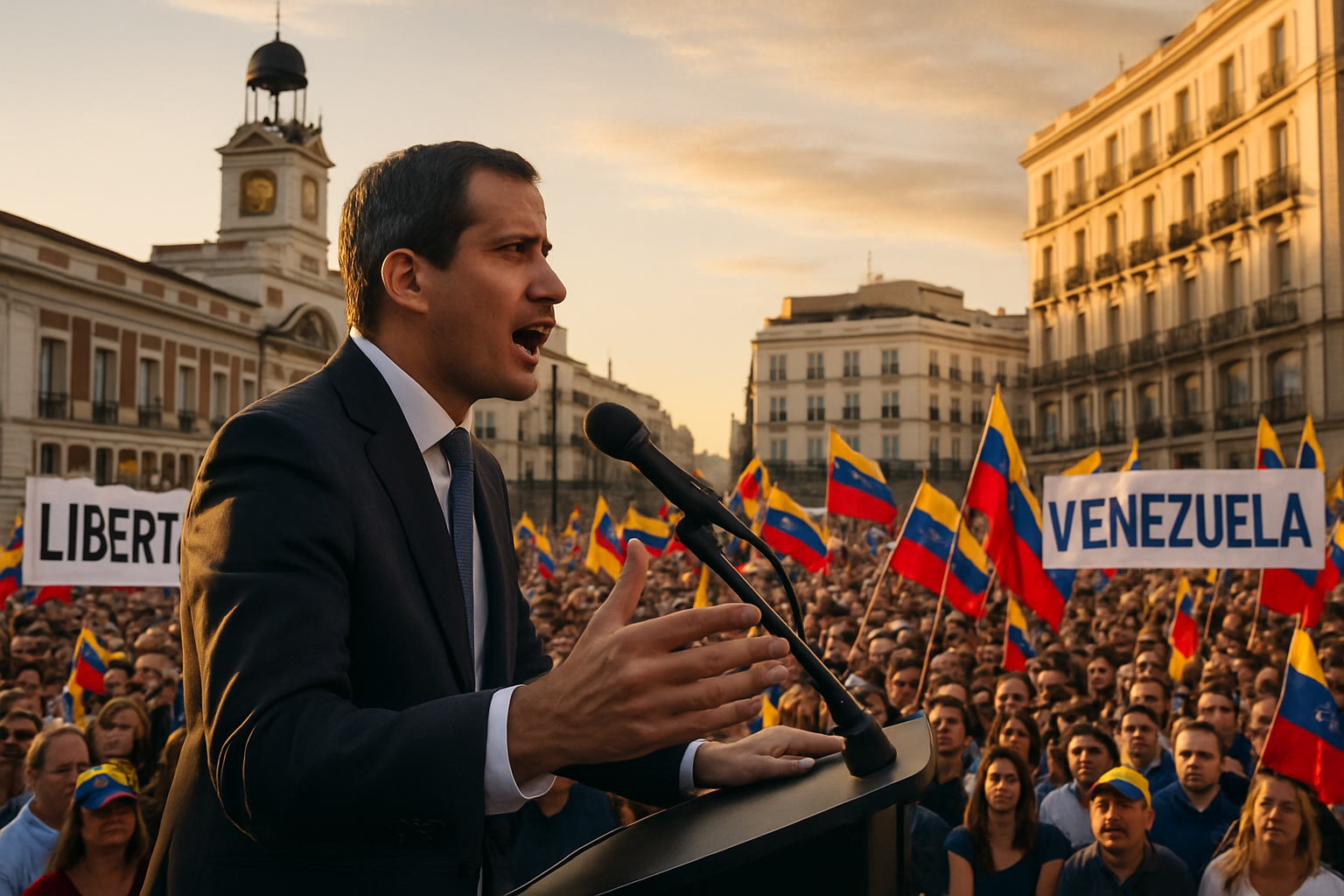
Venezuelan opposition leader and Nobel Peace Prize laureate María Corina Machado made her first public appearance in Europe in over a decade, addressing thousands of Venezuelan exiles in Madrid's Puerta del Sol while receiving the Spanish capital's Gold Medal and defending her controversial decision to give her Nobel Peace Prize to President Donald Trump.
The 58-year-old opposition leader, who emerged from clandestinity in Venezuela last December to collect her Nobel Peace Prize in Oslo, told the emotional crowd at Puerta del Sol that preparations for Venezuela's democratic future were underway. "Here we are beginning the return home," Machado declared to supporters who chanted "Elecciones, elecciones" (Elections, elections).
Historic Recognition in Madrid
Madrid regional president Isabel Díaz Ayuso awarded Machado the Community of Madrid's Gold Medal in an institutional ceremony, marking the highest honor bestowed by the Spanish capital. Speaking at the ceremony, Machado expressed profound gratitude: "For me it is an immense honor, on behalf of all Venezuelans, to receive this gold medal from the Community of Madrid, a recognition to each of the citizens of my country, inside and outside Venezuela who have risked their lives for freedom."
The ceremony represented the culmination of extensive meetings with Spanish leadership and national television appearances during Machado's first day in Spain. The Venezuelan diaspora converted her appearances into what local media described as "acts of hope" for the millions of Venezuelans living abroad.
Defending the Trump Nobel Decision
Machado used her Madrid platform to address international criticism over her decision to present her Nobel Peace Prize medal to President Trump following the U.S. military operation that captured former Venezuelan president Nicolás Maduro in January 2026.
"There is one leader in the world, one head of state in the world, one, who has put the lives of the citizens of his country at risk for the freedom of Venezuela, and that is Donald Trump."
— María Corina Machado, Nobel Peace Prize Laureate
The opposition leader expressed no regrets about the controversial gift, emphasizing Trump's unique role in Venezuela's democratic transition. This defense comes as some international observers questioned the appropriateness of transferring such a prestigious peace award to a political leader involved in military action.
Massive Diaspora Support
Thousands of Venezuelan exiles filled Madrid's iconic Puerta del Sol square for what many described as their first opportunity in years to see Machado in person. The crowd, waving Venezuelan flags and shouting "Libertad!" (Freedom!), demonstrated the continued mobilization capacity of Venezuela's diaspora community throughout Europe.
Machado's message resonated deeply with the exile community: "Many of you have found in this great nation welcome, affection, love, those who have learned, worked, saved, preparing for a day, preparing for that day." She referenced the long struggle spanning "these long 27 years" of preparation for democratic change.
Political Context and Diplomatic Tensions
The Madrid events occurred against the backdrop of complex Spanish domestic politics. Machado notably declined to meet with Spanish Prime Minister Pedro Sánchez, citing his participation in a progressive forum in Barcelona during the same weekend. Díaz Ayuso used the ceremony to criticize the Barcelona progressive summit, claiming "no European representative" attended despite the presence of prominent figures including the Italian Democratic Party leader and Swedish Social Democrat Stefan Löfven.
Machado's rejection of the Sánchez meeting highlighted ongoing tensions between Venezuela's opposition and European socialist leaders who have maintained more cautious approaches to the country's political transition.
Return to Venezuela Imminent
The Madrid rally marks a significant moment in Machado's carefully planned return to active Venezuelan politics. Having announced her intention to return to Venezuela "within weeks," her European appearance serves as a crucial test of international support for her democratic leadership role.
Machado promised her supporters that their preparations abroad would soon bear fruit: "Everything we have done during these long 27 years has been to prepare ourselves... Soon we will embrace each other in Venezuela, with our families and in freedom."
Ongoing Challenges in Venezuela
While celebrating diplomatic progress, significant challenges remain in Venezuela's democratic transition. Despite the release of over 750 political prisoners under the comprehensive 1999-2026 amnesty program—the most ambitious Latin American political reconciliation in recent history—approximately 600 political prisoners remain detained according to human rights organizations.
The Venezuelan economy continues facing severe difficulties with 475% inflation in 2025 (the world's highest rate), though oil exports have surged 60% to 800,000 barrels daily with the United States displacing China as the top customer following diplomatic relations restoration.
International Implications
Machado's Madrid appearance reinforces her role as the international face of Venezuela's democratic opposition while her defense of the Trump Nobel gift signals continued alignment with U.S. policy. This positioning may prove crucial as she prepares to return to Venezuela, where her ability to navigate between international support and domestic political realities will determine her effectiveness.
The Venezuelan opposition leader's European platform also demonstrates the global dimension of Venezuela's political transition, with diaspora communities serving as critical sources of international pressure and moral authority for democratic change.
Looking Ahead
As Machado concluded her Madrid agenda having received the capital's highest distinctions, her imminent return to Venezuela represents perhaps the most significant test of the country's democratic transition credibility. Her ability to operate freely in Venezuela will serve as a crucial indicator of genuine democratic progress versus cosmetic political reforms.
The success or failure of Machado's reintegration into Venezuelan politics will likely influence not only the country's democratic future but also serve as a template for Latin American reconciliation processes and post-authoritarian transitions throughout the region.