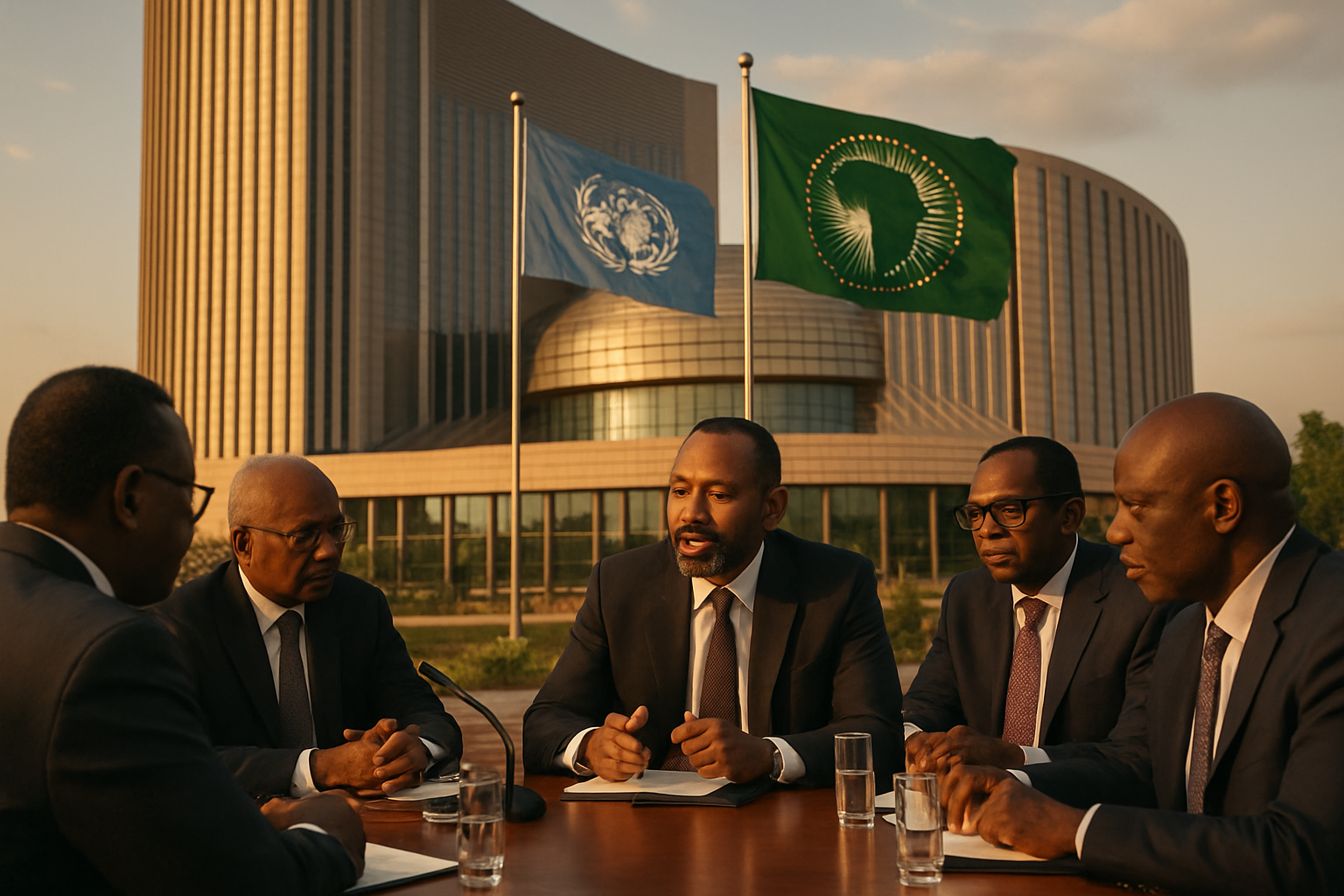
Former Senegal President Macky Sall's campaign to become the next UN Secretary-General has encountered significant obstacles as the African Union failed to formally endorse his candidacy and his own country publicly disavowed the bid.
The African Union Commission announced Friday, March 27, 2026, that a resolution to support Sall's candidacy was not adopted after 20 member states, including Senegal, broke the organization's "silence procedure" – effectively blocking the proposal. According to multiple African media reports, 14 countries explicitly objected to the resolution while six requested an extension without formally opposing it.
Unprecedented Diplomatic Isolation
The failure to secure continental backing represents an extraordinary diplomatic setback for Sall, whose candidacy was initially submitted by Burundi in March 2026 when that country held the rotating African Union presidency. The unusual arrangement of having another nation nominate Sall rather than Senegal itself had already raised eyebrows in diplomatic circles.
Adding to his challenges, Senegal's current government has officially distanced itself from the former president's UN ambitions. The administration of President Bassirou Diomaye Faye has made clear that it neither initiated nor endorses Sall's candidacy, creating the awkward situation of a candidate running without his home country's support.
"The African Union validated a candidacy from Addis Ababa without Dakar's agreement, creating diplomatic tension,"
— Cameroon media analysis
This diplomatic isolation extends beyond official channels. Political figures in Senegal have criticized the current government's stance, with some arguing that the country should support its former president regardless of domestic political differences.
Historical Context and Controversial Timing
Sall's candidacy comes amid what Portuguese media has described as allegations that he concealed Senegal's public debt during his presidency from 2012 to 2024. These accusations help explain why Burundi, rather than Senegal, submitted his nomination – a mechanism that allowed circumvention of potential domestic political obstacles.
The former president's bid represents a significant moment in the UN's selection process, as the organization prepares to replace current Secretary-General António Guterres when his term expires in January 2027. If successful, Sall would become only the second African to lead the UN since Egypt's Boutros Boutros-Ghali held the position from 1992 to 1996.
Campaign Continues Despite Setbacks
Despite the African Union's failure to endorse his candidacy, Sall's team announced that his campaign remains active. His communication team issued a statement Friday confirming that "the candidacy for the position of UN Secretary-General continues" despite the continental setback.
The statement acknowledged that the AU Commission had informed them the resolution failed to gain adoption but emphasized that alternative pathways remain available for pursuing the nomination.
Broader Implications for African Diplomacy
The rejection of Sall's candidacy highlights deeper tensions within African continental politics. Nigeria has also reportedly expressed reservations about the nomination, adding another major African power to the list of countries questioning the former Senegalese president's suitability.
The situation reflects the complex dynamics of African Unity versus national interests, particularly when former leaders seek international positions while facing domestic criticism. The AU's inability to present a unified continental candidate could weaken Africa's influence in the global competition for the UN's top job.
"This attitude translates a major inconsistency and marks a retreat from principles of dignity and respect that Senegal deserves,"
— Tahirou Sarr, critic of government position
Political Divisions at Home
Within Senegal, political reactions have been sharply divided along party lines. The opposition Alliance for the Republic (APR), Sall's former party, has mounted a defense of his international ambitions. APR spokesperson Alioune Badara Coulibaly argued that Sall's candidacy represents legitimate international recognition of his experience and capabilities.
However, critics like Tahirou Sarr have denounced the current government's failure to support the former president, arguing that "Senegal deserves better" and calling the position "incoherent." These domestic divisions have complicated what should typically be a moment of national pride and unity around a citizen's international recognition.
International Selection Process
The UN Secretary-General selection process involves extensive consultations among member states, with particular influence wielded by the five permanent members of the Security Council who hold veto power. The traditional principle of regional rotation suggests that an African candidate might have an advantage following the tenure of Portuguese António Guterres.
However, the lack of unified African support significantly weakens any continental candidate's prospects. Previous successful Secretary-General campaigns have typically required strong regional backing as a foundation for building broader international support.
Legacy and Future Prospects
Macky Sall's presidency was marked by significant infrastructure development in Senegal, regional diplomatic engagement, and participation in various African Union initiatives. His supporters point to his experience in continental governance and peacekeeping efforts as qualifications for global leadership.
Yet his current predicament illustrates how domestic political transitions can complicate former leaders' international ambitions. The allegations surrounding debt transparency and the political opposition he faces at home have created obstacles that extend well beyond Senegal's borders.
As the UN selection process moves forward throughout 2026, Sall's team will need to overcome both the lack of African Union endorsement and the absence of home country support – challenges that may prove insurmountable in the highly competitive race to lead the world's premier international organization.
The coming months will reveal whether alternative diplomatic channels can salvage his candidacy or whether the former president's UN ambitions will remain a case study in how domestic political considerations can derail international diplomatic careers.