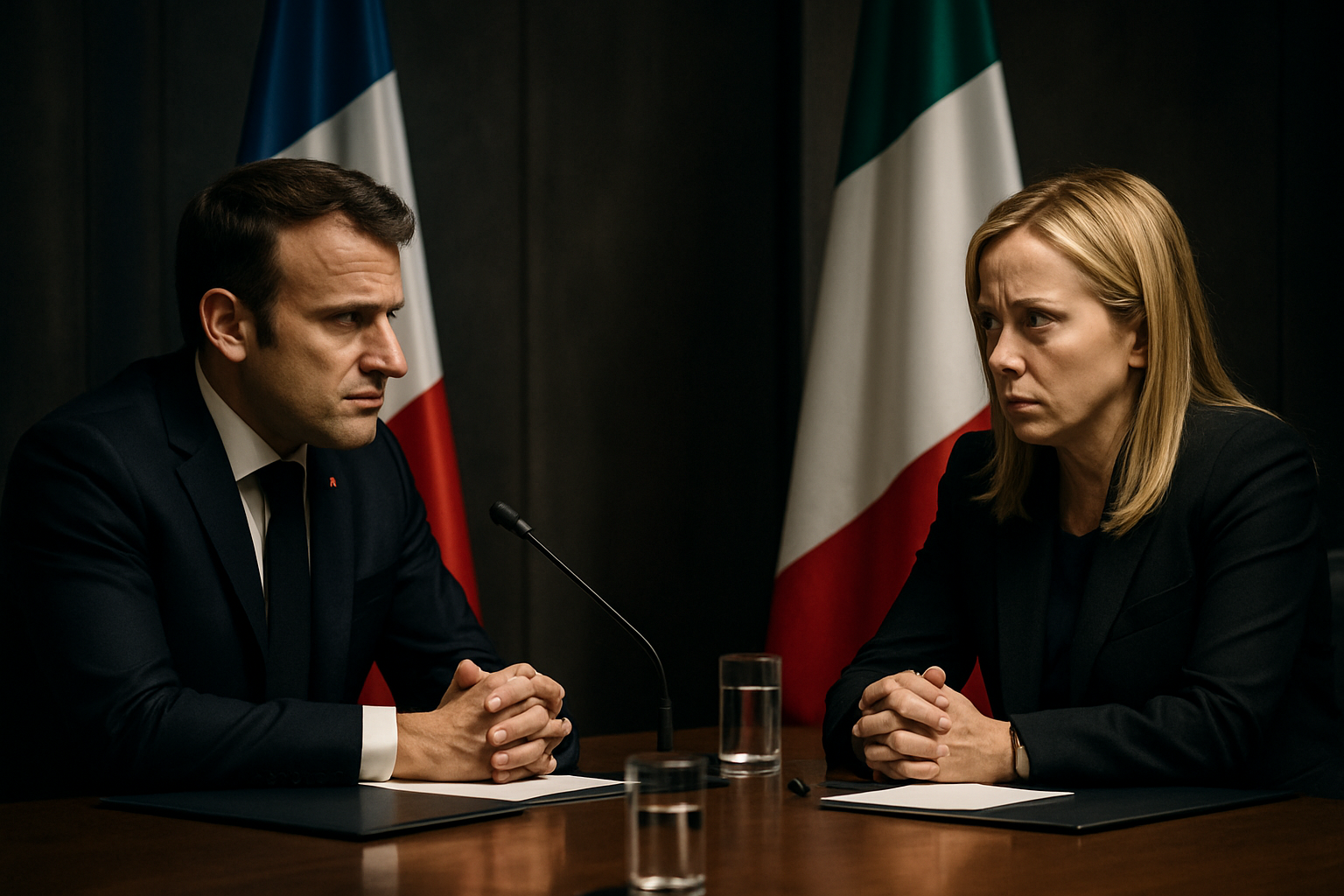
A war of words erupted between French President Emmanuel Macron and Italian Prime Minister Giorgia Meloni on Thursday over the killing of a French far-right activist, marking a significant diplomatic clash between the two European leaders over Italy's commentary on France's internal affairs.
President Macron directly challenged Meloni to stop "commenting on what is happening in other people's countries" after the Italian Prime Minister expressed shock at the fatal beating of 23-year-old Quentin Deranque in Lyon. The exchange represents one of the most public diplomatic spats between France and Italy in recent years, highlighting growing tensions over political violence and national sovereignty within the European Union.
The Lyon Incident That Sparked International Tension
Quentin Deranque died from head injuries after being attacked by at least six people last week on the sidelines of a far-right protest at a university in Lyon. The 23-year-old activist was participating in demonstrations when the violent confrontation occurred, according to French authorities who have opened an investigation into the killing.
The incident has become deeply symbolic within France's polarized political landscape, occurring during a period of heightened tensions between far-right and far-left groups. Lyon, France's third-largest city, has experienced increased political confrontations in recent months, with this latest incident representing a dangerous escalation of political violence.
Meloni's Response Triggers Diplomatic Crisis
Italian Prime Minister Meloni's expression of shock over Deranque's death was characterized by French officials as inappropriate interference in domestic affairs. Italian sources described Meloni's statements as showing "proximity to the French people, who were affected by this terrible event," while emphasizing there was "absolutely no interference in France's internal affairs."
However, Macron's response was swift and pointed. Speaking from the Élysée Palace, the French President suggested that if "each person minded their own business, things would go very well," in what Romanian media described as a message that Meloni was meddling in France's internal affairs.
"We ask that Italy not comment on France's affairs after this activist remark. Each country should focus on its own challenges."
— Emmanuel Macron, French President
International Reactions and Broader Implications
The diplomatic exchange has attracted significant international attention, with media across Europe and Asia covering the unprecedented public dispute between two major EU leaders. Greek media emphasized the severity of the clash, while Japanese outlets described it as highlighting "tensions that flare between European allies over domestic political violence."
Slovak media noted that Meloni's statements about the murder of the French right-wing activist provoked "a sharp reaction from President Macron," who demanded Italy not interfere in France's internal affairs. This coverage underscores how the diplomatic spat has resonated beyond France and Italy's borders.
The incident occurs against a backdrop of rising political violence across Europe, with authorities in multiple countries expressing concern about the escalation of confrontations between opposing political groups. The Lyon killing represents a tragic example of how political tensions can turn deadly.
Historical Context of Franco-Italian Relations
Relations between France and Italy have experienced periodic tensions despite their shared EU membership and geographic proximity. Previous disagreements have centered on migration policy, with Italy often criticizing France's approach to handling migrants attempting to cross their shared border.
This latest diplomatic crisis, however, represents a more direct challenge to the principle of national sovereignty within the EU framework. Macron's public rebuke of Meloni suggests deep French sensitivity about foreign commentary on domestic political violence, particularly from a leader known for her strong nationalist positions.
The exchange also highlights the complex dynamics within European right-wing politics, where leaders like Meloni must balance their domestic political positioning with diplomatic relationships across the continent.
European Union's Response to Political Violence
The diplomatic clash comes as the European Union grapples with rising political extremism and violence across member states. The Lyon incident represents part of a broader pattern of political confrontations that have increasingly turned violent in various European cities.
European officials have expressed concern about the normalization of political violence and its potential impact on democratic institutions. The public nature of the Macron-Meloni dispute adds another layer of complexity to these challenges, as it demonstrates how domestic political violence can quickly become a source of international diplomatic tension.
The incident also raises questions about the appropriate level of solidarity and commentary that European leaders should provide when political violence occurs in neighboring countries, particularly when such events involve ideologically sensitive issues.
Implications for European Unity
The diplomatic spat between Macron and Meloni occurs at a time when European unity faces multiple challenges, from migration policy disagreements to differing approaches to relations with Russia and China. This latest incident adds to concerns about the cohesion of European leadership during a period of global instability.
French officials have emphasized that while they welcome international concern about violence, they view direct political commentary from fellow EU leaders as crossing diplomatic boundaries. Italian officials, meanwhile, maintain that expressing solidarity with victims of political violence represents basic humanitarian decency rather than political interference.
The resolution of this diplomatic crisis will likely require careful navigation by both leaders to restore working relations while maintaining their domestic political credibility. The incident serves as a reminder of how quickly local political violence can escalate into international diplomatic incidents within the interconnected European political landscape.
Looking Forward
As investigations continue into the Lyon killing, both France and Italy will need to manage the diplomatic fallout from this public exchange. The incident highlights the delicate balance European leaders must maintain between expressing solidarity with neighboring countries and respecting national sovereignty over domestic affairs.
The broader implications of this diplomatic crisis extend beyond Franco-Italian relations, potentially influencing how European leaders approach commentary on domestic political issues across the continent. As political tensions continue to rise across Europe, the management of such diplomatic disagreements will become increasingly important for maintaining European unity and cooperation.