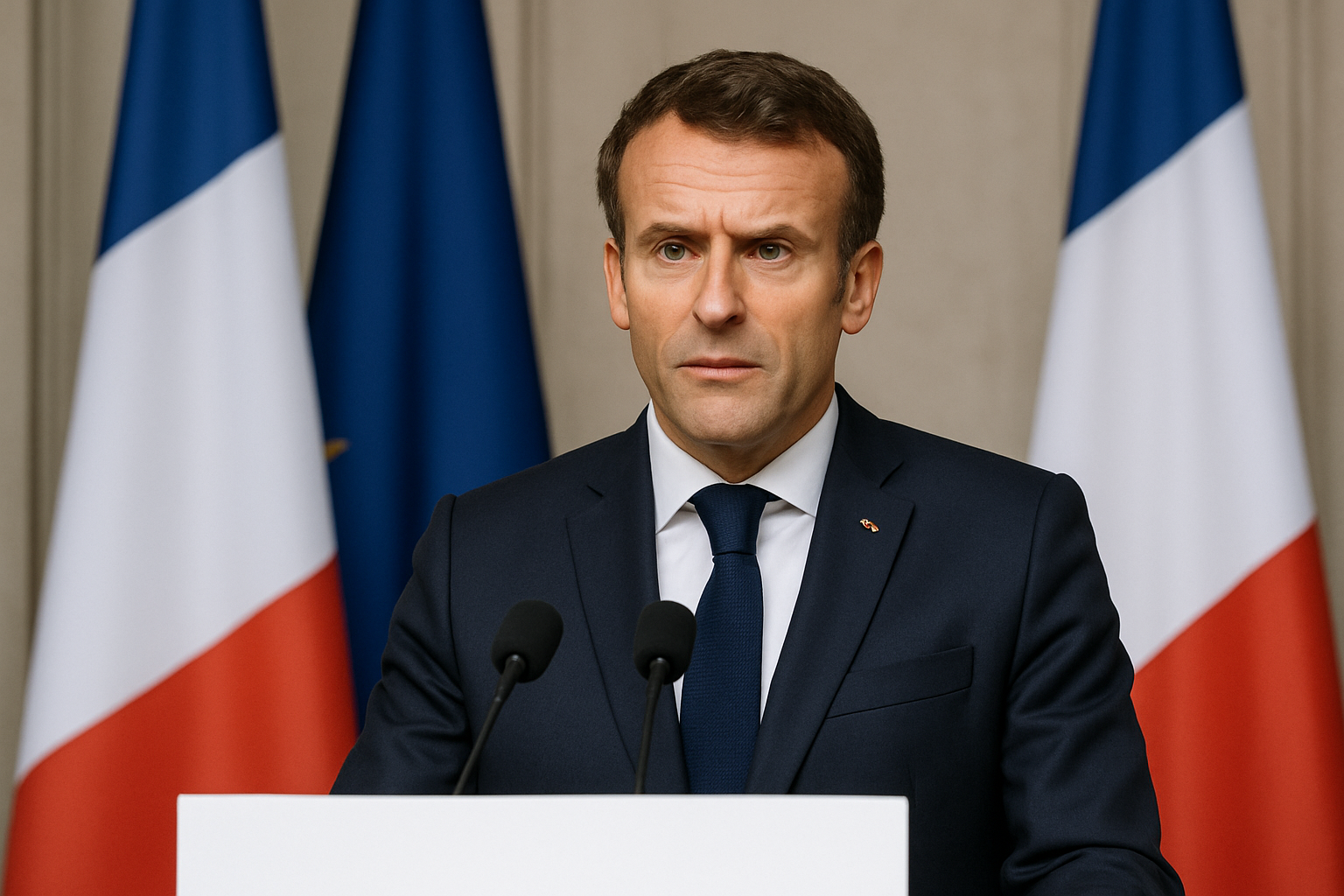
French President Emmanuel Macron delivered a measured but firm rebuke to Donald Trump's personal attacks against his wife Brigitte, dismissing the American president's remarks as "neither elegant nor appropriate" following inappropriate comments made during a private lunch event.
The diplomatic incident unfolded when Trump, speaking during a Wednesday lunch meeting, mocked the French presidential couple with crude personal observations. According to French media reports from Le Monde, Trump stated that "Macron, whose wife treats him extremely badly... he is still recovering from the punch he took to the jaw," referencing a widely publicized incident from May 2025 when television cameras captured Brigitte Macron appearing to strike her husband's face before he exited the presidential aircraft during a Southeast Asian tour.
Personal Attacks Cross Diplomatic Red Lines
The comments represent an unprecedented breach of diplomatic protocol between allied nations, with Trump's remarks targeting not only a sitting head of state but his spouse in explicitly demeaning terms. French officials characterized the attack as crossing fundamental boundaries of international discourse, even between leaders who have experienced tensions.
Speaking to reporters, Macron maintained presidential dignity while making clear such personal commentary had no place in international relations. His response, described by multiple sources as restrained yet decisive, emphasized that personal attacks on spouses violated basic diplomatic norms regardless of political disagreements between nations.
"Such remarks are neither elegant nor at the proper level expected between leaders of democratic nations."
— Emmanuel Macron, President of France
Context of Deteriorating France-US Relations
The personal insults come amid broader diplomatic tensions that have strained the traditionally strong France-US alliance. Spain's recent rejection of US military base access for Iranian operations, which Trump threatened with trade retaliation, has created ripple effects across NATO as European allies increasingly question American diplomatic conduct.
French-American relations have faced particular challenges over Middle Eastern policy differences, with France maintaining more cautious approaches to military interventions while Trump has pursued aggressive stances, particularly regarding Iran. The personal nature of Trump's latest comments marks a significant escalation from policy disagreements to character assassination.
International media coverage highlighted the incident as emblematic of Trump's unconventional diplomatic style, which has repeatedly caused friction with traditional allies. European officials privately expressed concern that such personal attacks undermined the foundation of respectful discourse necessary for effective multilateral cooperation.
European Solidarity and International Response
The incident has generated broader European solidarity with France, as other EU leaders view Trump's personal attacks as symptomatic of deteriorating American diplomatic standards. German and British officials, while avoiding direct criticism, emphasized the importance of maintaining respectful dialogue between allied nations.
Swedish media coverage noted Trump's use of a French accent while making the disparaging remarks, adding an element of mockery that further inflamed diplomatic tensions. European analysts described the incident as part of a pattern where Trump's personal grievances increasingly influence international relations.
The timing proves particularly sensitive as France navigates ongoing domestic political challenges following the February Lyon violence crisis that claimed the life of Quentin Deranque. French officials have worked to maintain international credibility while managing internal political pressures, making Trump's personal attacks especially unwelcome.
Impact on NATO and Alliance Structures
Defense experts worry that personal diplomatic breakdowns between key NATO allies could undermine collective security cooperation at a critical moment. With ongoing conflicts in Ukraine and Middle Eastern tensions, the alliance requires strong Franco-American coordination that personal animosity between leaders could jeopardize.
The incident follows Spain's rejection of US military base access for Iranian operations, demonstrating growing European resistance to Trump's foreign policy approaches. France's measured response suggests Macron seeks to maintain alliance structures while establishing clear boundaries regarding acceptable diplomatic discourse.
NATO officials privately expressed concern that repeated personal conflicts between Trump and European leaders could erode the institutional trust necessary for effective military cooperation. The alliance has weathered previous diplomatic storms, but sustained personal attacks create longer-term relationship damage.
Broader Implications for International Diplomacy
Diplomatic historians note that while leaders have privately disagreed throughout history, public personal attacks on spouses represent an almost unprecedented breach of international protocol. The incident raises questions about whether traditional diplomatic norms can withstand leaders who reject conventional boundaries.
French diplomatic sources emphasized that while policy differences remain negotiable, personal respect forms the foundation of international relations. Macron's response aims to establish that crossing into personal territory will face consistent pushback from European allies.
The crisis demonstrates how personal conduct increasingly influences international relations in an era of social media and instant global communication. Trump's remarks, made during what was described as a private lunch, quickly became international news, showing how traditional diplomatic privacy no longer exists.
Looking Forward: Damage Control and Diplomatic Recovery
French officials indicate that while they will continue working with the United States on shared interests, Trump's personal conduct has created additional friction requiring careful management. The incident may prompt European leaders to develop new protocols for handling unconventional American diplomatic behavior.
Macron's restrained response appears designed to maintain moral authority while avoiding escalation that could further damage Franco-American cooperation. French diplomatic strategy seems focused on demonstrating European standards while leaving room for eventual relationship repair.
The long-term impact on France-US relations will likely depend on whether such personal attacks become normalized or remain isolated incidents. European unity in supporting France may signal to Trump that personal diplomatic attacks face collective resistance rather than isolated opposition.
As both nations face complex global challenges requiring cooperation, the incident serves as a reminder that personal respect remains fundamental to effective international relations, regardless of policy disagreements or political differences between democratic allies.