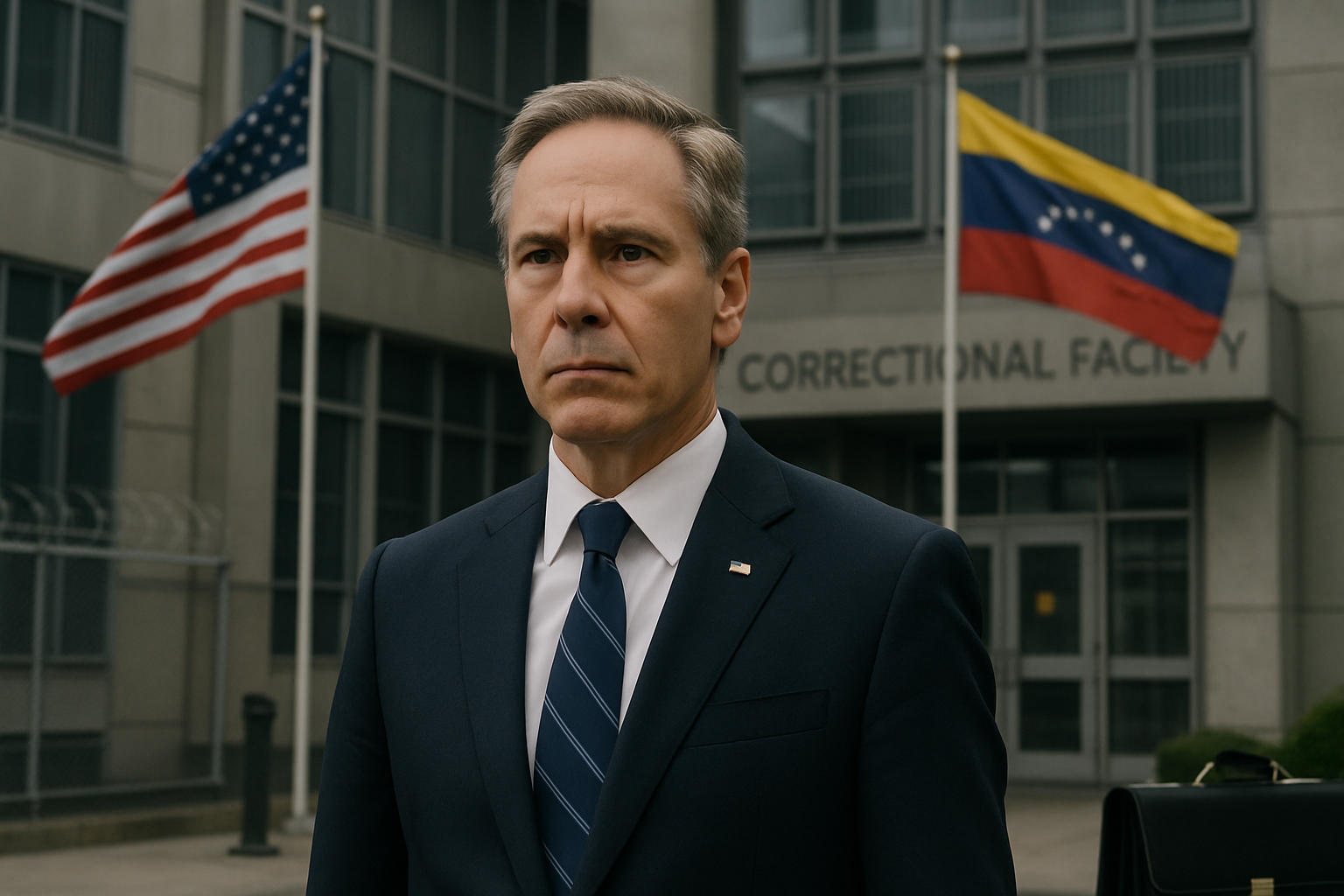
Former Venezuelan president Nicolás Maduro and his wife Cilia Flores have received their first consular visit while detained in New York federal custody, confirmed Venezuela's Interior and Justice Minister Diosdado Cabello, as authorities approved a new amnesty protocol to expedite the release of remaining political prisoners.
The consular visit, conducted on Friday according to Interior Minister Cabello's announcement, represents the first official diplomatic contact with the deposed leader since his capture by U.S. forces on January 3, 2026. Both Maduro and Flores remain in federal custody in New York facing drug trafficking and corruption charges.
Simultaneously, Venezuelan Prosecutor General Tarek William Saab announced the approval of a comprehensive implementation protocol for the country's historic amnesty law, though the document remains unpublished. The protocol aims to "guarantee that all organs of justice administration execute quickly and effectively the application of benefits for persons related to the established facts" under the amnesty legislation.
Diplomatic Engagement Despite Detention
The consular visit marks a significant diplomatic development in the complex relationship between Venezuela's interim government under Acting President Delcy Rodríguez and the detained former leadership. Interior Minister Cabello's confirmation of the visit suggests ongoing adherence to international diplomatic protocols despite the unprecedented circumstances of Maduro's detention.
Sources familiar with the detention arrangements indicate that both Maduro and Flores are being held in standard federal facilities, with access to legal representation and now, consular services. The visit likely focused on ensuring their well-being and discussing legal proceedings related to the drug trafficking charges they face.
"This represents a continuation of diplomatic norms even under extraordinary circumstances."
— Diplomatic Source, speaking on condition of anonymity
Amnesty Protocol Implementation Challenges
The announcement of the new amnesty protocol comes as Venezuela's comprehensive political reconciliation effort faces implementation hurdles. The National Assembly unanimously passed historic amnesty legislation in February covering political offenses from 1999-2026, potentially affecting hundreds of remaining political prisoners.
However, the process has encountered delays due to disagreements over Article 7, which requires prisoners to "present themselves to justice." The Chavista party has demanded prisoners acknowledge alleged crimes for release, while opposition groups reject this requirement, arguing detainees are persecution victims rather than criminals.
Prosecutor General Saab's announcement suggests authorities are moving to streamline the implementation process, though the protocol's specific provisions remain unclear as the document has not been made public. The protocol reportedly involves Interior Minister Cabello in reviewing cases previously excluded from amnesty consideration.
Political Prisoner Status Update
According to human rights organization Foro Penal, over 600 political prisoners remain detained despite the release of more than 400 individuals since January 2026 under the interim government's amnesty program. The releases have included prominent opposition figures, journalists, and activists detained under the previous regime.
Recent releases included Juan Pablo Guanipa, a close ally of Nobel Peace Prize laureate María Corina Machado, though he was subsequently placed under house arrest with electronic monitoring. The mixed implementation has raised concerns about the genuine nature of the reconciliation process versus cosmetic reforms.
Civil society organizations have expressed cautious support for the releases while demanding more comprehensive implementation. Cofavic, a prominent human rights group, has emphasized that releases constitute "rights restitution, not State favor," while calling for broader guarantees against future persecution.
International Context and Diplomatic Engagement
The developments occur amid unprecedented U.S.-Venezuela diplomatic engagement following Maduro's removal. Acting President Delcy Rodríguez has held high-level meetings with U.S. Chargé d'Affaires Laura Dogu at Miraflores Palace, representing the highest diplomatic contact between the countries since 2019.
Venezuela's oil exports have surged 60% to 800,000 barrels daily since January, with the United States displacing China as the country's top oil customer. This economic transformation accompanies the political transition, with major American companies including Chevron, BP, and Shell authorized to expand operations.
Former Spanish Prime Minister José Luis Rodríguez Zapatero continues to mediate reconciliation efforts in Caracas, while Cardinal Baltazar Porras has organized nationwide prayer vigils supporting the peace process. The international community views the amnesty implementation as a critical test of Venezuela's democratic transition credibility.
Legal and Constitutional Framework
The amnesty law covers 27 years of political conflict spanning the entire Chávez-Maduro era, representing one of the most comprehensive political reconciliation efforts in recent Latin American history. However, Article 9 excludes those who "promoted attacks on national territory by foreign states or corporations," maintaining certain limitations on the amnesty's scope.
Legal experts have raised concerns about the law's temporal limitations and exclusions, with some arguing it represents a "selective measure ignoring full persecution history." The new protocol approved by Prosecutor General Saab may address some implementation challenges, though transparency remains limited.
The Venezuelan Constitution forbids amnesty for certain crimes, including human rights violations and crimes against humanity, which has shaped the law's exclusions. Opposition leaders have questioned whether an amnesty is necessary at all, arguing that political prisoners are innocent victims of persecution rather than criminals requiring pardons.
Regional Implications and Template Potential
Venezuela's amnesty process is being closely monitored as a potential template for democratic transitions across Latin America. The Dominican Republic has reopened diplomatic and commercial relations with Venezuela, while Brazil and the European Union have expressed cautious support for the transition.
The success or failure of the implementation could influence similar reconciliation efforts in other post-authoritarian contexts. Regional observers note that genuine reconciliation requires not only prisoner releases but also institutional reforms to prevent future persecution cycles.
However, cases like Guanipa's house arrest and the exclusion of certain detainees have raised questions about whether the changes represent genuine democratic reform or tactical adjustments to maintain international legitimacy while preserving authoritarian control mechanisms.
Challenges Ahead
The implementation of the amnesty protocol faces several critical challenges. Reintegration guarantees for released prisoners remain unclear, as do monitoring mechanisms to prevent future persecution. Safe return provisions for political exiles have not been adequately addressed, limiting the reconciliation process's comprehensiveness.
Families of political prisoners have maintained vigils and hunger strikes outside detention centers, demanding complete and unconditional releases. The Committee for Liberation of Political Prisoners (CLIPP) has organized protests warning that government indifference puts demonstrators at "grave risk."
The broader institutional reforms necessary for sustainable democratic transition - including justice system restructuring, press freedom guarantees, and protection of opposition rights - remain largely unaddressed. International observers emphasize that prisoner releases, while significant, represent only the first step in a comprehensive democratic transformation.
Future Prospects
The combination of Maduro's consular visit and the new amnesty protocol suggests a complex balancing act between international diplomatic norms and domestic political reconciliation. The interim government must navigate between satisfying international expectations for democratic reform and managing internal pressures from various political factions.
The unpublished nature of the amnesty protocol raises transparency concerns among civil society organizations, though government officials indicate it will expedite the review and release process for eligible prisoners. The involvement of Interior Minister Cabello in reviewing excluded cases suggests a high-level commitment to addressing implementation challenges.
Success in implementing the amnesty law could provide momentum for broader democratic reforms and international recognition of Venezuela's transition. However, failure to deliver comprehensive prisoner releases and institutional guarantees risks undermining the credibility of the entire reconciliation process.
As Venezuela continues its complex transition from authoritarianism to democracy, the world watches closely to see whether this ambitious reconciliation effort can succeed where others have failed, potentially offering a model for peaceful political transformation in an increasingly polarized global environment.