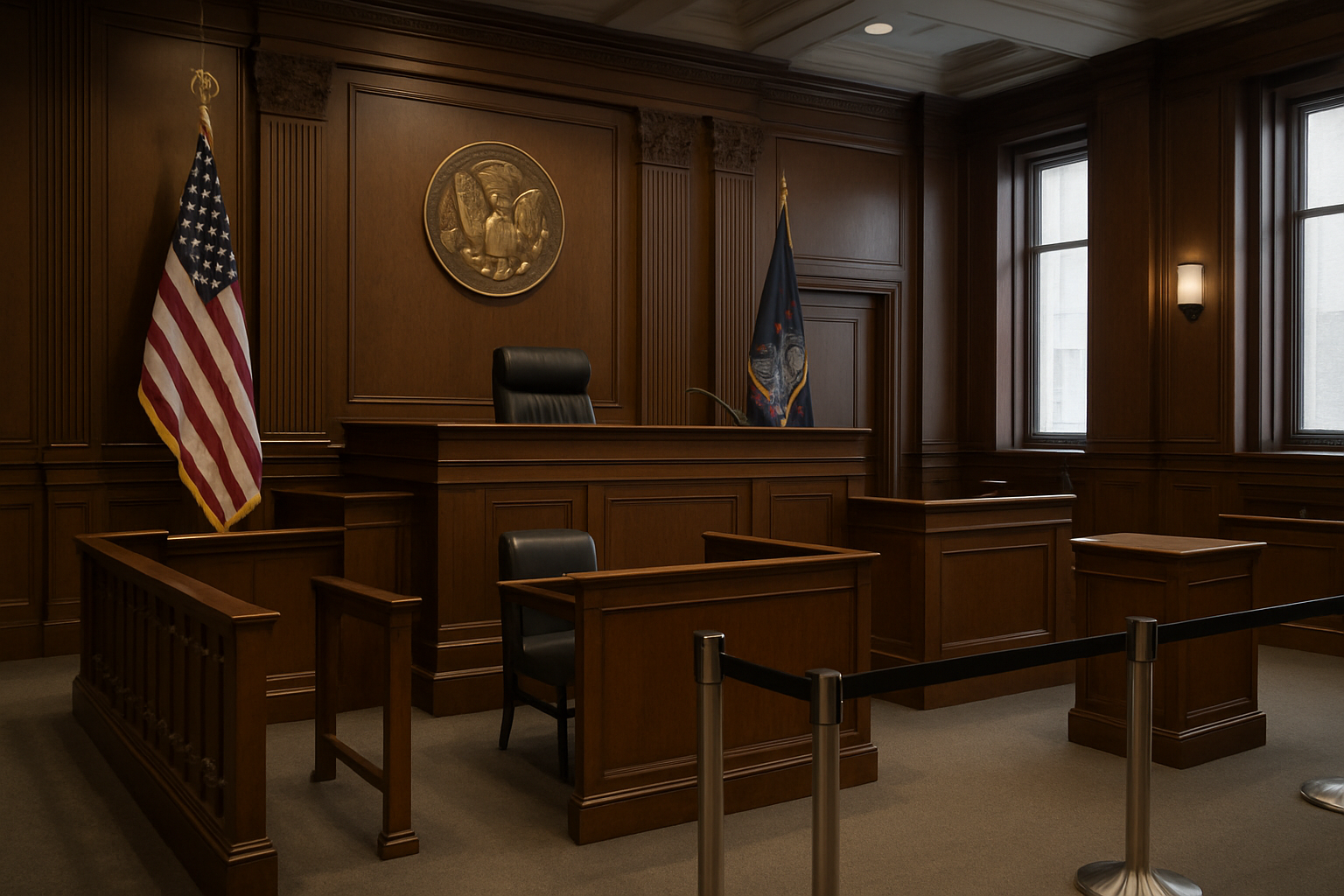
Former Venezuelan President Nicolás Maduro made his second court appearance in New York federal court on Thursday, facing drug trafficking and terrorism charges nearly three months after his dramatic capture by US special forces in Caracas.
The 63-year-old former leader, who governed Venezuela from 2013 until his January 3, 2026 capture, appeared before Judge Alvin Hellerstein as his defense team argued that the US government is systematically undermining his ability to mount an adequate legal defense.
Maduro's legal representatives contend that prosecutors are blocking access to Venezuelan state funds that could be used for his defense, arguing the US government refuses to recognize his legitimacy as Venezuela's former president. The former leader has pleaded not guilty to all charges against him.
Rare Narcoterrorism Statute Being Tested
The case centers on the rarely-used 2006 narcoterrorism statute, which was designed to target drug trafficking activities tied to what the United States considers terrorism. The law has produced only four trial convictions since its enactment, with two later overturned due to witness credibility issues.
Legal experts note that the statute's limited track record makes Maduro's case particularly significant for future prosecutions involving the intersection of drug trafficking and alleged terrorist activities.
"This represents one of the most high-profile tests of the narcoterrorism law since its creation," said a federal prosecutor familiar with similar cases. "The complexity of proving both drug trafficking and terrorist connections simultaneously has historically presented challenges for prosecutors."
Detention Conditions and Legal Challenges
Maduro is being held in solitary confinement at a federal prison facility, reportedly for security reasons due to concerns about potential attacks from other Venezuelan nationals in the prison system. His wife, Cilia Flores, is detained separately on related charges.
The former president's legal team argues that their client's detention conditions, combined with the government's refusal to allow access to Venezuelan state assets for legal fees, constitutes a violation of his constitutional right to adequate counsel.
"The United States is attempting to obstruct the defense through procedural manipulation and financial restrictions."
— Defense Attorney Statement
During Thursday's hearing, Judge Hellerstein indicated he would review the defense motions regarding access to legal funding and potential government interference. The judge initially scheduled the hearing to allow Maduro's legal team time to review evidence and establish a timeline for legal motions ahead of a potential trial date.
Political Context and Diplomatic Implications
Maduro's court appearance comes as Venezuela undergoes a dramatic political transformation under Acting President Delcy Rodríguez. Since taking power following Maduro's capture, the interim government has released over 750 political prisoners and restored diplomatic relations with the United States after a seven-year break.
The case has created an unusual legal paradox where the defendant claims inability to pay for legal defense despite US intelligence agencies documenting vast hidden wealth accumulated during his presidency. Venezuelan authorities under the new government have been cooperating with US justice officials, marking a sharp departure from the previous administration's hostility toward American law enforcement.
Outside the New York courthouse, competing groups of demonstrators reflected the deep divisions within the Venezuelan diaspora. Supporters displayed signs reading "Free President Maduro and Cilia Flores," while opposition voices could be heard chanting slogans against the former Chavista leader.
Broader Legal and Regional Significance
The prosecution represents part of a broader US strategy targeting what authorities describe as a criminal network that operated at the highest levels of the Venezuelan government. The charges encompass allegations of drug trafficking operations that allegedly moved tons of narcotics through Venezuelan territory toward US markets.
Intelligence sources indicate that the case could potentially implicate other high-ranking officials from the former Maduro administration, with investigators examining financial networks that allegedly enabled the transportation and distribution of illegal narcotics.
The proceedings are being closely monitored throughout Latin America as a potential precedent for how international courts handle cases involving former heads of state accused of criminal activities during their tenure.
Economic and Energy Transformation
Meanwhile, Venezuela's interim government has presided over significant economic changes, with oil exports surging 60% to 800,000 barrels daily as the United States displaced China as Venezuela's top customer. Energy Secretary Chris Wright's historic February visit to Caracas resulted in comprehensive cooperation agreements that ended the 2019 US oil embargo.
The economic transformation has occurred alongside political reconciliation efforts, with the Venezuelan National Assembly unanimously approving a historic amnesty law covering political offenses from 1999-2026. However, civil society groups note that over 600 political prisoners remain detained despite the releases.
International Cooperation and Justice
The Maduro case exemplifies evolving international cooperation mechanisms for addressing transnational organized crime. The successful capture operation required coordination between US military forces and Venezuelan security agencies under the new government, demonstrating how diplomatic realignments can enable previously impossible law enforcement cooperation.
Legal observers note that the case tests democratic institutions' capacity to deliver justice while maintaining due process protections, even for defendants who previously held the highest levels of political power.
"This case represents a fundamental test of whether our legal system can fairly prosecute complex international criminal networks while preserving constitutional safeguards."
— Former Federal Prosecutor
The next hearing is scheduled for April 15, 2026, when the court will address pretrial motions and potentially set a trial date. The case is expected to continue for months, with both prosecution and defense teams preparing for what could become one of the most significant narcoterrorism trials in US legal history.
As Venezuela continues its political transition and regional diplomatic relationships evolve, the outcome of Maduro's trial will likely influence how similar cases involving former government officials are handled in international courts, potentially setting precedents for democratic accountability in an era of increasingly sophisticated transnational criminal networks.