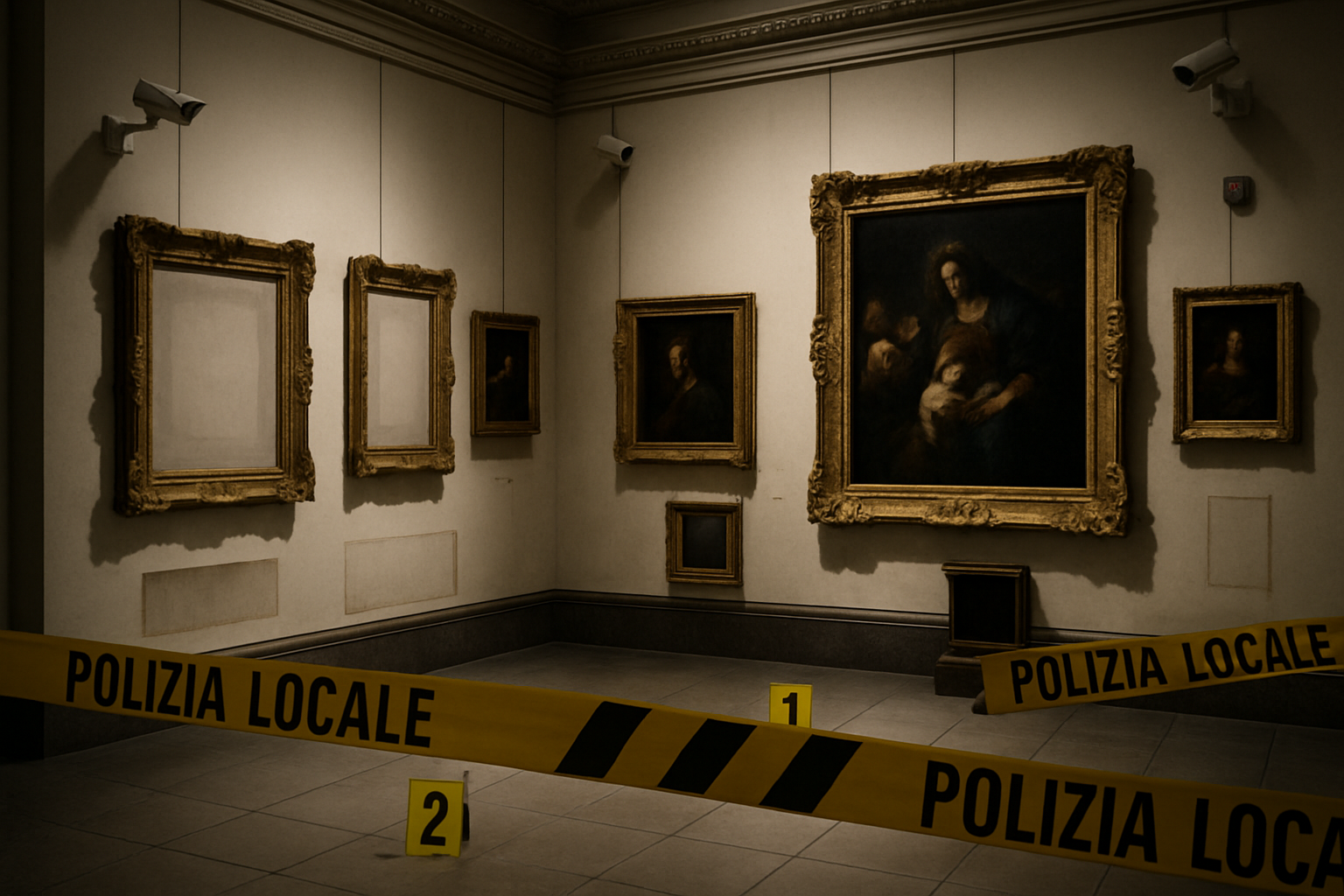
Four masked intruders executed one of Italy's most sophisticated art thefts in recent years, stealing three masterpieces by French Impressionist and Post-Impressionist masters from the prestigious Fondazione Magnani-Rocca near Parma in a meticulously planned operation that lasted less than three minutes.
The thieves struck during the night between March 22 and 23, 2026, targeting the museum's villa in Mamiano di Traversetolo, approximately 15 kilometers from Parma in northern Italy. The theft went undetected for nearly a week before being announced publicly on March 29, highlighting the professional nature of the operation.
Stolen Masterpieces
The stolen works represent some of the finest examples of French artistic mastery held in Italian collections:
- "Les Poissons" (The Fish) by Pierre-Auguste Renoir (c. 1917) - An oil on canvas from the artist's late period, valued at several million euros
- "Still Life with Cherries" by Paul Cézanne (1885-1887) - A classic Post-Impressionist still life demonstrating the artist's revolutionary approach to form and color
- "Odalisque on the Terrace" by Henri Matisse - An exquisite watercolor showcasing the master's fascination with Orientalist themes
Portuguese media reports suggest the collective value of the stolen works may reach nine million euros, though official valuations have not been disclosed by authorities.
A Textbook Professional Operation
According to Italian investigators and museum officials, the theft demonstrated hallmarks of a highly organized criminal enterprise with intimate knowledge of the museum's layout and security systems. The four intruders bypassed less valuable artworks scattered throughout the villa, targeting specifically these three French Impressionist and Post-Impressionist pieces hanging together in a ground-floor gallery.
"The theft was a very well-organized action that lasted less than three minutes."
— Fondazione Magnani-Rocca statement
The speed and precision of the operation suggests extensive reconnaissance and planning. Sources familiar with the investigation indicate the thieves demonstrated detailed knowledge of the museum's security protocols, timing their entry to minimize exposure to surveillance systems and maximize their escape window.
Investigation Underway
Italy's elite Carabinieri Cultural Heritage Protection Unit, known globally for their expertise in art crime recovery, has taken charge of the investigation. This specialized unit, which has recovered thousands of stolen artworks over decades, is treating the case as a priority given the international significance of the stolen pieces.
The delay in discovering and announcing the theft has raised questions about the museum's security procedures, though officials have not disclosed specific details about how the theft went undetected for nearly a week. Russian media reports indicate that alarm systems did eventually activate, but by then the perpetrators had already escaped.
The stolen works have been entered into international databases maintained by Interpol, the FBI's Art Crime Team, and the Art Loss Register, creating a global network to track any attempts to sell or move the pieces.
Cultural Heritage at Risk
The Fondazione Magnani-Rocca, established in the villa of collector Luigi Magnani Rocca, houses one of Italy's finest private art collections. The museum's collection spans from medieval works to contemporary pieces, with particular strength in French Impressionist and Post-Impressionist paintings that made it an attractive target for sophisticated art thieves.
This theft occurs during what cultural experts have termed the "2026 Cultural Renaissance," a period of unprecedented global cultural activity and increased public engagement with arts institutions. However, this heightened profile has also made prestigious collections more attractive targets for international criminal networks specializing in art theft.
Growing Concerns About Museum Security
The Parma heist comes amid broader concerns about the vulnerability of European cultural institutions. Recent incidents have highlighted the challenges museums face in balancing public accessibility with security requirements. The theft demonstrates how professional criminal organizations can exploit even sophisticated security systems through careful planning and insider knowledge.
European law enforcement agencies have noted an increase in highly organized art thefts targeting specific high-value pieces, suggesting the involvement of criminal networks with international reach and resources to conduct extensive reconnaissance operations.
Historical Context
Art theft has plagued Italian cultural institutions for decades, with the country's vast artistic heritage making it a prime target for international criminal networks. Italy hosts an estimated 60% of the world's artistic heritage, distributed across thousands of museums, churches, and private collections.
The Carabinieri Cultural Heritage Protection Unit has developed world-renowned expertise in art recovery, with a success rate that has made Italy a model for other nations. However, the sophistication of modern art theft operations, as demonstrated in the Magnani-Rocca case, continues to challenge even the most experienced investigators.
International Cooperation
Recovery efforts are expected to involve extensive international cooperation, given that stolen artworks of this caliber typically enter global black markets. The thieves' professional approach suggests they may have pre-arranged buyers or may attempt to hold the works for future ransom negotiations.
Art crime experts note that works by artists of Renoir, Cézanne, and Matisse's stature are extremely difficult to sell on legitimate markets due to their fame and documentation in international databases. This often leads to extended negotiations or underground transactions that can take years to complete.
Museum Closure and Security Review
The Fondazione Magnani-Rocca has temporarily closed to the public while authorities conduct their investigation and the museum reassesses its security protocols. This closure represents not only a loss to cultural tourism in the Parma region but also highlights the broader impact of art crime on public access to cultural heritage.
Museum officials are expected to implement enhanced security measures before reopening, though the specific nature of these improvements will likely remain confidential to prevent future security breaches.
What This Means for Art Security
The Magnani-Rocca theft is likely to prompt security reviews across European cultural institutions, particularly those housing valuable collections in villa or palace settings that may be more vulnerable than purpose-built museum facilities. The case demonstrates how traditional security approaches may be inadequate against contemporary criminal organizations with sophisticated planning capabilities.
Experts suggest the incident will accelerate adoption of advanced security technologies, including artificial intelligence-powered surveillance systems, biometric access controls, and enhanced perimeter security measures. However, these improvements must be balanced against the need to maintain the welcoming atmosphere that makes cultural institutions vital community resources.
As the investigation continues, the art world watches closely, hoping for the swift recovery of these masterpieces while recognizing that this theft represents a significant escalation in the ongoing battle between cultural preservation and international art crime.