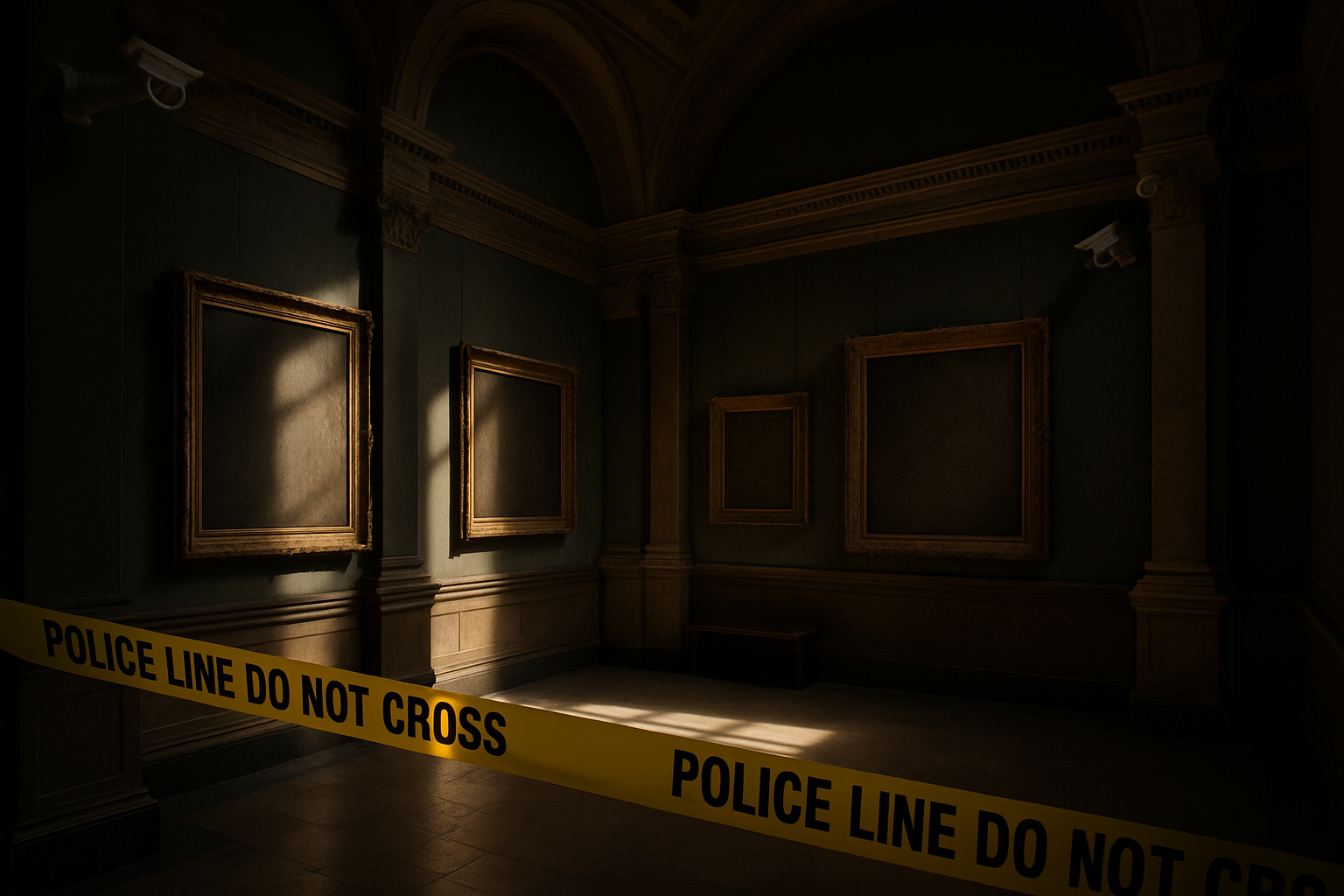
Three priceless masterpieces by French impressionist masters Renoir, Cézanne, and Matisse have been stolen from Italy's prestigious Magnani-Rocca Foundation in what investigators are calling one of the most sophisticated art heists to strike the country in recent years.
The theft occurred at the Fondazione Magnani Rocca in Mamiano di Traversetolo, near Parma in northern Italy, during the night of March 22-23, 2026. Four intruders broke into the villa housing the foundation's renowned collection and made off with the three paintings in what Italian media reports describe as a meticulously planned operation lasting just three minutes.
The Stolen Masterpieces
The stolen works represent significant pieces from each artist's oeuvre. According to Italian authorities and the newspaper Finestre sull'Arte, the thieves specifically targeted:
- "Les Poissons" by Pierre-Auguste Renoir - An oil on canvas painted around 1917, valued at several million euros and representing one of the rare Renoir pieces in a permanent Italian collection
- "Still Life with Cherries" by Paul Cézanne - A characteristic work showcasing the artist's revolutionary approach to form and color
- "Odalisque on the Terrace" by Henri Matisse - Exemplifying the master's bold use of color and oriental themes
The targeted nature of the theft, with exactly one work taken from each of the three French masters, suggests the perpetrators had intimate knowledge of the collection and had carefully planned their selection in advance.
A Swift and Professional Operation
What makes this heist particularly alarming to security experts is the speed and precision of the operation. According to sources close to the investigation, the intruders managed to disable security systems, locate and remove three specific paintings, and escape without detection—all within a three-minute window.
The theft went unnoticed for several days, only coming to public attention when Italian Carabinieri confirmed the incident on Sunday, March 29. This delay between the crime and its discovery has raised questions about the museum's security protocols and monitoring systems.
"The professional nature of this operation suggests we are dealing with individuals who had detailed knowledge of the museum's layout, security systems, and the specific location of these valuable works."
— Italian Carabinieri Cultural Heritage Protection Unit
The Magnani-Rocca Foundation
The Fondazione Magnani Rocca, established in the villa of the same name in Mamiano di Traversetolo, houses one of Italy's most significant private art collections. The foundation was created to preserve and display the collection assembled by Luigi Magnani, featuring works spanning from the 15th to the 20th centuries.
The institution has long been regarded as a jewel of Italian cultural heritage, attracting art enthusiasts and scholars from around the world to view its impressive holdings of European masters. The theft represents not just a financial loss but a significant blow to Italy's cultural patrimony.
International Investigation Launched
Italy's specialized Carabinieri unit for cultural heritage protection has taken charge of the investigation, working closely with international law enforcement agencies. The unit, known for its expertise in art crime, has experience recovering stolen masterpieces and has successfully solved several high-profile art thefts in recent years.
The international nature of the art market means the investigation will likely extend beyond Italy's borders. Stolen artworks of this caliber often surface in other countries, requiring cooperation between multiple law enforcement agencies and art recovery specialists.
Context of Art Crime in Italy
This theft occurs against the backdrop of what cultural heritage experts describe as one of the most significant art heists to strike Italy in recent years. The country, home to an estimated 60% of the world's artistic heritage, has long been a target for art criminals seeking to profit from its cultural treasures.
Recent months have seen heightened attention to cultural heritage protection, with the February 2026 "Cultural Renaissance" period marked by increased international cooperation in heritage preservation and security. This theft represents a setback to those efforts and underscores the ongoing vulnerability of cultural institutions to sophisticated criminal operations.
The Challenge of Recovery
Art recovery experts note that the theft of such well-documented and famous works presents both challenges and opportunities for investigators. While the high profile of the pieces makes them difficult to sell through legitimate channels, it also increases their value in illegal markets.
The three-minute timeframe suggests the thieves had a predetermined escape route and likely had buyers already arranged. Such precision planning typically indicates involvement of organized crime networks with experience in high-value art theft.
Impact on Museum Security
The success of this operation will likely prompt a comprehensive review of security measures at cultural institutions across Italy and Europe. The ability of the thieves to bypass multiple security layers in such a short timeframe suggests potential vulnerabilities in current protection systems.
Museum security experts are particularly concerned about what this theft reveals about the evolving sophistication of art crime. The combination of detailed inside knowledge, advanced planning, and flawless execution represents a new level of professionalism in cultural heritage crime.
Looking Forward
As the investigation continues, the art world watches closely for any leads that might bring these masterpieces back to their rightful home. The theft serves as a stark reminder of the ongoing threats facing cultural heritage sites worldwide and the need for continued vigilance in protecting humanity's artistic legacy.
The Magnani-Rocca Foundation has not yet announced whether it will increase security measures or make changes to its exhibition policies in response to the theft. However, the incident is certain to influence discussions about cultural heritage protection across Italy and beyond.
For now, three irreplaceable works of art remain missing, their empty frames serving as silent testimony to one of Italy's most audacious recent art crimes. The international art community can only hope that ongoing investigations will eventually restore these masterpieces to their proper place in the cultural heritage of humanity.