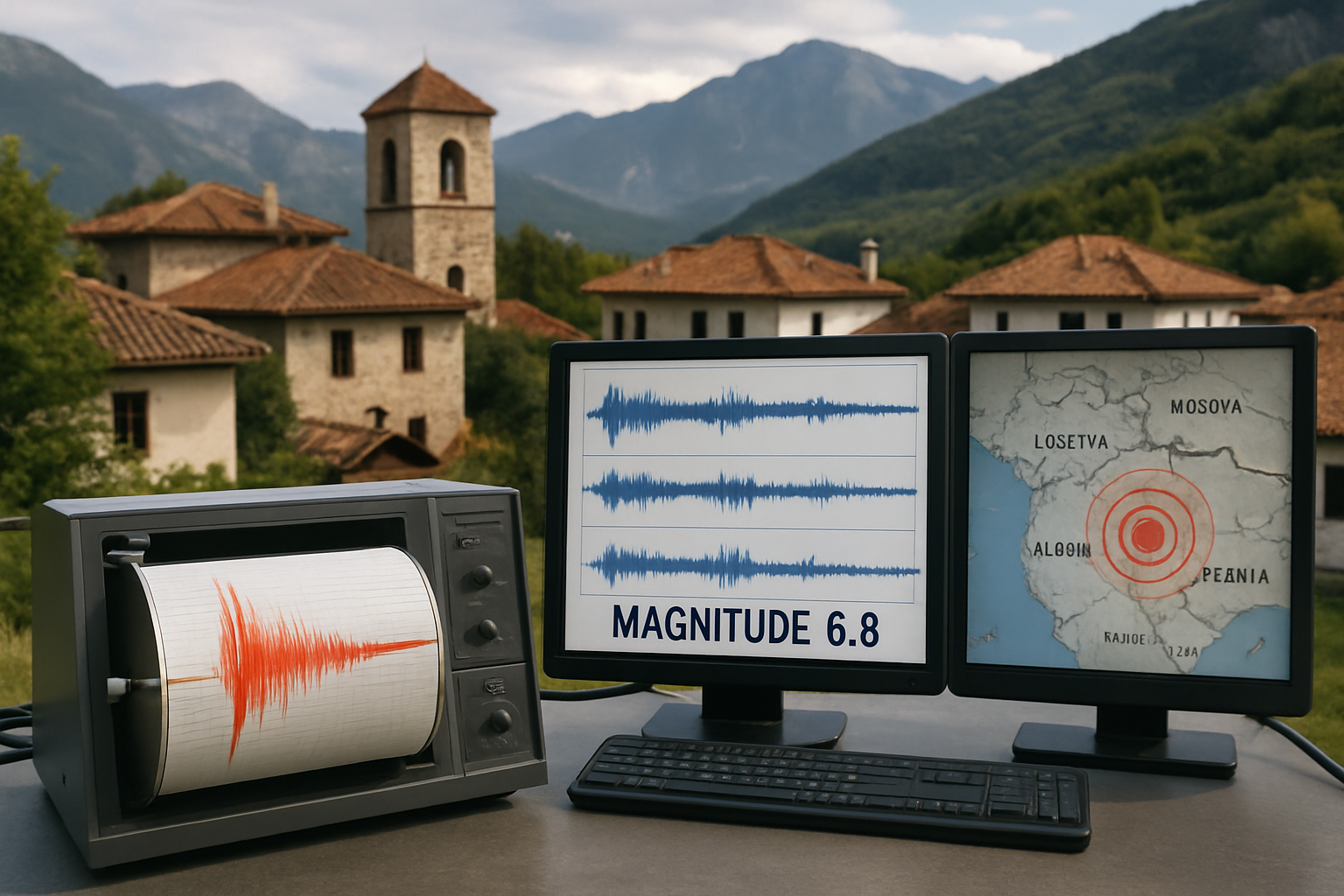
A magnitude 4.8 earthquake struck the Peskova region of North Macedonia on Tuesday evening, February 10, 2026, sending tremors across the Balkans and prompting emergency responses throughout Kosovo, Albania, and neighboring territories.
The earthquake, which occurred around 9:00 PM local time, was centered in the Peskova area of North Macedonia but its effects were widely felt across multiple countries in the region. Seismic monitoring stations recorded the event at 4.8 magnitude on the Richter scale, classifying it as a moderate earthquake capable of causing noticeable shaking and minor structural damage.
Widespread Impact Across Multiple Countries
The earthquake's impact extended far beyond its epicenter, with reports of tremors coming from several major population centers across the Balkans. In Kosovo, the cities of Prizren, Pristina, and Fushë-Kosova experienced significant shaking, leading to widespread panic among residents.
Social media footage from Ferizaj showed residents evacuating apartment buildings in panic, with videos capturing people rushing from multi-story residential complexes as the ground shook beneath them. The scenes highlighted the immediate psychological impact of seismic events on urban populations, even when no major structural damage occurs.
In Albania, the northern regions felt the earthquake's effects, with particular reports coming from the Kukës area. Albanian seismic monitoring services confirmed that tremors were detected across several provinces, though no immediate damage was reported in Albanian territory.
Seismic Activity and Regional Geology
The Balkan Peninsula sits atop a complex geological zone where the African and Eurasian tectonic plates interact, making the region naturally prone to seismic activity. The earthquake's location in North Macedonia's Peskova region aligns with known fault lines that periodically generate moderate to strong earthquakes.
Initial reports from geological institutes across the region noted variations in magnitude measurements, with some preliminary assessments suggesting readings between 4.3 and 4.8 on the Richter scale. These variations are common in the immediate aftermath of seismic events as different monitoring stations process data and refine their calculations.
Emergency Response Protocols Activated
Emergency services across the affected countries immediately activated standard earthquake response protocols. In Kosovo, emergency management teams were placed on high alert as reports of the tremors flooded in from across the territory.
Police and emergency services in all affected areas began conducting preliminary damage assessments, though early reports suggested no major structural damage or casualties. The earthquake's moderate magnitude and relatively deep focus likely contributed to the widespread but non-destructive nature of the tremors.
Historical Context of Balkan Seismicity
The February 10 earthquake occurs within a broader pattern of seismic activity that characterizes the Balkan region. The area has experienced numerous significant earthquakes throughout recorded history, with some causing substantial damage and loss of life.
The region's geological instability stems from its position along the boundary zone between major tectonic plates, creating a network of active fault systems that periodically release accumulated stress through seismic events. This earthquake represents a relatively moderate release of tectonic pressure compared to more devastating events that have historically affected the region.
Modern seismic monitoring networks across the Balkans have significantly improved the speed and accuracy of earthquake detection and reporting, enabling rapid assessment of magnitude, location, and potential impacts. This technological advancement has proven crucial for emergency response coordination across multiple countries during cross-border seismic events.
Public Safety and Preparedness
The earthquake served as a reminder of the importance of earthquake preparedness in seismically active regions. Videos from Ferizaj showed that residents responded appropriately by evacuating buildings quickly and orderly, suggesting that public awareness of earthquake safety protocols remains strong in the region.
Emergency management officials across the affected countries used the event as an opportunity to remind citizens of proper earthquake response procedures, including the importance of identifying safe spaces within buildings and maintaining emergency supply kits.
International Cooperation in Seismic Monitoring
The earthquake highlighted the effective cooperation between Balkan countries in seismic monitoring and emergency response. Data sharing between geological institutes in North Macedonia, Kosovo, Albania, and other regional countries enabled rapid confirmation of the earthquake's parameters and coordinated assessment of its impacts.
This international cooperation represents a significant improvement over past decades, when political divisions sometimes hindered scientific collaboration and emergency response coordination across the region.
Ongoing Assessment and Monitoring
In the hours following the main shock, seismic monitoring stations across the region remained on heightened alert for potential aftershocks. While moderate earthquakes like Tuesday's event typically generate smaller aftershocks, monitoring networks maintained continuous surveillance to detect and analyze any subsequent seismic activity.
Geological survey teams were dispatched to the epicentral region in North Macedonia to conduct detailed field assessments and gather additional data about the earthquake's characteristics and any localized effects that might not be immediately apparent from remote monitoring stations.
The earthquake's occurrence on a Tuesday evening when most residents were at home likely contributed to the high number of people who felt the tremors, as opposed to working hours when populations might be more dispersed. This timing factor often influences the public perception and psychological impact of seismic events, even when actual damage remains minimal.
Looking Forward: Regional Preparedness
As the immediate response to Tuesday's earthquake continues, regional authorities are using the event as an opportunity to evaluate and potentially improve emergency response systems. The cross-border nature of the earthquake's effects demonstrates the ongoing need for coordinated preparedness efforts among Balkan nations.
The successful detection, reporting, and initial response to this moderate earthquake provides valuable data for improving future emergency management protocols and reinforces the importance of maintaining robust seismic monitoring networks throughout the tectonically active Balkan region.