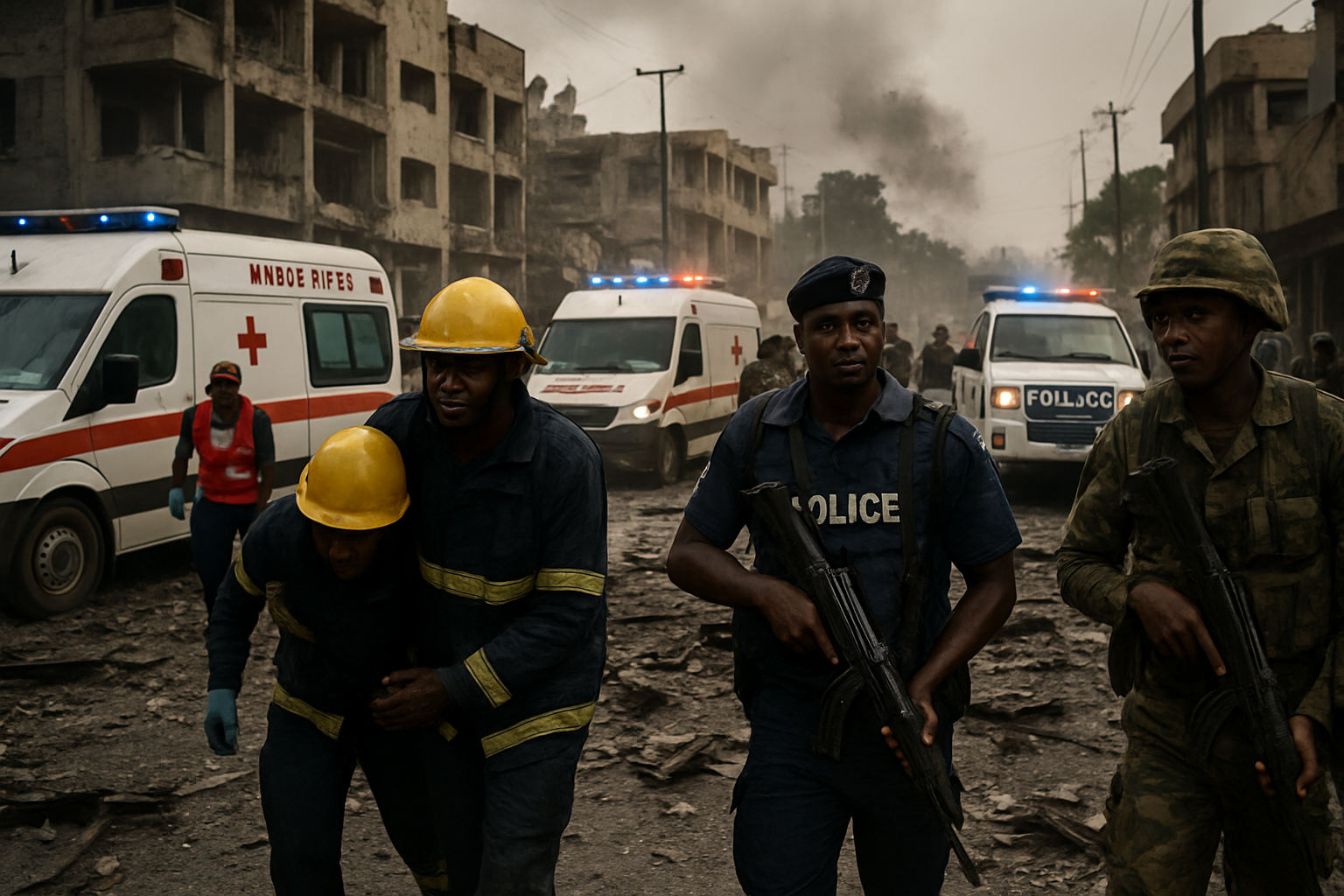
Multiple explosions rocked Maiduguri, the capital of Nigeria's Borno State, on Monday evening, killing scores of people in what appears to be a coordinated terrorist attack that has shattered years of relative calm in the northeastern city.
The first explosion occurred around 7:00 PM local time during iftar, the evening meal that breaks the Ramadan fast, according to reports from SaharaReporters. The attack struck during a time when many residents were gathered for the traditional meal, maximizing the potential for casualties in what security experts describe as a calculated assault on civilian targets.
Nigerian police have deployed explosives clearance teams to three separate sites following what witnesses and authorities suspect were suicide attacks in the city that serves as a major hub in Nigeria's fight against terrorism. The University of Maiduguri Teaching Hospital was among the locations targeted, according to local reports, highlighting the attackers' apparent strategy to target both civilian and medical infrastructure.
Years of Calm Shattered
The attacks represent a devastating blow to what had been years of relative peace in Maiduguri, a city that has long been at the epicenter of Nigeria's battle against Boko Haram and other extremist groups. The coordinated nature of the explosions, occurring at multiple sites across the city, suggests a level of planning and coordination that security forces had hoped was diminishing in the region.
"This appears to be a well-coordinated attack designed to cause maximum casualties and psychological impact," a security analyst familiar with the situation told international media. The timing during Ramadan's iftar period indicates the attackers' awareness of when civilian populations would be most vulnerable.
According to witness accounts and preliminary reports from healthcare sources, the casualty toll is significant, though exact numbers remain unclear as rescue operations continue through the night. The explosions have left many wounded requiring urgent medical attention at facilities already strained by the ongoing humanitarian crisis in northeastern Nigeria.
Pattern of Escalating Violence
Monday's attacks come against the backdrop of Nigeria's broader security crisis that has expanded far beyond the northeastern strongholds traditionally associated with Boko Haram and Islamic State West Africa Province (ISWAP) operations. Recent months have witnessed a concerning geographic expansion of terrorist activities across multiple Nigerian states.
The February 2026 Kwara State massacre, where at least 170 people were killed in coordinated attacks by the Lakurawa group with Islamic State affiliations, demonstrated how terrorist networks have successfully expanded operations into previously stable regions of the country. That attack occurred despite months of community warnings about armed terrorists camping in surrounding areas—warnings that authorities reportedly ignored.
More recently, in March 2026, Nigerian military forces suffered significant losses when Boko Haram and ISWAP launched coordinated attacks on multiple military bases in Borno State, killing commanding officer Lt. Col. Umar Farouq and successfully seizing ammunition and military equipment. These attacks targeted four strategic locations: Mainok, Jakana, Marte, and Konduga.
Intelligence Failures and Systemic Challenges
The recurring pattern of successful terrorist attacks across Nigeria has exposed critical intelligence failures and systemic vulnerabilities in the country's security apparatus. Community leaders and security experts have repeatedly documented instances where local populations provided advance warnings about terrorist activities, only to see these alerts ignored by authorities.
The Kwara State attacks particularly highlighted this intelligence breakdown, as survivors reported that residents had alerted authorities for months about armed terrorists camping in surrounding bushland. The failure to act on these warnings allowed terrorists to establish operational bases and plan major attacks with devastating consequences.
"The systematic pattern of communities providing advance warnings about armed groups camping in bushes but authorities ignoring alerts represents a critical vulnerability that armed groups exploit for operational base establishment and major attack planning."
— Security Analysis from Previous Attacks
This intelligence failure pattern demonstrates how terrorist organizations have learned to exploit weaknesses in Nigeria's security coordination between federal, state, and local authorities. The result has been a reactive rather than proactive approach to counter-terrorism operations.
Regional Security Implications
The Maiduguri attacks carry significant implications for regional security across West Africa, given Nigeria's status as the continent's largest economy and most populous country. The successful expansion of terrorist operations from northeastern strongholds into multiple regions demonstrates the evolving capabilities of extremist networks operating across state boundaries.
International observers have noted that Nigeria's security deterioration affects broader West African stability through disrupted trade routes, humanitarian access challenges, and the potential for spillover effects into neighboring countries. The sophistication demonstrated in recent attacks—including coordinated assaults, vehicle-borne improvised explosive devices (VBIEDs), and systematic targeting of both civilian and military infrastructure—indicates retained operational capabilities despite sustained military pressure.
The timing of the Maiduguri attacks during Ramadan follows a concerning pattern of terrorists exploiting religious periods for maximum psychological impact. This tactic has been observed in previous attacks, including the February 2026 ISIS-K bombing of an Islamabad mosque that specifically targeted Shia Muslims during Friday prayers.
Government Response and Military Operations
President Bola Ahmed Tinubu's administration has deployed army battalions including soldiers and forest guards in response to the expanding terrorist threat. However, critics argue that military responses alone have proven insufficient to address the complex factors contributing to the security crisis, including poverty, unemployment, climate-related displacement, and weak governance structures.
The Nigerian military's recent counter-terrorism operations have achieved tactical successes, including the elimination of over 400 militants in February 2026 Balochistan-style operations. However, the ability of terrorist networks to continue launching sophisticated attacks demonstrates the limitations of purely military approaches to counter-terrorism.
Opposition leaders have demanded independent investigations into security sector failures and comprehensive reforms to address the root causes of instability. The systematic nature of recent attacks has prompted calls for enhanced intelligence sharing, both domestically and internationally, to prevent terrorist networks from exploiting coordination gaps between different levels of government.
Humanitarian Crisis Deepening
The latest attacks in Maiduguri contribute to an already severe humanitarian crisis affecting millions of Nigerians displaced by violence across the country. The targeting of medical facilities, as appears to have occurred with the Teaching Hospital, represents a particularly concerning development that could further limit access to essential services for vulnerable populations.
Humanitarian organizations have documented how the expansion of terrorist activities has created multiple displacement crises simultaneously, overwhelming the capacity of aid organizations and government agencies to provide adequate assistance. The Red Cross and other international organizations have reported being stretched beyond capacity as they attempt to respond to crises across multiple states.
The psychological impact on civilian populations extends far beyond immediate casualties, as communities live in constant fear of attack and many have altered their daily routines to minimize exposure to potential violence. Educational and healthcare facilities have become particular targets, representing a long-term threat to Nigeria's development prospects.
International Concerns and Support
The international community has expressed growing concern about Nigeria's security situation and its implications for regional stability. The United States recently sanctioned eight Nigerians over alleged ties to Boko Haram and other extremist organizations, while European partners have increased intelligence sharing and provided technical assistance for counter-terrorism operations.
However, international observers note that external support must be coupled with comprehensive domestic reforms addressing the underlying conditions that allow terrorist recruitment and operations to flourish. These include addressing youth unemployment, improving education access, strengthening governance institutions, and developing effective community-based conflict prevention mechanisms.
The attacks also highlight the need for enhanced regional cooperation through organizations like the Economic Community of West African States (ECOWAS) to address transnational criminal networks that operate across borders and exploit weak governance structures.
Looking Forward: The Challenge of Sustainable Security
As emergency responders continue working through the night in Maiduguri to assist victims and secure affected areas, the broader challenge facing Nigeria remains clear: developing a comprehensive approach to counter-terrorism that goes beyond immediate military responses to address the systemic issues enabling terrorist recruitment and operations.
The successful attacks in Maiduguri, coming after years of relative calm, demonstrate that terrorist networks retain both the capability and determination to strike at symbolic targets even in areas where security forces believed they had established effective control. This reality requires a fundamental reassessment of current security strategies and their effectiveness.
For Nigeria's democracy and development prospects, the expanding security crisis represents one of the most serious challenges facing the Tinubu administration. The ability to restore security while preserving democratic governance and human rights will be crucial for maintaining international support and domestic legitimacy.
The coming days and weeks will be critical as authorities investigate these latest attacks, care for the wounded, and work to prevent further escalation. The resilience of Nigerian communities in the face of such attacks continues to provide hope, but sustainable solutions will require addressing the complex web of factors that enable terrorist operations to persist and expand across the country.