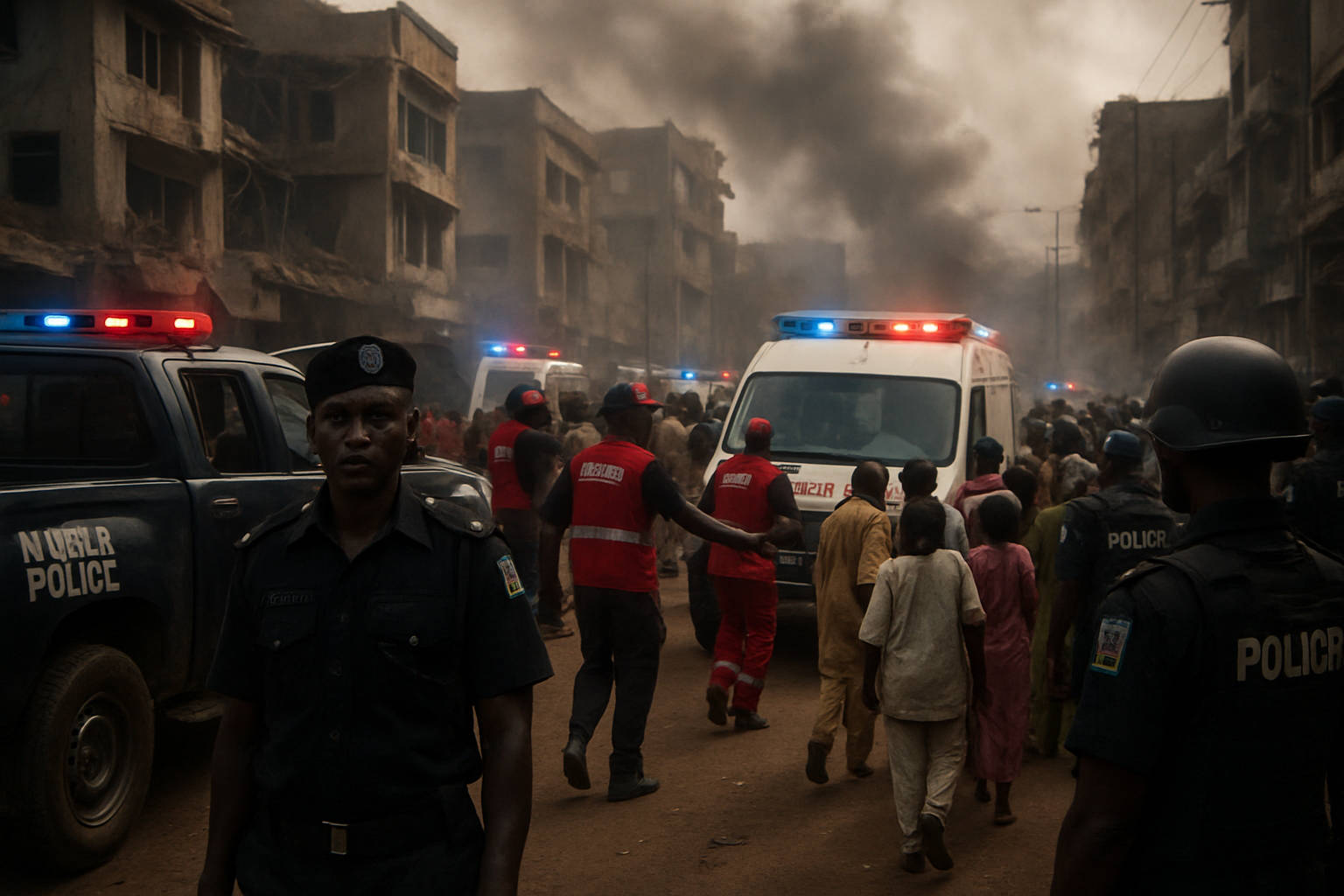
Multiple coordinated suicide bomb attacks rocked Maiduguri, the capital of Nigeria's Borno State, killing at least 23 people and injuring over 100 others in what represents the deadliest terrorist assault to hit the northeastern city since February's devastating attacks.
The bombings occurred Monday evening during iftar - the traditional Ramadan evening meal when Muslims break their daily fast - targeting civilian areas in a calculated assault designed to maximize casualties. Police have confirmed at least three separate explosions rocked the city, with authorities deploying explosive clearance teams to multiple sites following the suspected suicide attacks.
Timeline of Terror
According to preliminary reports from multiple news agencies, the coordinated assault began around 7:00 PM local time when the first blast occurred at a post office in the city center. This was immediately followed by additional explosions targeting civilian areas, with police sources confirming at least 108 people were wounded in the attacks.
The University of Maiduguri Teaching Hospital was among the sites targeted, according to Greek news sources citing Nigerian police statements. This strategic targeting of medical facilities represents a particularly heinous aspect of the assault, threatening the city's capacity to treat victims of the very attacks being perpetrated.
"The first blast went off at a post office in the city centre and was immediately followed by another," according to a statement from the Borno State police command issued late Monday.
— Mozambique news sources citing Nigerian authorities
Pattern of Escalating Violence
These latest attacks shatter what had been years of relative calm in Maiduguri, a city that serves as a major counter-terrorism hub for Nigerian and international forces fighting Boko Haram and Islamic State West Africa Province (ISWAP) militants in the region. The timing during Ramadan and the targeting of iftar gatherings demonstrates the calculated nature of the assault.
The bombings represent a dangerous escalation in Nigeria's expanding security crisis, which has spread far beyond the traditional northeastern strongholds of terrorist organizations. This pattern follows February 2026's devastating Kwara State Lakurawa massacre that killed 170 people, demonstrating how terrorist networks are expanding their operational reach into previously stable regions.
Intelligence failures have been a recurring theme in recent attacks across Nigeria. The February Kwara attacks were preceded by months of community warnings about armed terrorists camping in bushes that authorities dismissed, highlighting systemic coordination failures between federal, state, and local security levels.
Targeting Healthcare Infrastructure
The reported targeting of the University of Maiduguri Teaching Hospital represents a particularly concerning development in terrorist tactics. Medical facilities have increasingly become targets in Nigeria's security crisis, threatening long-term development and creating additional humanitarian challenges.
This strategy of attacking healthcare infrastructure during emergency situations not only increases immediate casualties but systematically undermines the capacity of communities to recover from terrorist attacks. The targeting of medical personnel and facilities during rescue operations has become a documented pattern in the region.
Broader Security Context
Monday's attacks occur against the backdrop of a comprehensive security crisis that has seen Nigerian forces conducting multiple counter-terrorism operations across the country. In February 2026 alone, military operations eliminated over 400 militants in Balochistan-style operations, yet attacks have continued to demonstrate the resilience and territorial expansion capabilities of terrorist networks.
Recent months have witnessed a series of devastating attacks that test the Nigerian democracy and President Tinubu's administration credibility. The March 5, 2026 coordinated attacks on multiple military bases in Borno State saw Boko Haram and ISWAP kill commanding officer Lt. Col. Umar Farouq, representing a significant escalation in terrorist capabilities to directly confront military installations.
The death toll from Monday's attacks makes them among the deadliest terrorist incidents in the region since the February massacres, underscoring the persistent threat posed by extremist organizations despite sustained military pressure.
International Dimensions and Response
The attacks highlight the regional implications of Nigeria's security crisis for West African stability, given Nigeria's status as the continent's largest economy and most populous country. International observers have noted with concern the territorial expansion of terrorist activities, which now affect multiple regions simultaneously, overwhelming aid capacity and testing regional security cooperation mechanisms.
Enhanced cooperation with ECOWAS partners and technical assistance from international allies including the European Union and United States have been provided, but comprehensive domestic reforms addressing root causes including poverty, unemployment, and weak governance remain essential for long-term solutions.
The United States has sanctioned eight Nigerians with extremist ties as part of broader international efforts to disrupt terrorist financing and operational networks. However, the persistence of attacks demonstrates the limitations of purely military approaches to counter-terrorism.
Humanitarian Crisis Deepens
The latest attacks compound an already severe humanitarian crisis in northeastern Nigeria, where multiple displacement crises across states are overwhelming aid capacity. The targeting of medical facilities and educational infrastructure threatens long-term development prospects for the region.
Emergency response teams have been deployed to assist victims, but the scale and coordination of the attacks have strained local capacity. The timing during Ramadan, when families gather for traditional meals, was clearly calculated to maximize the psychological impact on Muslim communities.
The attacks have created fresh displacement as residents flee affected areas, adding to the millions already displaced by over a decade of conflict in the region. International humanitarian organizations have expressed concerns about access to affected populations and the safety of aid workers operating in increasingly dangerous conditions.
Strategic Implications
Monday's coordinated bombings demonstrate several concerning developments in terrorist operational capabilities. The ability to conduct simultaneous attacks across multiple sites in a heavily secured city like Maiduguri suggests sophisticated planning, intelligence gathering, and coordination among terrorist cells.
The attacks test the effectiveness of Nigeria's counter-terrorism strategy, which has relied heavily on military solutions while struggling to address underlying social and economic grievances that terrorists exploit for recruitment and support.
For the broader West African region, Nigeria's security challenges have implications for trade routes, economic development, and regional stability. The expansion of terrorist activities beyond traditional strongholds creates new vulnerabilities that require coordinated international responses.
Government Response and Investigation
Nigerian authorities have launched a comprehensive investigation into the attacks, with security forces conducting sweep operations to identify and apprehend any remaining suspects. Enhanced security measures have been implemented across Maiduguri and other major cities in the northeast.
The government's response will be closely watched both domestically and internationally, as previous attacks have highlighted gaps in intelligence gathering, inter-agency coordination, and rapid response capabilities. Opposition parties have already begun calling for independent investigations into security sector failures.
President Tinubu's administration faces mounting pressure to demonstrate effective leadership in addressing Nigeria's expanding security crisis, which has become a central political issue ahead of upcoming elections.
As rescue operations continue and the full extent of casualties becomes clear, Monday's attacks serve as a stark reminder of the persistent terrorist threat facing Nigeria and the urgent need for comprehensive approaches that address both immediate security concerns and underlying causes of extremism in the region.