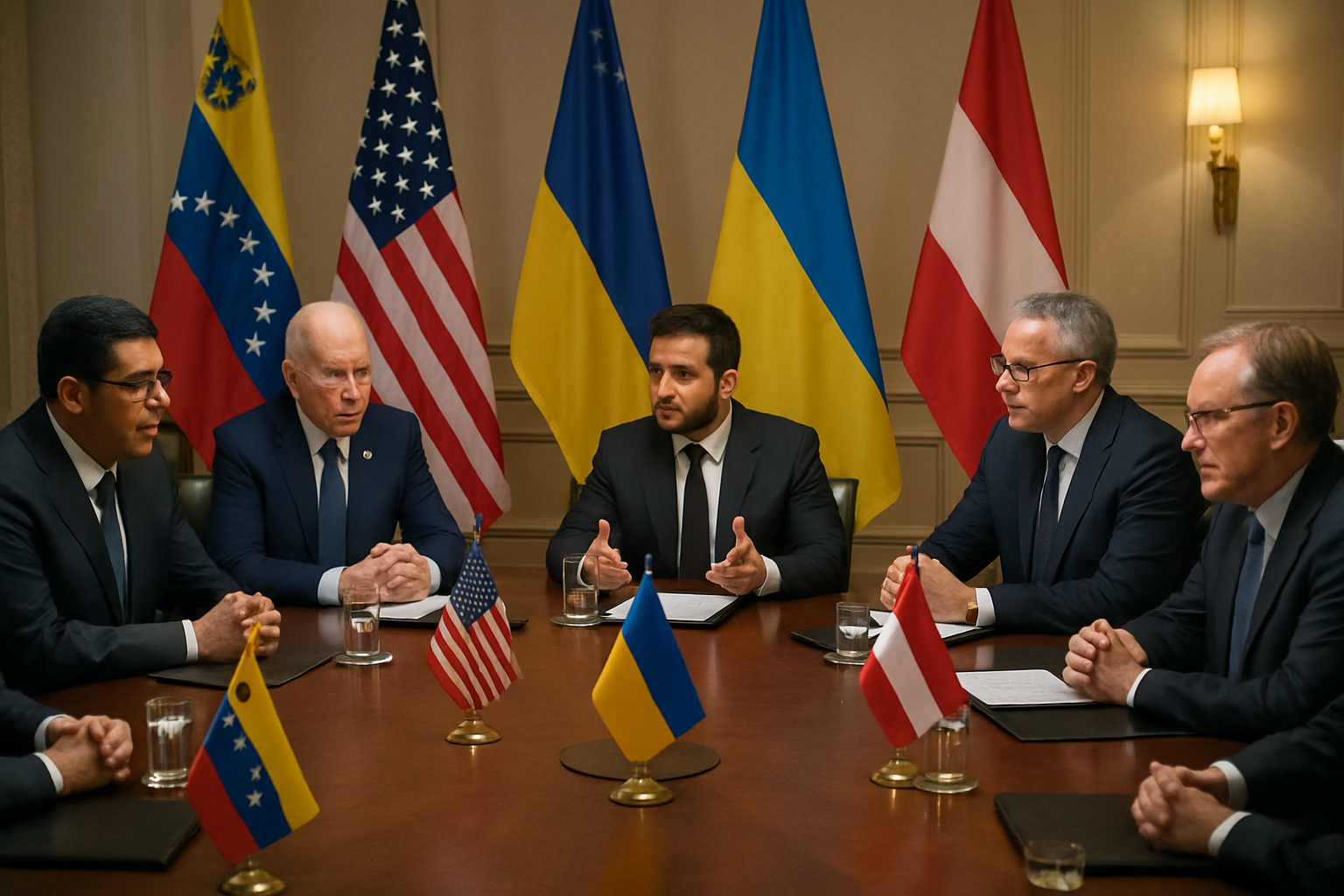
A wave of unprecedented diplomatic breakthroughs is reshaping international relations across multiple continents, as nations forge new partnerships and restore long-severed ties in what analysts are calling the most significant realignment of global cooperation since the Cold War's end.
The most dramatic development centers on the complete transformation of U.S.-Venezuela relations, where Acting President Delcy Rodríguez has overseen a remarkable diplomatic revolution. Venezuelan Deputy Communications Minister Rander Peña announced that government officials are inspecting their embassy and consulates in the United States following the restoration of diplomatic relations after a seven-year break.
"There are things to be done that surely, from this moment, will be accommodated and arranged," Peña stated, indicating that the Washington embassy building will likely need renovation work to resume full operations.
Venezuela's Democratic Transformation Accelerates
The restoration of U.S.-Venezuela ties represents one of the most dramatic foreign policy reversals in recent history. Following the January 2026 removal of Nicolás Maduro, the interim government under Delcy Rodríguez has implemented sweeping democratic reforms that have fundamentally altered the regional landscape.
Opposition leader Juan Guanipa expressed strong support for the diplomatic restoration, describing it as "an advance toward a democratic transition and an election of government by the Venezuelan majority, aligned with Washington's gradual approach to foster stability and economic recovery."
Rodríguez herself emphasized the constructive nature of the new relationship, declaring: "We are going to do it with friendship, with disposition and with good intelligence and for the welfare of the Venezuelan people." The statement came during an event at the El Maizal commune, signaling broad-based support for the diplomatic reset.
However, the transformation has not been without regional complications. Right-wing Colombian presidential candidate Paloma Valencia has ruled out contact with Delcy Rodríguez if she wins the presidency, citing loyalty to democracy. "I have a loyalty to democracy that prevents me from kneeling before those of the regime, even if they are now pro-United States," Valencia stated, referencing the improved Caracas-Washington relationship.
Ukraine Forges New Energy Partnerships
Meanwhile, Ukraine continues to diversify its international partnerships despite ongoing conflict challenges. In a significant development for European energy cooperation, Ukraine's First Deputy Prime Minister and Minister of Energy Denys Shmyhal signed a memorandum of cooperation in the renewable hydrogen sector with Austria's Federal Minister of Economy, Energy and Tourism Wolfgang Hattmannsdorfer.
This partnership represents Ukraine's ongoing efforts to integrate with European energy systems while building sustainable economic foundations for post-conflict reconstruction. The hydrogen cooperation agreement positions both nations at the forefront of renewable energy transition, potentially creating new models for regional energy security.
"This cooperation framework demonstrates how nations can build productive partnerships even during challenging times."
— Diplomatic analyst speaking on condition of anonymity
Economic Implications of Diplomatic Realignment
The economic ramifications of these diplomatic shifts are already becoming apparent. Venezuelan oil exports have surged 60% to 800,000 barrels daily since the political transition began in January, with the United States displacing China as Venezuela's top customer following sanctions relief.
Energy Secretary Chris Wright's historic February visit to Caracas resulted in comprehensive energy cooperation agreements, with major oil companies including Chevron, BP, Shell, Eni, and Repsol authorized to expand operations. The restoration represents a complete reversal of the 2019 oil embargo that had isolated Venezuela from global markets.
This transformation is creating ripple effects throughout Latin America, where nations are recalibrating their relationships with both traditional and emerging powers. The Dominican Republic has reopened relations with Venezuela, while Brazil and the European Union maintain cautious but supportive positions on the democratic transition.
Broader Implications for Global Governance
These developments occur against the backdrop of significant shifts in global governance mechanisms. The February expiration of the New START treaty between the United States and Russia marked the first time in over 50 years without nuclear arms control constraints between the superpowers, creating additional impetus for new forms of international cooperation.
The success of bilateral partnerships, rather than complex multilateral frameworks, appears to be emerging as a preferred model for addressing contemporary global challenges. This trend is evident not only in the U.S.-Venezuela energy partnership but also in the Ukraine-Austria hydrogen cooperation and similar bilateral arrangements being negotiated worldwide.
Regional Security and Stability
The diplomatic breakthroughs are contributing to enhanced regional stability in ways that extend beyond traditional alliance structures. The restoration of U.S.-Venezuela relations, in particular, is providing a template for "bilateral energy diplomacy" that could counter Chinese influence throughout Latin America.
Regional powers are being forced to adapt their strategies to these new realities. China faces reduced influence in Venezuela as the country reorients toward U.S. markets, while European nations are exploring new energy partnerships that could enhance their strategic autonomy.
The Venezuela case demonstrates how rapid diplomatic transformations can occur when combined with economic incentives and political transitions. The comprehensive amnesty program covering 1999-2026 political offenses has released over 750 political prisoners since January, representing the most ambitious Latin American political reconciliation in recent history.
Looking Forward: Sustainable Partnerships
The sustainability of these diplomatic breakthroughs will depend on continued democratic progress and economic recovery. Venezuela's oil production remains at only 700,000 barrels compared to its historical peak of 3 million barrels, requiring sustained international investment and technical assistance.
Similarly, the Ukraine-Austria hydrogen partnership will need to navigate the complexities of wartime conditions and post-conflict reconstruction planning. The success of these initiatives could provide models for similar cooperation frameworks in other regions facing economic and security challenges.
International observers are closely monitoring these developments as potential templates for 21st-century diplomatic approaches. The combination of bilateral partnerships, economic cooperation, and democratic transitions appears to be offering more flexible and responsive alternatives to traditional multilateral frameworks.
As these diplomatic transformations continue to unfold, they are reshaping not only bilateral relationships but the broader architecture of international cooperation. The coming months will be critical in determining whether these breakthroughs represent temporary adjustments or fundamental shifts toward new models of global governance adapted to contemporary challenges.