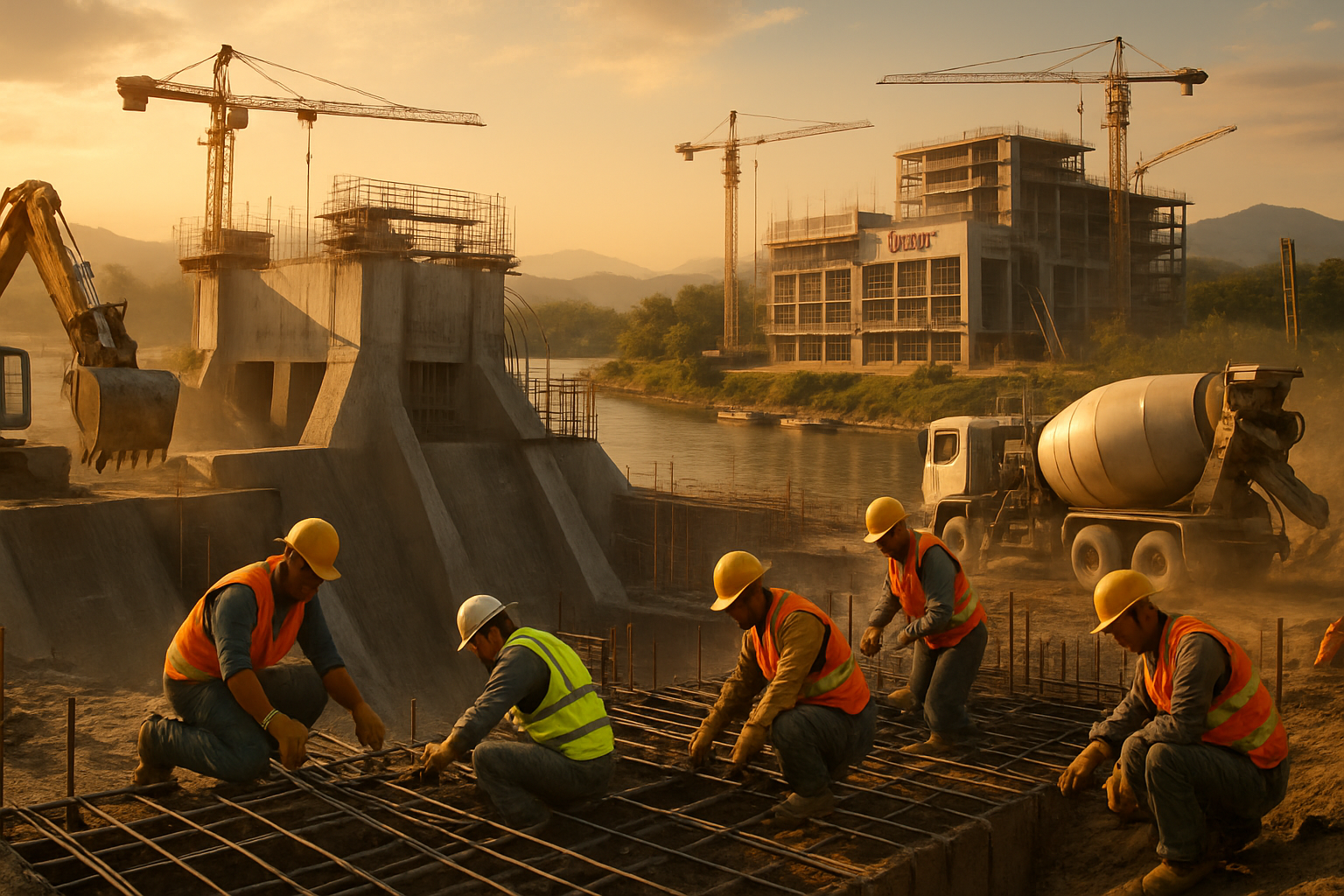
Three major infrastructure initiatives across Africa, the Caribbean, and the Pacific demonstrate unprecedented coordination in global development projects, with governments seeking billions in investment for transformative construction programs spanning water management, security infrastructure, and educational facilities.
Mozambique Advances $1.2 Billion Mapai Dam Project
The Government of Mozambique is actively seeking international investors to implement the ambitious Mapai Dam construction project in Gaza province, a massive undertaking estimated at approximately US$1.2 billion. This landmark infrastructure initiative will be executed through a public-private partnership (PPP) model encompassing the preparation of executive projects, construction of critical infrastructure, and long-term operational management.
The announcement was delivered in Parliament, highlighting the government's commitment to transparent procurement processes and international cooperation in addressing the nation's water management and energy security needs. The Mapai Dam project represents one of southern Africa's most significant infrastructure investments, designed to enhance agricultural productivity, provide flood control, and support regional economic development.
This initiative aligns with the broader continental infrastructure renaissance, building on recent successes across Africa including Kenya's accelerated highway completions and Tanzania's railway expansion programs. The project demonstrates Mozambique's evolution toward sophisticated development financing mechanisms that leverage international expertise while maintaining national ownership of strategic assets.
Guyana Strengthens Regional Security Infrastructure
The Government of Guyana has completed a comprehensive $200 million security infrastructure enhancement program in Region One, substantially strengthening law enforcement capabilities along the strategic Barima River corridor. The multi-faceted investment encompasses the reconstruction of the Imbotero Wharf, establishment of a new Police Boathouse, and complete rebuilding of the Imbotero Police Station.
This substantial infrastructure investment represents a paradigm shift in Caribbean security architecture, moving beyond traditional approaches to create integrated security systems that combine maritime patrol capabilities with community-based law enforcement facilities. The project's strategic location along the Barima River positions it as a critical component of Guyana's border security and anti-trafficking efforts.
The investment demonstrates Guyana's growing economic confidence following significant offshore oil discoveries, enabling the nation to undertake major infrastructure programs that enhance both security capabilities and regional economic development. The project creates permanent employment opportunities while establishing world-class facilities that serve multiple communities throughout the region.
Papua New Guinea Advocates for Educational and Healthcare Infrastructure
Papua New Guinea's Western Highlands Province is advancing calls for transformative educational and healthcare infrastructure development, with Member of Parliament Wai Rapa advocating for the establishment of a comprehensive university and regional referral hospital in Mount Hagen. These proposed facilities would serve the broader Highlands region, addressing critical gaps in higher education access and specialized medical care.
The initiative reflects Papua New Guinea's commitment to human capital development through strategic infrastructure investment. A regional university in Hagen would provide tertiary education access for thousands of students across the challenging mountainous terrain of the Highlands, while a referral hospital would deliver specialized medical services currently requiring expensive travel to Port Moresby or overseas facilities.
This advocacy occurs within the context of Papua New Guinea's broader infrastructure modernization efforts, including the ongoing Civil Aviation Development Investment Program (CADIP) Phase 3 and comprehensive road development initiatives. However, Works Secretary Gibson Holemba has confirmed that the Connect PNG program remains severely underfunded despite its vital importance for national integration across the country's 800+ languages and geographically challenging terrain.
Global Infrastructure Coordination Reaches Unprecedented Levels
These three initiatives represent components of the ongoing $570+ billion global infrastructure surge that has characterized 2026, demonstrating unprecedented international coordination in development project planning and execution. The convergence of water management technology in Mozambique, security infrastructure in Guyana, and educational facilities in Papua New Guinea illustrates the sophisticated approach modern governments are taking toward comprehensive national development.
Contemporary infrastructure projects incorporate advanced technology integration from the design phase, including real-time monitoring systems, predictive maintenance capabilities, digital payment integration, and environmental optimization protocols. Climate adaptation measures have evolved from optional considerations to fundamental design requirements, with enhanced drainage systems, weather-resistant materials, and backup power capabilities standard across all major projects.
The financing mechanisms demonstrate increasing sophistication, combining traditional public-private partnerships with innovative international development cooperation models. Mozambique's PPP approach for the Mapai Dam, Guyana's direct government investment in security infrastructure, and Papua New Guinea's advocacy for educational facilities represent diverse but complementary approaches to sustainable development financing.
Economic Implications and Regional Integration
The economic multiplier effects of these infrastructure investments extend far beyond immediate construction employment, creating permanent operational positions, enhancing regional market access, and reducing long-term logistics costs. Mozambique's dam project will support agricultural modernization and energy security, while Guyana's security infrastructure investments enhance business confidence and tourism safety.
Regional integration benefits are substantial, with each project contributing to broader connectivity objectives including the African Continental Free Trade Area (AfCFTA) initiatives and Caribbean economic cooperation frameworks. Papua New Guinea's educational and healthcare infrastructure advocacy supports Pacific regional development goals and enhanced human capital formation across the region.
Success factors for these initiatives include sustained political commitment, transparent governance frameworks, comprehensive stakeholder engagement, and adaptive management strategies that can respond to changing economic and environmental conditions. International cooperation through technical assistance, knowledge sharing, and coordinated procurement helps address supply chain challenges and ensure quality control standards.
Implementation Challenges and Strategic Solutions
Universal implementation challenges include material cost inflation, skilled labor shortages, environmental compliance requirements, and the complexity of multi-stakeholder coordination. The global semiconductor shortage, which has driven prices up sixfold, particularly affects smart infrastructure components, requiring innovative approaches to technology integration.
Environmental sustainability has evolved from regulatory compliance to fundamental project design principles, with renewable energy integration, waste reduction protocols, and climate resilience planning essential for project approval and financing. Countries are increasingly adopting "build back better" principles that ensure infrastructure serves future climate conditions rather than historical patterns.
The strategic significance of March 2026 infrastructure developments cannot be overstated, as these projects establish precedents that will influence global development strategies for decades ahead. The integration of immediate economic development needs with long-term sustainability requirements creates new models that balance rapid modernization with environmental protection and community engagement.
"Infrastructure development has evolved beyond simple construction toward comprehensive systems that support economic development, environmental protection, and social connectivity simultaneously."
— Analysis of Global Infrastructure Trends, March 2026
The convergence of technological advancement, environmental awareness, and international cooperation evident in these three projects represents a fundamental shift in how nations approach infrastructure development. Success in implementing these ambitious programs could catalyze additional investment and cooperation, creating positive development cycles that strengthen national capabilities while supporting regional integration frameworks essential for addressing the interconnected challenges of the 21st century.