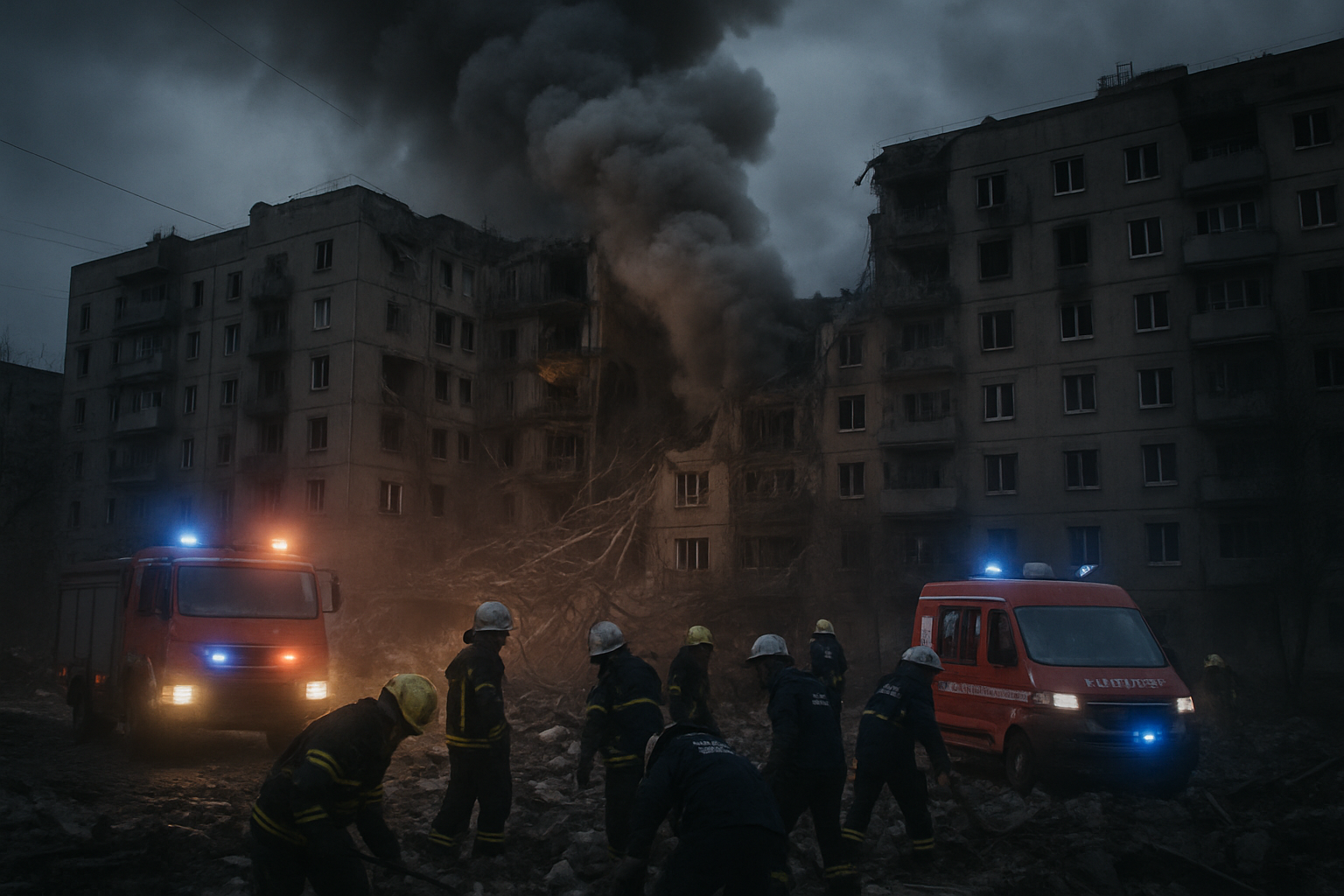
Russia launched a massive coordinated assault on Ukraine overnight February 25-26, 2026, using 420 attack drones and 39 missiles including 11 ballistic missiles, according to President Volodymyr Zelensky. The attack targeted eight Ukrainian regions, injuring dozens of civilians and causing widespread damage to residential areas and critical infrastructure.
Ukrainian President Zelensky condemned the overnight strikes as representing Russia's continued systematic targeting of civilian areas, stating on social media that "most missiles were intercepted... unfortunately, there were also hits." The coordinated attack comes just days before the fourth anniversary of Russia's full-scale invasion of Ukraine on February 24, 2022.
Scale and Impact of the Attack
The assault represented one of the most extensive Russian attacks of 2026, with Ukrainian air defense systems working throughout the night to intercept incoming threats. Multiple regions across Ukraine came under sustained bombardment, with explosions reported in major population centers including Kyiv, Kharkiv, and Zaporizhzhia.
In Kharkiv, Ukraine's second-largest city, the attack resulted in 16 casualties including two children, according to regional officials. The strikes hit both the regional center and 13 surrounding settlements, demonstrating the broad geographic scope of Russian targeting.
Zaporizhzhia bore particularly heavy casualties, with the death toll from nighttime Russian strikes climbing to nine people according to Ukrainian emergency services. The attacks caused significant damage to residential buildings and civilian infrastructure throughout the southeastern city.
"The majority of missiles were shot down... Unfortunately, there were also impacts that caused casualties and damage."
— President Volodymyr Zelensky, via Social Media
Regional Impact Across Ukraine
The attacks extended far beyond major urban centers, affecting rural communities and critical infrastructure across eight Ukrainian regions. In the Vinnytsia region, a woman was injured during the morning assault, while houses sustained damage from the bombardment. Local authorities implemented emergency response protocols to assist affected civilians.
Energy infrastructure again proved to be a primary target, with an energy facility in southern Odesa region suffering damage during the attack. This continued Russia's systematic strategy of targeting Ukrainian power generation and distribution systems, particularly during winter months when heating is essential for civilian survival.
The widespread nature of the assault forced emergency services across multiple regions to coordinate rescue operations simultaneously, stretching Ukraine's civil defense capabilities as responders worked to clear debris and provide medical assistance to injured civilians.
Ongoing Diplomatic Context
The massive attack occurred amid ongoing international diplomatic efforts to end the nearly four-year conflict. Recent trilateral negotiations between Ukraine, Russia, and the United States in Geneva achieved some progress on ceasefire monitoring mechanisms, though fundamental territorial disputes remain unresolved.
The timing of such a large-scale assault continues a documented pattern of Russian military escalation before or during diplomatic initiatives, apparently designed to strengthen Moscow's bargaining position through humanitarian pressure on Ukrainian civilians.
US-Ukraine talks are scheduled to convene in Geneva Thursday, bringing together Ukraine's lead negotiator Defense Minister Rustem Umerov and Trump administration envoys Steve Witkoff and Jared Kushner. A full trilateral session involving Russia is expected in early March, according to diplomatic sources.
Military Capabilities and Defense Response
Ukraine's air defense systems demonstrated continued effectiveness despite the scale of the Russian assault, intercepting a significant portion of incoming missiles and drones. However, the sheer volume of projectiles – 420 drones and 39 missiles – overwhelmed defensive capabilities in some areas, allowing strikes to penetrate to populated areas.
The attack utilized a mix of ballistic missiles, cruise missiles, and Iranian-supplied Shahed attack drones, representing Russia's multi-vector approach to overwhelming Ukrainian air defenses. The 11 ballistic missiles mentioned by President Zelensky likely included Iskander and Kinzhal systems capable of reaching targets throughout Ukraine.
Ukrainian forces have engaged in 235 combat clashes with Russian forces along frontlines in recent days, with 57 attacks repelled in the heavily contested Pokrovsk sector alone. This indicates continued intense ground combat alongside the aerial bombardment campaign.
Civilian Impact and International Law
The systematic targeting of residential areas and civilian infrastructure represents continued violations of international humanitarian law, according to legal experts. The Geneva Conventions explicitly prohibit attacks on civilian objects and require parties to distinguish between military and civilian targets.
The human toll of the conflict continues mounting, with President Zelensky previously disclosing that 55,000 Ukrainian soldiers have been officially confirmed killed, with a "large number" still missing. International estimates suggest actual casualty figures may be 2-3 times higher when accounting for undocumented deaths.
Over 17.8 million Ukrainians are currently accessing winter support programs as the country's energy infrastructure struggles under repeated attacks. The systematic targeting of power generation facilities during extreme cold represents what Ukrainian officials term "energy terrorism."
International Support and Response
The attack occurred against a backdrop of unprecedented international support for Ukraine, with the European Union having approved a historic €90 billion loan package – the largest single-nation assistance program in EU history. However, some member states including Slovakia, Czech Republic, and Hungary have refused participation, highlighting persistent divisions within the alliance.
Military assistance continues flowing to Ukraine, with Sweden and Denmark providing €246 million in air defense systems including advanced Tridon Mk2 platforms. Germany has committed 35 Patriot missile interceptors, while the World Bank allocated $40 million for energy infrastructure restoration.
NATO Secretary-General Mark Rutte previously condemned similar attacks as sending a "bad signal" during diplomatic efforts, reflecting international frustration with Russia's continued military escalation amid peace negotiations.
Nuclear Context and Strategic Stakes
The massive assault occurs within an unprecedented nuclear governance crisis, as the New START treaty between the United States and Russia expired February 5, 2026 – marking the first time in over 50 years without bilateral nuclear constraints between the superpowers. Both nations control approximately 80% of global nuclear weapons.
UN Secretary-General António Guterres has warned of a "grave turning point" with nuclear risks at their "highest in decades." The only remaining formal diplomatic channel between Washington and Moscow is the recently restored military communications protocols established through previous Abu Dhabi negotiations.
The stakes extend far beyond Ukraine's borders, with success or failure of diplomatic efforts likely to influence conflict resolution mechanisms, international law enforcement, and territorial sovereignty principles for decades to come.
Looking Ahead
As Ukraine approaches the fourth anniversary of Russia's full-scale invasion, the massive February 26 attack demonstrates the conflict's continued intensity despite international diplomatic efforts. The assault's scale and civilian impact underscore the challenges facing negotiators attempting to bridge fundamental disagreements over territorial control.
The upcoming US-Ukraine talks in Geneva represent the latest attempt to build momentum toward a comprehensive resolution, though eastern Ukrainian territories under Russian control remain a fundamental sticking point. Russia demands territorial recognition while Ukraine maintains its territorial integrity position.
With a June 2026 peace deadline established by the Trump administration and Washington venue talks potentially involving presidential-level engagement, the coming months will prove decisive for determining whether diplomatic innovation can overcome continued military escalation in Europe's deadliest conflict since World War II.