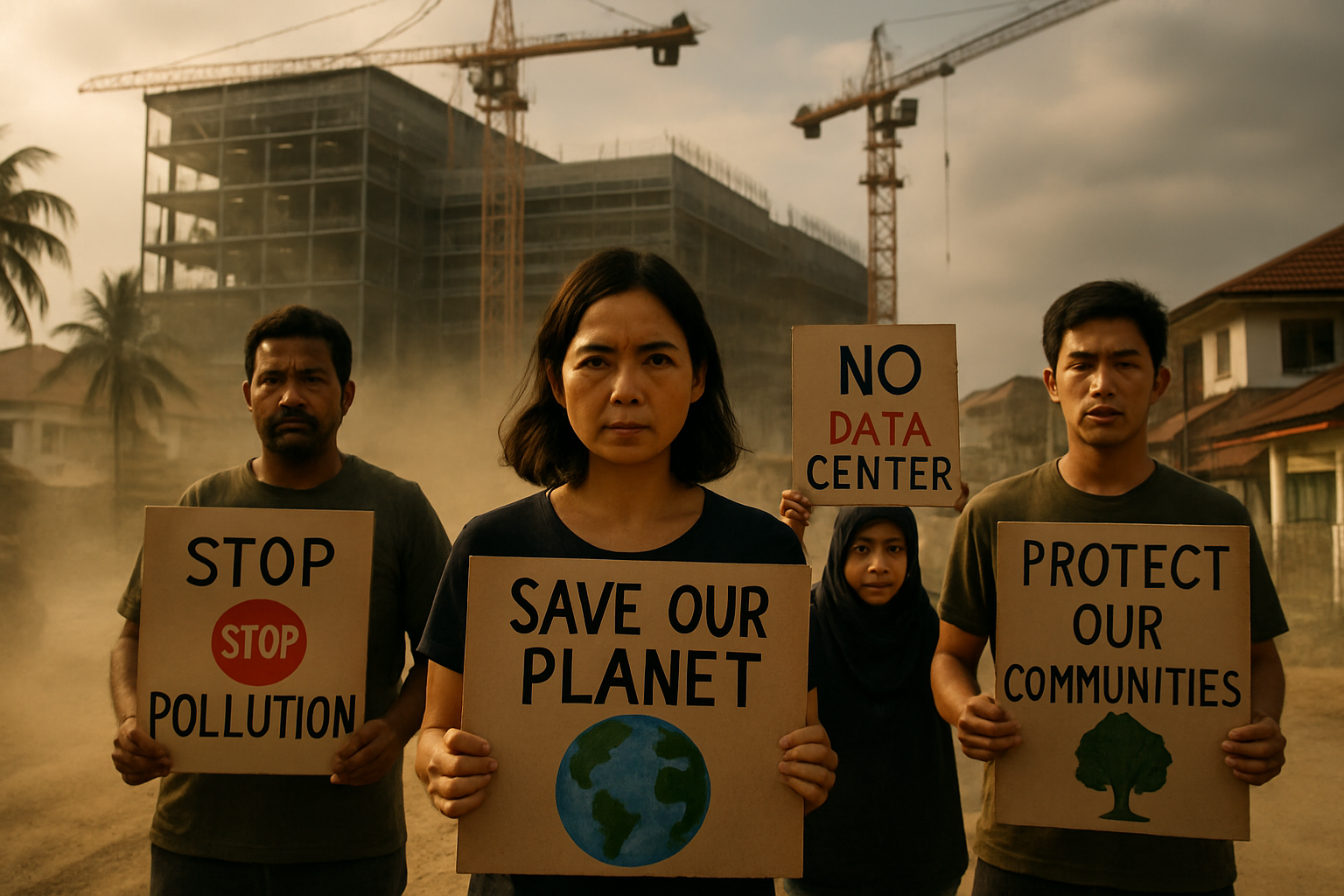
Malaysia's unprecedented data center construction boom faced its first major environmental protest on Saturday as more than 50 residents gathered outside a construction site in Johor state, marking a significant milestone in growing global unease over AI infrastructure development.
The demonstration took place near a residential area in southern Johor, where protesters demanded an immediate halt to dust pollution from ongoing construction and compensation for potential health impacts. Their concerns extend beyond immediate construction issues to the facility's long-term environmental footprint, including massive water consumption for cooling systems that have become synonymous with modern data centers.
This protest represents Malaysia's entry into a growing international movement of communities pushing back against the environmental costs of artificial intelligence infrastructure. The country is emblematic of mounting social unease with data centers worldwide, despite their crucial role in powering internet services and AI applications like ChatGPT searches.
The Scale of Malaysia's Data Center Expansion
Malaysia has emerged as a key destination for international data center investment, driven by government initiatives to position the country as a regional digital hub. The rapid AI-driven build-out has attracted billions in foreign investment, with major tech companies establishing facilities to serve Southeast Asian markets and support global AI operations.
The Johor facility represents part of this broader expansion, strategically located to capitalize on the state's proximity to Singapore and established infrastructure connections. However, the construction's immediate environmental impact has created the first significant community resistance to what government officials have promoted as economic development.
According to the South China Morning Post, protesters specifically highlighted dust pollution as their primary concern, but also expressed anxiety about the facility's future water usage and potential health consequences for nearby residents. The demonstration reflects broader community fears about industrial development proceeding without adequate consultation or environmental safeguards.
Global Pattern of Data Center Opposition
Malaysia's protest fits within a global pattern of community resistance to data center development. From Ireland to Virginia, local communities have raised concerns about power consumption, water usage, and environmental impact as tech companies race to build AI infrastructure.
The water consumption issue is particularly acute. According to World Bank analysis referenced in recent global reports, AI water demand could reach 4.2-6.6 billion cubic meters by 2027—equivalent to four to six times Denmark's annual water withdrawal—primarily driven by cooling requirements for cloud data centers and AI processing engines.
This environmental burden has prompted warnings from officials worldwide. Melbourne's Lord Mayor previously cautioned that AI data centers could "cook the planet" due to their environmental impact, while multiple European jurisdictions have implemented or considered restrictions on data center development.
Malaysia's AI Integration Paradox
The Johor protests present Malaysia with a complex balancing act. The country has positioned itself as a leader in AI integration, notably opening the world's first AI-integrated Islamic school and pursuing digital transformation across multiple sectors. The government's digital initiatives, including enhanced 5G connectivity and smart city development, depend on robust data center infrastructure.
Malaysia's approach has been praised internationally for combining technological advancement with cultural preservation, particularly in educational settings. However, the environmental protests suggest that community acceptance of AI infrastructure cannot be taken for granted, even in countries actively promoting digital transformation.
The timing is particularly challenging given the global AI memory crisis, which has seen semiconductor prices surge sixfold, making data center construction more expensive while demand continues to grow. Major technology companies, including Alphabet's $180 billion AI infrastructure investment and Amazon's trillion-dollar AI development plans, are competing for limited resources to build the physical infrastructure supporting AI operations.
Community Concerns and Health Impacts
Protesters in Johor emphasized immediate health concerns related to construction dust, but their demands for compensation suggest deeper worry about long-term impacts. Dust pollution from construction sites can cause respiratory problems, particularly affecting children, elderly residents, and those with pre-existing health conditions.
The residents' concerns about future facility operations are well-founded given the environmental profile of modern data centers. These facilities require constant cooling to prevent server overheating, leading to substantial water consumption and energy use. In tropical climates like Malaysia's, cooling demands are particularly intensive, potentially straining local water supplies and contributing to noise pollution from cooling systems.
The proximity of the facility to residential areas amplifies these concerns. Unlike industrial zones designed for heavy infrastructure, data centers built near communities create ongoing environmental impacts that residents must live with daily.
Economic Development Versus Environmental Protection
The Johor demonstration highlights the tension between Malaysia's economic development ambitions and environmental protection needs. Data centers represent significant foreign investment, job creation, and positioning in the global digital economy. However, the protests suggest that community acceptance requires more comprehensive environmental planning and consultation.
International experience suggests successful data center development requires proactive community engagement, transparent environmental impact assessments, and meaningful mitigation measures. Countries like Ireland and Denmark have developed frameworks balancing economic benefits with environmental protection, including requirements for renewable energy use and water conservation measures.
Malaysia's response to this first protest will likely establish precedents for future data center development. The government must balance its digital transformation goals with legitimate community concerns about environmental impact and public health.
Implications for Southeast Asian AI Development
Malaysia's experience may influence data center development across Southeast Asia, where multiple countries are competing to attract AI infrastructure investment. Thailand, Indonesia, and Vietnam have all announced initiatives to become regional AI hubs, but community resistance in Malaysia could prompt more careful environmental planning in neighboring countries.
The protest also reflects broader questions about the sustainability of current AI development trajectories. As AI applications become more sophisticated and widespread, the infrastructure requirements continue growing, potentially creating environmental impacts that communities find unacceptable.
Regional cooperation on environmental standards for data centers could help address these concerns while maintaining competitiveness for AI investment. Coordinated approaches might include shared renewable energy requirements, water conservation standards, and community consultation frameworks.
Looking Forward: Sustainable AI Infrastructure
The Malaysian protests represent more than local environmental concerns—they reflect fundamental questions about how societies balance technological advancement with environmental sustainability. As AI becomes increasingly central to economic development, countries must develop frameworks ensuring community acceptance and environmental protection.
Potential solutions include requirements for renewable energy use, water recycling systems, noise mitigation measures, and meaningful community benefit-sharing. Some jurisdictions have implemented "data center taxes" to fund local environmental improvements, while others require developers to invest in community infrastructure.
The success of Malaysia's digital transformation ambitions may ultimately depend on developing sustainable approaches to AI infrastructure that address legitimate community concerns while maintaining the country's competitiveness in the global digital economy.
As AI continues reshaping economies worldwide, the Johor protests serve as an important reminder that technological progress must proceed in partnership with affected communities, not despite their concerns. The path forward requires innovative solutions balancing economic opportunity with environmental responsibility and social acceptance.