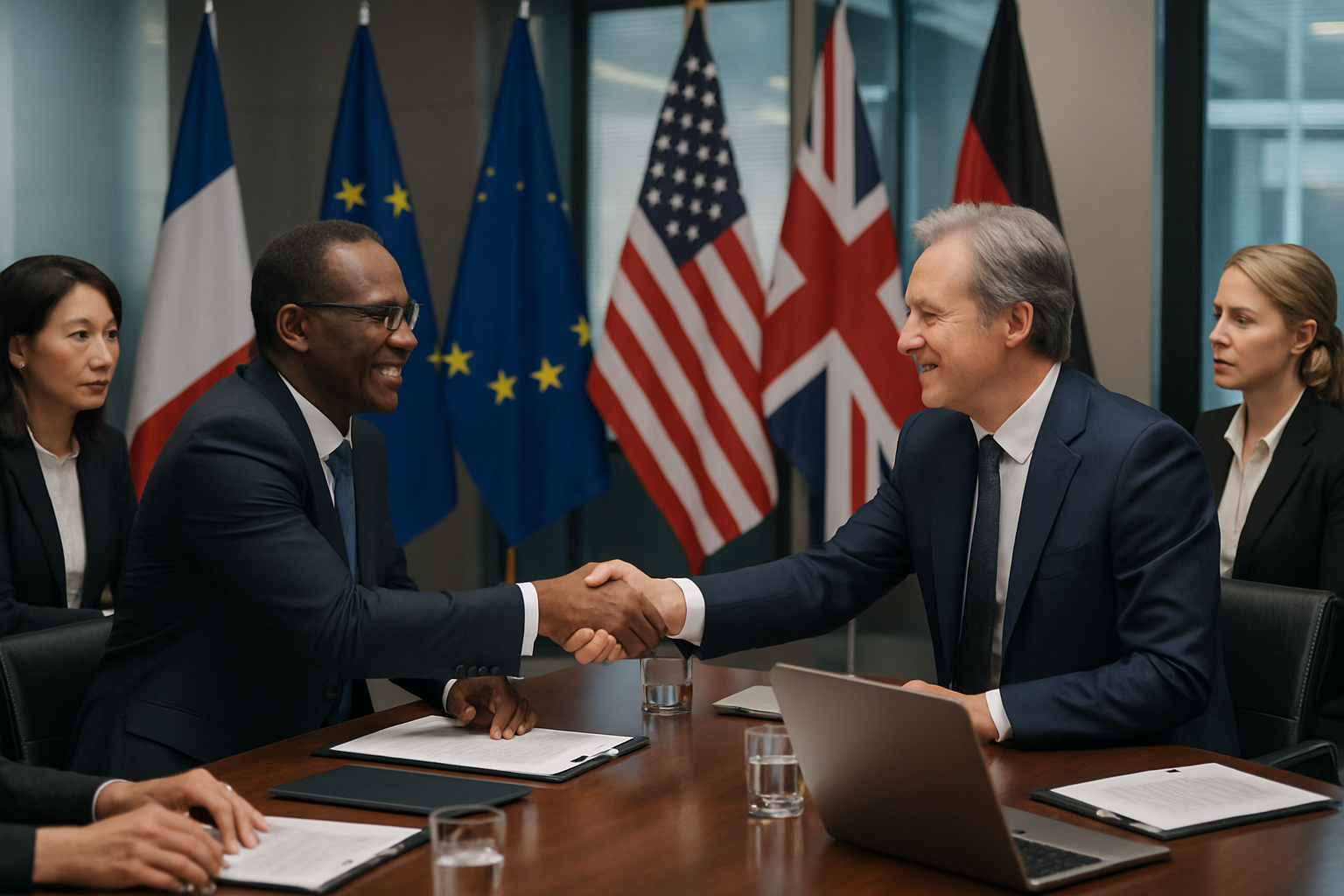
International business partnerships reached new milestones this week as Malaysia and India celebrated their strongest ties in history while Uzbekistan launched its inaugural business and investment council with the United States, demonstrating a global shift toward strategic economic cooperation amid evolving geopolitical dynamics.
Prime Minister Datuk Seri Anwar Ibrahim described his relationship with Indian Prime Minister Narendra Modi as that of a "great friend," emphasizing the exceptional strength of Malaysia-India cooperation during Modi's official visit to Malaysia. The meeting reflects what Anwar characterized as the "historic high" in bilateral relations, driven by robust collaboration across multiple sectors.
The Malaysia-India partnership comes at a pivotal moment as both nations navigate complex global trade relationships. Malaysia has been actively pursuing diverse international partnerships, while India continues implementing its comprehensive trade framework with the United States, which reduced tariffs from 25% to 18% and resolved the Russian oil import dispute that had strained Indo-US relations.
Uzbekistan's Historic US Partnership Initiative
Simultaneously, Uzbekistan marked a significant diplomatic achievement with the inaugural meeting of the Uzbek-American Business and Investment Council in Tashkent, as announced by Saida Mirziyeva, head of the Presidential Administration. This groundbreaking initiative represents the first formal business investment mechanism between Uzbekistan and the United States, opening new avenues for economic cooperation in Central Asia.
The timing of Uzbekistan's initiative is particularly significant given the region's growing integration into global economic networks. Recent developments have seen Central Asia attract over $500 million in international investments, including Kazakhstan's 32 commercial agreements with Pakistan and major corporate commitments across the region.
Central Asian nations have increasingly positioned themselves as crucial links in global supply chains, leveraging their strategic location and natural resources. The Uzbek-American Business Council aligns with this broader trend of regional economic modernization and international integration.
Regional Context and Strategic Implications
These developments unfold against a backdrop of shifting global trade patterns and the ongoing reconfiguration of international economic relationships. The Malaysia-India partnership builds on historical ties while addressing contemporary challenges including supply chain diversification and energy security.
Malaysia's strategic approach to international partnerships has been evident in its balanced engagement with multiple powers. The nation has maintained strong relationships across the Asia-Pacific region while pursuing new opportunities for economic collaboration. India's role as a key partner reflects Malaysia's commitment to strengthening South-South cooperation and regional integration.
For Uzbekistan, the establishment of formal business ties with the United States represents a major step in its economic modernization strategy. The Central Asian nation has been pursuing comprehensive reforms to attract foreign investment and integrate more fully into global markets, making the US partnership particularly valuable for technological transfer and business expertise.
Economic Cooperation Models
The Malaysia-India relationship demonstrates how historical partnerships can evolve to meet contemporary economic challenges. Both nations have emphasized the importance of cooperation in emerging sectors including renewable energy, digital technologies, and sustainable development initiatives.
The partnership benefits from established institutional frameworks and strong people-to-people connections, providing a solid foundation for expanded economic cooperation. Trade between the two nations has grown consistently, with both countries identifying significant potential for further expansion across multiple sectors.
Uzbekistan's approach with the United States follows a different model, focusing on creating new institutional mechanisms to facilitate business relationships. The Business and Investment Council will likely serve as a platform for identifying opportunities, addressing regulatory challenges, and promoting mutual understanding of business environments.
Global Trade Environment
These partnerships emerge during a period of significant transformation in international trade relationships. The success of bilateral agreements like the recent India-US trade framework demonstrates the continuing relevance of country-to-country cooperation alongside multilateral initiatives.
Regional organizations and partnerships have gained prominence as nations seek to diversify their economic relationships and reduce dependence on single markets or partners. Both the Malaysia-India relationship and the Uzbek-American initiative reflect this broader trend toward multiple strategic partnerships.
The focus on business and investment councils, institutional cooperation, and systematic engagement represents a mature approach to international economic relationships, emphasizing long-term stability and mutual benefit rather than short-term transactional arrangements.
Future Prospects
The strengthening of these partnerships signals continued momentum in international economic cooperation despite global uncertainties. Malaysia and India have identified numerous areas for expanded collaboration, while the Uzbek-American Business Council is expected to facilitate significant new investment opportunities.
Success in these initiatives could serve as models for other nations seeking to develop strategic economic partnerships. The emphasis on institutional mechanisms, business-to-business connections, and systematic cooperation provides a framework that other countries might adapt for their own international relationships.
The timing of these announcements also reflects the ongoing importance of bilateral cooperation in addressing global challenges. As nations navigate complex economic transitions, the value of strong partnerships with compatible economies becomes increasingly apparent.
Both developments demonstrate how strategic economic cooperation continues to evolve, combining traditional diplomatic relationships with modern business mechanisms to create frameworks for sustained mutual benefit and regional stability in an increasingly interconnected global economy.