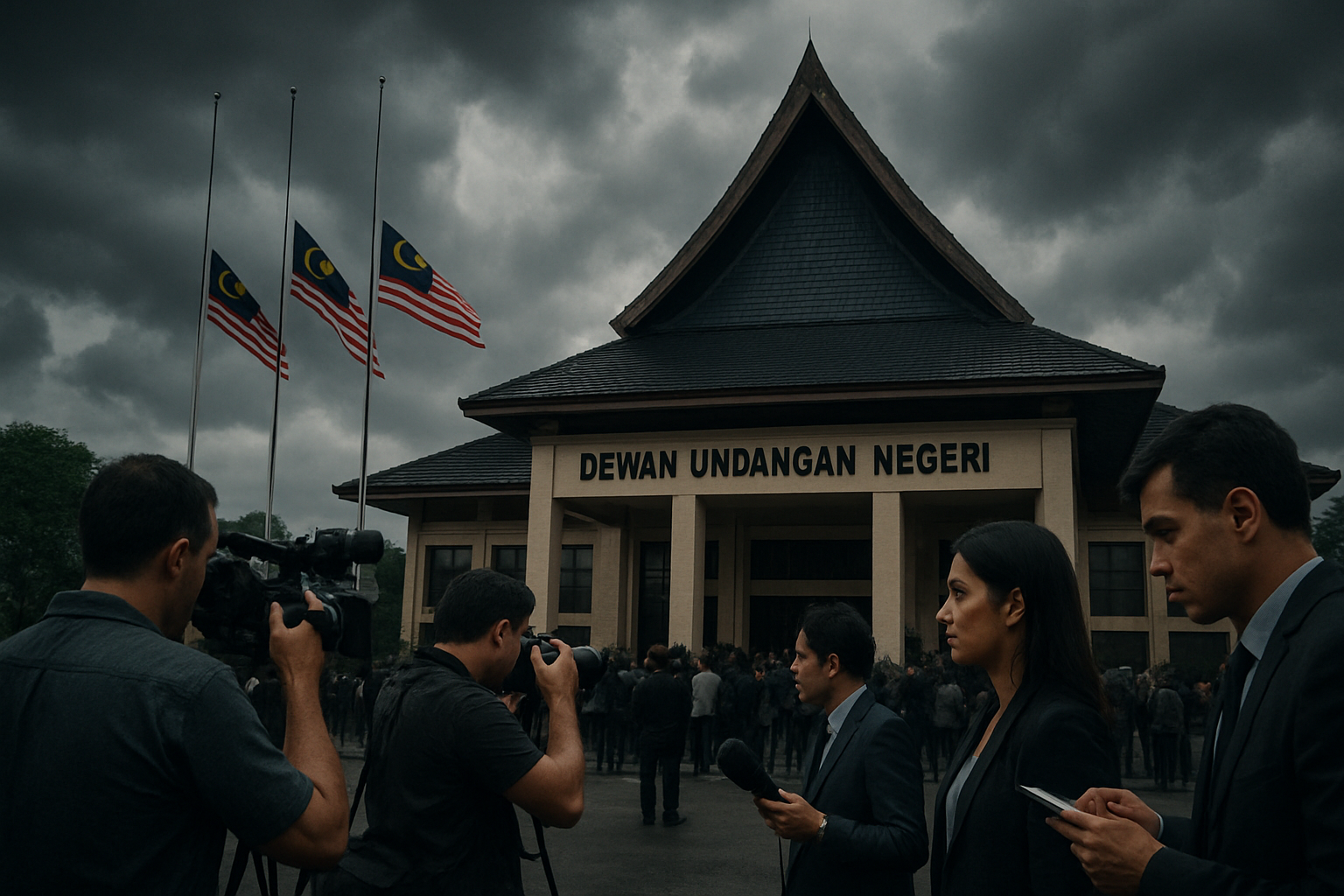
Malaysia's Negeri Sembilan state government teeters on the brink of collapse after the United Malays National Organization (UMNO) withdrew support for Chief Minister Aminuddin Harun on Monday, creating a constitutional crisis that could reshape the nation's political landscape ahead of upcoming general elections.
The dramatic withdrawal came as UMNO's 14 state representatives declared they had "lost confidence" in Aminuddin's leadership amid a deepening royal dispute that has exposed fragile ties within Prime Minister Anwar Ibrahim's unity government coalition. The crisis represents the most serious threat to political stability in Malaysia since Anwar's Pakatan Harapan coalition came to power.
Royal Controversy at the Heart of Crisis
The political upheaval centers on an ongoing constitutional dispute involving royal succession protocols and traditional chieftain procedures in Negeri Sembilan. Sources familiar with the situation indicate that disagreements over state constitution Article 10 interpretation regarding royal succession and due process requirements have created an unprecedented standoff between political and traditional authorities.
The crisis deepened when traditional nobles staged their first-ever boycott of state legislative sessions, creating governance paralysis that has prevented normal governmental functions from proceeding. This represents the first time in modern Malaysian history that traditional noble houses have collectively withdrawn from state governance.
"The business as usual approach cannot continue when fundamental constitutional questions remain unresolved,"
— Senior Constitutional Lawyer
Police investigations are reportedly underway regarding a Facebook account accused of making insulting remarks about royal matters, adding another layer of complexity to the already tense political environment.
Coalition Government Under Strain
The Negeri Sembilan crisis has sent shockwaves through Anwar Ibrahim's Madani government, which relies on UMNO as a crucial coalition partner. PKR Youth leaders have warned of "broken trust" within the alliance, while emergency meetings are being convened by both the Chief Minister's office and DAP leadership to address the rapidly deteriorating situation.
The timing could not be worse for the Prime Minister, who has been facing growing pushback from allies and critics alike in recent months. With national polls due in less than two years, parties across the political spectrum are positioning themselves to maximize their advantage, and the Negeri Sembilan crisis provides an opportunity for opposition forces to test the government's resilience.
Opposition Seizes Political Opportunity
Perikatan Nasional (PN) has moved quickly to capitalize on the government's troubles, with party leaders expressing willingness to cooperate with Barisan Nasional (BN) in Negeri Sembilan. Such cooperation, if formalized, would result in a complete change of the state government and deal a significant blow to Anwar's national authority.
The opposition's strategy appears calculated to demonstrate that the unity government lacks the stability needed for effective governance. By targeting a state-level administration, PN can showcase its ability to fracture Anwar's coalition without directly challenging the federal government.
Constitutional and Legal Implications
Legal experts and former appeals judges have raised serious questions about whether proper constitutional procedures were followed in matters relating to traditional chieftain appointments and royal succession protocols. The crisis has highlighted tensions between Malaysia's unique constitutional monarchy framework, which incorporates hereditary rulers and traditional authorities, and modern democratic governance processes.
The dispute over state constitution Article 10 could establish important precedents for federal-state relations and constitutional interpretation across Malaysia's complex political system, which balances traditional Malay royal institutions with democratic governance structures.
Economic and Social Impact
Negeri Sembilan's political uncertainty comes at a time when Malaysia is grappling with broader economic challenges. The state, known for its manufacturing base and proximity to Kuala Lumpur, requires stable governance to maintain investor confidence and continue development projects.
Local communities are expressing concern about the impact of political instability on everyday governance, from municipal services to state-level development programs. The crisis also raises questions about Malaysia's reputation for political stability, which has been a key factor in attracting foreign investment.
Historical Context and Precedent
The Negeri Sembilan crisis represents the first major test of state-level royal constitutional arrangements in decades, echoing similar challenges that have faced Malaysia's complex federal system. The country's unique approach to constitutional monarchy, involving multiple hereditary rulers across different states, requires careful balance between traditional authority and democratic accountability.
Previous constitutional crises in Malaysia have typically been resolved through negotiation and compromise, but the current situation appears more entrenched, with both sides showing little willingness to back down from their positions.
National Political Ramifications
The crisis extends beyond Negeri Sembilan's borders, threatening to destabilize Anwar Ibrahim's carefully constructed coalition government. With rumors of early general elections circulating, the Prime Minister's ability to maintain UMNO's support for his Madani government at the federal level may depend on how successfully the Negeri Sembilan crisis is resolved.
Political analysts suggest that UMNO's willingness to withdraw support at the state level could signal broader dissatisfaction within the party about its role in the unity government. The party may be testing its leverage ahead of future negotiations or positioning itself for potential realignment with opposition forces.
Path Forward Uncertain
Multiple resolution pathways remain available, including formal constitutional interpretation by relevant authorities, traditional mediation through royal channels, or federal intervention to restore stability. However, each approach carries significant political and constitutional implications that could influence Malaysia's governance framework for years to come.
The stakes extend well beyond Negeri Sembilan to fundamental questions about Malaysia's political future. The resolution of this crisis will likely establish important precedents for how the country balances traditional institutions with democratic governance in the 21st century.
As emergency meetings continue and political leaders seek solutions, Malaysia faces a critical test of its institutional resilience and ability to manage complex constitutional challenges while maintaining political stability in an increasingly polarized environment.