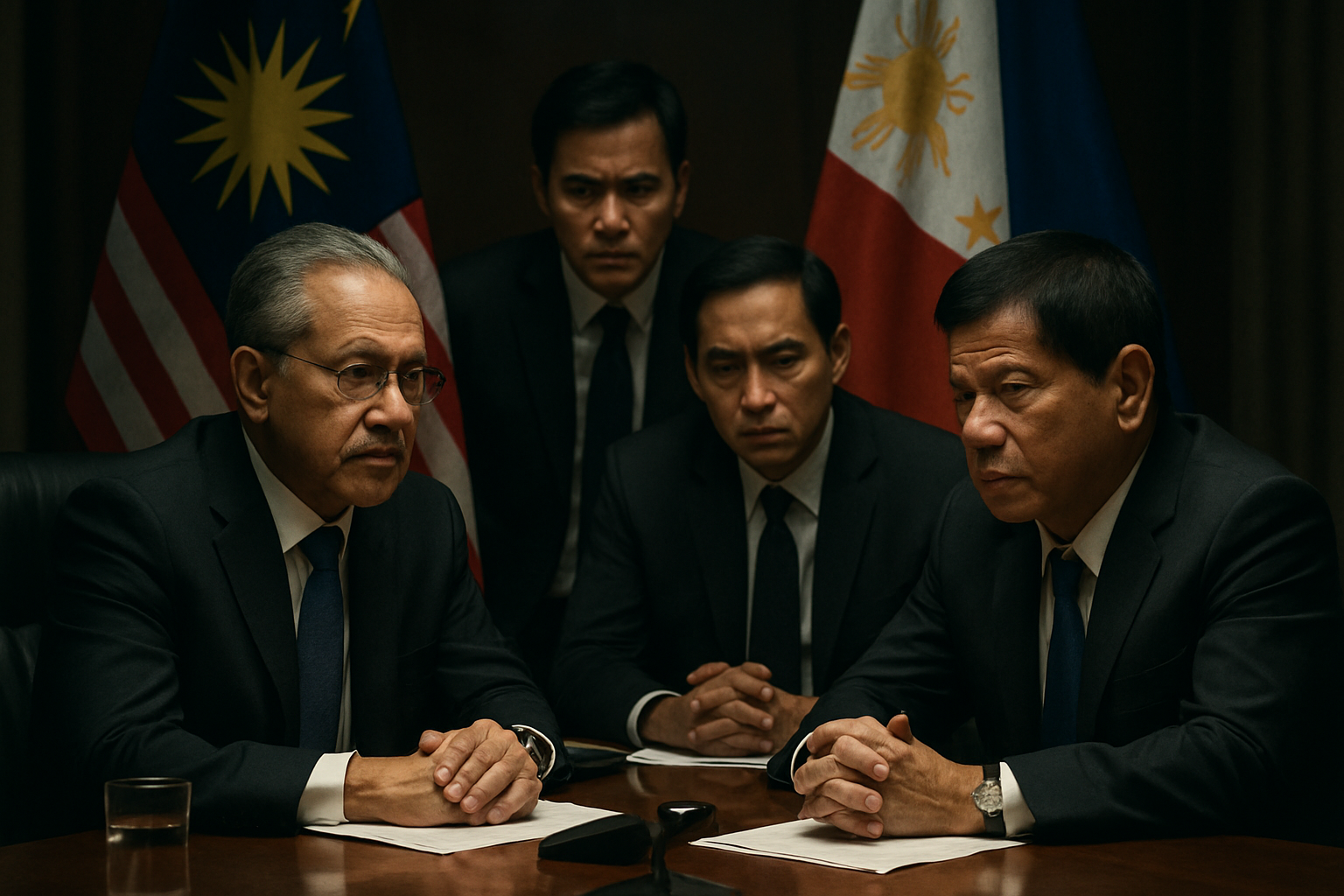
Southeast Asia finds itself at a critical juncture as Malaysia confronts a deadly security crisis and major political party restructuring, while the Philippines grapples with massive protests and reflects on four decades since the People Power Revolution that toppled the Marcos dictatorship.
Malaysia: Violence Strikes Border Security Leadership
In a shocking incident that underscores Malaysia's escalating border security challenges, the vehicle carrying SAC Mohd Nasaruddin Mohd Nasir, commander of the Malaysian Control and Border Protection Agency (MCBA) in Bukit Kayu Hitam, was targeted in a dawn shooting attack on February 25, 2026. According to Kedah Police chief Datuk Adzli Abu Shah, the commander escaped unharmed when two men on a motorcycle, both wearing full-face helmets, fired two shots at his vehicle as he drove to perform Subuh prayers at Masjid Al Muhajirin around 5:40 AM.
The attack occurred approximately one kilometer from the Malaysian-Thai border, highlighting the dangerous security environment facing officials responsible for border control operations. Police are investigating whether the shooting represents retaliation by criminal syndicates against intensified border enforcement efforts.
"One of the suspects fired two shots, hitting the rear right door and the front passenger door of the car. Fortunately, the victim was not injured."
— Datuk Adzli Abu Shah, Kedah Police Chief
Bersatu Party Undergoes Major Restructuring
Malaysia's political landscape experienced significant shifts as Parti Pribumi Bersatu Malaysia announced the appointment of Mohd Radzi Md Jidin as its new Melaka state chief, following what sources describe as a "major overhaul" of the party's state leadership. The restructuring comes after reports that former state chairman Tan Sri Abdul Rahim Thamby Chik had stepped down, citing a "loss of confidence in Muhyiddin."
In a statement issued by Bersatu secretary-general Datuk Seri Mohamed Azmin Ali, party president Tan Sri Muhyiddin Yassin confirmed Radzi's appointment, emphasizing that he "has the experience and leadership needed to build strength among a new generation of leaders who remain committed to Bersatu's ideals." The announcement follows the dissolution of five of Bersatu's six divisions in Melaka with immediate effect.
Adding to the political intrigue, questions have emerged regarding the replacement of Malaysia Anti-Corruption Commission's top prosecutor. Parti Pejuang has questioned Attorney-General's decision to move Wan Shaharuddin to the deputy head post at AGC's Prosecution and Appeals Division, reflecting broader concerns about institutional independence and governance transparency.
Philippines Commemorates Four Decades of People Power
As Malaysia grapples with immediate security and political challenges, the Philippines marked a significant historical milestone - the 40th anniversary of the EDSA People Power Revolution that peacefully toppled the Marcos dictatorship in February 1986. The commemoration took on special significance given the current political climate and ongoing social movements.
At the Bantayog ng mga Bayani (Monument of Heroes) in Quezon City, visitors were reminded of the Filipinos who "paid the highest price — their lives and lifetimes — for a future many of them never even got to see." The memorial serves not only as a place of remembrance but as a living testament to the values and ideals of the People Power Revolution.
Senator Bam Aquino addressed the commemorative events, calling the EDSA Revolution not an end but "the beginning" of an ongoing struggle for democratic governance and social justice. This perspective resonated with contemporary observers who noted that "the seeds that our elders planted haven't fully blossomed" and that "it's not too late to nurture them."
Contemporary Protests Echo Historical Movements
The anniversary celebrations coincided with the continuation of the "Trillion Peso March" movement, as several groups marched from the EDSA shrine to the People Power Monument for the third installment of protests organized by the Trillion Peso March Movement and Caritas Philippines. The ongoing demonstrations reflect persistent concerns about governance, corruption, and social justice that echo the original motivations of the 1986 revolution.
The convergence of historical commemoration and contemporary protest highlights what many observers describe as an "unfinished revolution" - the ongoing challenge of translating democratic ideals into effective governance and social progress. This theme resonates across Southeast Asia, where democratic institutions continue to face tests from various internal and external pressures.
"Life can only be understood backwards, but it must be lived forwards."
— Søren Kierkegaard, as referenced in contemporary Philippine political discourse
Regional Implications of Political Transformation
The developments in Malaysia and the Philippines reflect broader patterns of political transformation across Southeast Asia. Malaysia's border security challenges underscore the complex interplay between criminal networks, territorial sovereignty, and regional cooperation in addressing transnational threats. The targeting of high-level security officials represents an escalation that could influence regional security cooperation frameworks.
Meanwhile, the restructuring within Bersatu demonstrates the ongoing evolution of Malaysia's political landscape, particularly within opposition coalitions. The changes reflect broader tensions within Malaysian politics as parties position themselves for future electoral contests while managing internal governance challenges.
The Philippines' reflection on People Power provides important context for understanding contemporary democratic movements throughout the region. The themes of popular mobilization, institutional accountability, and the ongoing struggle for effective governance resonate beyond Philippine borders, offering lessons for democratic consolidation efforts across Southeast Asia.
Security and Governance Challenges
The shooting incident in Bukit Kayu Hitam highlights the dangerous security environment facing officials responsible for border management in Southeast Asia. Criminal syndicates' willingness to target high-level security personnel suggests an escalation in the ongoing battle between law enforcement and organized crime networks that operate across national boundaries.
This security challenge intersects with broader governance issues, as evidenced by the political restructuring within Bersatu and questions about prosecutorial appointments in Malaysia's anti-corruption efforts. These developments underscore the complex relationship between political stability, institutional independence, and effective governance in addressing both domestic and transnational challenges.
The Philippines' experience with People Power and its contemporary echoes in the Trillion Peso March demonstrate both the potential and limitations of popular mobilization in achieving lasting political reform. The characterization of EDSA as an "unfinished revolution" reflects the ongoing challenges of translating democratic ideals into sustained improvements in governance and social outcomes.
Looking Forward: Regional Democratic Resilience
As Southeast Asia navigates these political developments, the region's democratic resilience faces multiple tests. Malaysia's ability to address security challenges while maintaining political stability will influence regional approaches to border security and criminal network disruption. The country's handling of party restructuring and institutional appointments will signal the health of its democratic institutions.
The Philippines' engagement with its People Power legacy, combined with contemporary protest movements, reflects the ongoing vitality of civil society and democratic participation. The ability to balance historical reflection with contemporary action demonstrates the adaptive capacity of democratic movements in the region.
These developments occur within a broader context of regional transformation, where traditional political arrangements face pressure from evolving security challenges, changing social expectations, and shifting geopolitical dynamics. The outcomes in Malaysia and the Philippines will likely influence approaches to similar challenges throughout Southeast Asia.
As the region moves forward, the intersection of security concerns, political reform, and democratic participation will continue to shape Southeast Asia's political landscape. The experiences of Malaysia and the Philippines in February 2026 provide important case studies in how Southeast Asian nations navigate the complex challenges of contemporary governance while preserving democratic institutions and addressing citizen concerns.