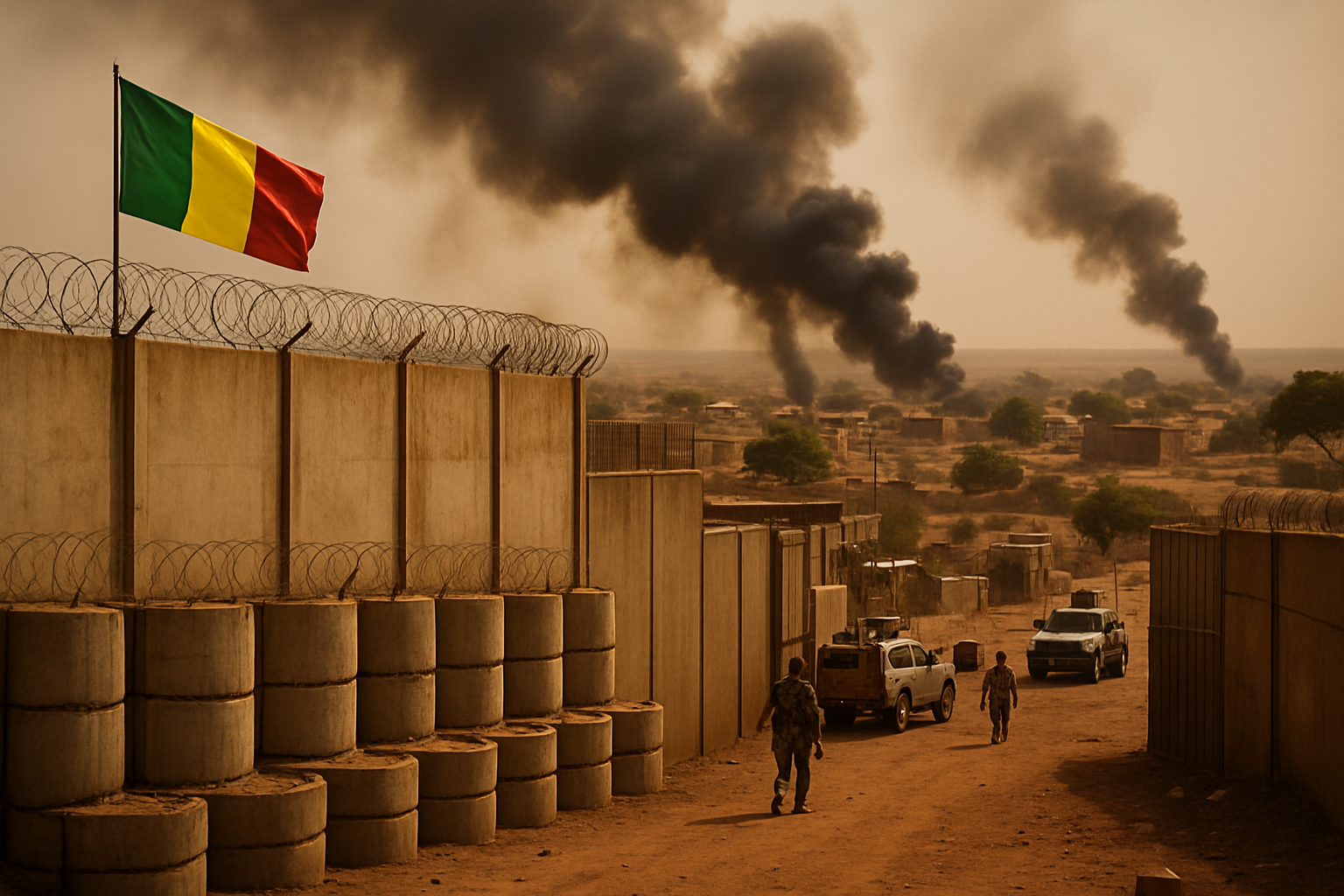
Armed groups launched sophisticated coordinated attacks on military and civilian targets across Mali on Saturday, April 25, 2026, including strikes in the capital Bamako and multiple interior regions, marking one of the most significant security breaches in recent years for the West African nation.
The Malian military confirmed that "unknown armed terrorists" conducted simultaneous attacks on military barracks and other key infrastructure in Bamako and several locations across the country. Fighting was reported ongoing as of Saturday evening, with witnesses describing intense gunfire and explosions near the Kati military base outside the capital.
Scale and Coordination Unprecedented
The attacks began in the early morning hours around 6:00 AM GMT, with explosions and gunfire reported near the strategic Kati military base, approximately 15 kilometers from Bamako. The base serves as a crucial military headquarters and has been targeted in previous coup attempts.
Additional incidents were simultaneously reported in Sevare, Kidal, Gao, and other strategic locations across Mali's vast territory. The coordinated nature of the strikes across different regions demonstrates sophisticated planning and operational capabilities among the attacking groups.
"The scale and coordination of Mali attacks appear unprecedented"
— Al Jazeera Security Analyst
International observers noted that the attacks required significant advance intelligence gathering, logistical coordination, and communication capabilities to execute simultaneous strikes across such a wide geographic area.
Dramatic Setback for Junta Government
Security expert Andrew Lebovich from Clingendael's Conflict Research Unit described the coordinated attacks as representing a "dramatic setback" for Mali's junta-led government. The attacks expose how tenuous the security situation remains despite ongoing military operations by Malian forces and their Russian partners.
The strikes come at a particularly sensitive time for the military government, which has emphasized security improvements as justification for its rule since taking power in 2021. The ability of armed groups to penetrate security around the capital and conduct coordinated operations across multiple regions raises serious questions about the effectiveness of current counter-terrorism strategies.
Witnesses reported seeing heavy security responses, including military reinforcements being deployed to affected areas. The government's ability to quickly restore order will be closely watched by both domestic and international observers as a measure of institutional capacity.
Claims of Responsibility
The group "Jama'at Nasr al-Islam wal Muslimin" (Support for Islam and Muslims) claimed responsibility for the attacks in a statement released Saturday evening. The organization stated that operations included targeting what it described as the residence of Malian President Assimi Goita, the Defense Minister's headquarters, Modibo Keita International Airport in Bamako, and military sites in Kati.
The group further claimed to have conducted military operations in multiple regions including Mopti, Sevare, and Gao, asserting control over military positions in those areas. These claims have not been independently verified by authorities.
Intelligence sources suggest the involvement of multiple armed factions, including elements of the "Azawad Liberation Front" in the Kidal region, indicating a level of coordination between different militant organizations operating in Mali.
International Response and Condemnation
The United States strongly condemned the attacks, describing them as "terrorist acts" and expressing condolences to victims and their families. Washington reaffirmed its commitment to supporting efforts to enhance peace, stability, and security in Mali and the broader Sahel region.
The Chairman of the African Union Commission, Moussa Faki Mahamat, expressed "deep concern" about the reported attacks, calling for immediate action to address the deteriorating security situation. The AU emphasized the need for coordinated regional responses to transnational security threats.
France, despite strained relations with Mali's current government, condemned the violence against civilian populations and called for protection of international humanitarian law principles.
Regional Security Implications
The attacks underscore the persistent security challenges facing the Sahel region, where various armed groups continue to operate despite international military interventions and regional cooperation efforts. Mali's security crisis has significant implications for neighboring countries and the broader West African region.
The timing of the coordinated strikes is particularly concerning for regional stability efforts. The attacks demonstrate that despite claims of territorial control and security improvements, armed groups retain significant operational capabilities and can coordinate complex multi-front operations.
Regional security analysts note that the attacks fit a pattern of escalating violence across West Africa, with similar coordinated attacks reported in recent months in Niger, Burkina Faso, and northern Nigeria, suggesting possible tactical coordination between regional extremist networks.
Russian Partnership Under Scrutiny
The security breach comes amid questions about the effectiveness of Mali's partnership with Russian military contractors, who have been providing security assistance since French forces withdrew from the country. The coordinated nature of Saturday's attacks raises questions about intelligence capabilities and rapid response mechanisms.
Russian media reports claimed that Russian forces helped repel the largest attack by Islamist groups in Mali, though these claims have not been independently verified. The incident represents a significant test of the Russian security model that Mali's junta has embraced as an alternative to Western partnerships.
Security experts suggest that the attacks may have been designed to test and expose weaknesses in current security arrangements, potentially undermining confidence in both the government and its international partners.
Economic and Humanitarian Impact
The attacks threaten to further destabilize an already fragile economic situation in Mali, one of the world's poorest countries. The targeting of key infrastructure, including reports of attempts against the international airport, could impact commercial activities and humanitarian operations.
Mali hosts significant international humanitarian operations supporting displaced populations from ongoing conflicts. Any disruption to these activities could exacerbate an already dire humanitarian situation affecting hundreds of thousands of people.
The security incidents also threaten Mali's mining sector, which is crucial for government revenues and includes several international operations. Foreign investors and workers may reassess their presence given the demonstrated ability of armed groups to coordinate attacks near the capital.
Historical Context and Ongoing Insurgency
Mali has faced persistent security challenges since 2012, when armed groups took control of northern regions before being pushed back by French military intervention. Despite multiple international interventions and peace agreements, various armed factions continue to operate across the country's vast territory.
The current attacks represent an escalation in both scope and coordination compared to previous incidents. The ability to simultaneously target multiple locations, including near the capital, suggests either improved organizational capabilities among existing groups or coordination between previously separate factions.
The security situation has been further complicated by political instability, with military coups in 2020 and 2021 leading to the current junta government. The combination of security and governance challenges has created a complex environment that armed groups have been able to exploit.
Looking Ahead
As authorities work to restore security and assess the full extent of the attacks, the incident serves as a stark reminder of the persistent challenges facing Mali and the broader Sahel region. The coordinated nature of Saturday's strikes suggests that current security strategies may need significant reassessment.
The government's response in the coming days will be crucial for maintaining both domestic confidence and international support. The ability to prevent future attacks and demonstrate effective governance will be key tests for Mali's leadership.
Regional and international partners will likely face renewed pressure to develop more effective approaches to addressing the root causes of instability in the Sahel, including poverty, governance deficits, and the proliferation of armed groups across porous national borders.