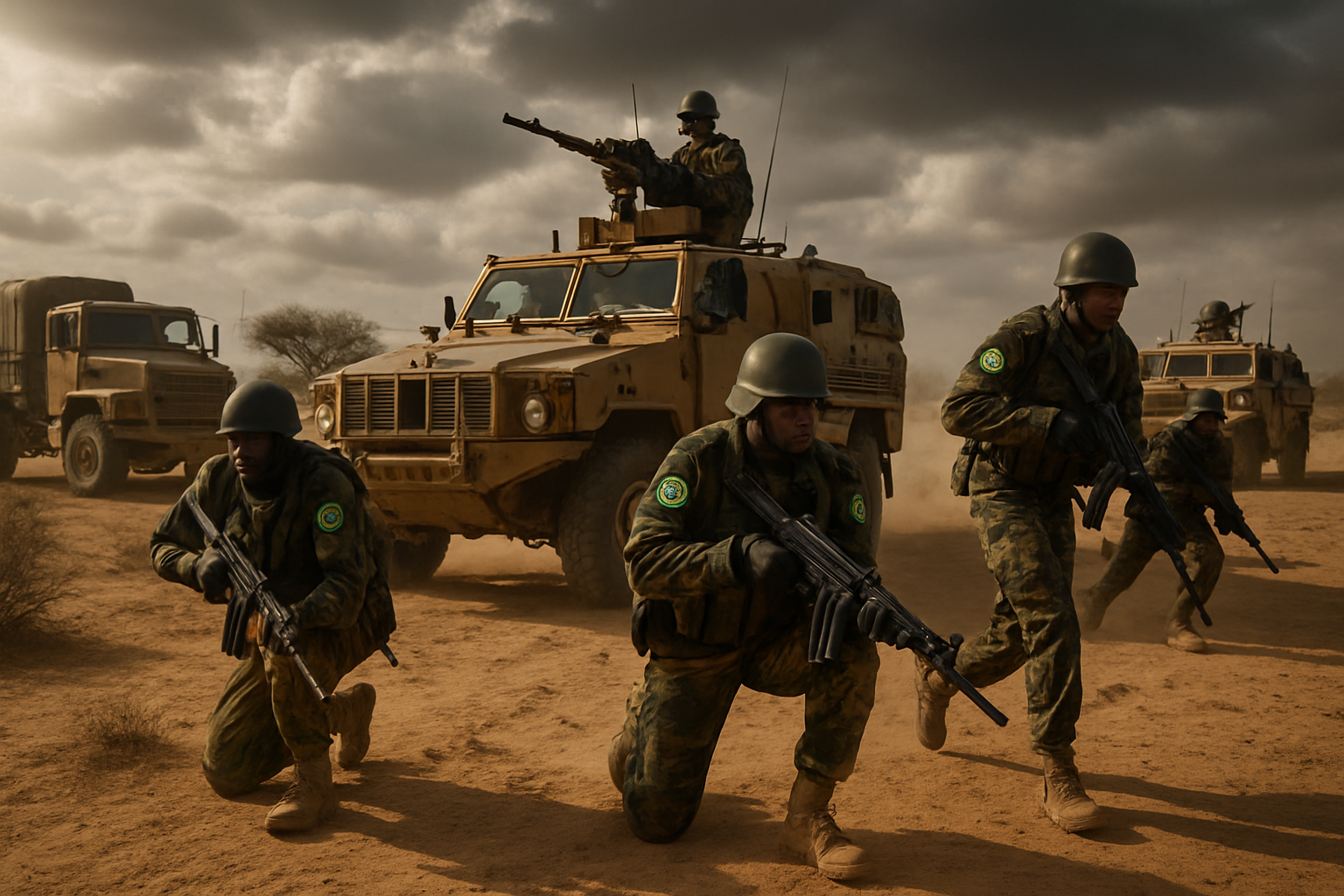
Mali's Defense Minister Sadio Camara was killed in coordinated attacks launched by Al-Qaeda-linked militants across multiple cities on Saturday, marking a devastating blow to the military government as the West African nation faces its most severe security crisis in years.
Family and government sources confirmed to AFP that Minister Camara, one of the most prominent officials in the military council that has ruled since 2020, was killed during attacks on his residence by fighters from Jama'at Nasr al-Islam wal Muslimin (JNIM), the Al-Qaeda affiliate active in the Sahel region.
"In the attack on Kati, the minister (Sadio) Camara was killed along with his second wife," a family member told AFP. A government source confirmed the minister's death, saying: "We have lost someone very dear, the defense minister. He fell in the field of honor."
Coordinated Multi-City Assault
The sophisticated operation targeted multiple strategic locations across Mali, including the capital Bamako, the military stronghold of Kati, and northern cities including Gao and Kidal. According to French and Saudi sources, JNIM claimed responsibility for coordinated operations that began early Saturday morning.
Military sources described the attacks as involving helicopters buzzing over Bamako and around the international airport, with fighting reported at nearby military bases in what officials called "one of the most complex attacks in years" in the impoverished West African country.
The attacks demonstrated unprecedented coordination between jihadist and Tuareg separatist forces, with JNIM reportedly joining forces with Tuareg rebels to launch strikes against army positions across junta-ruled Mali.
Government Response and Curfew
Mali's transitional government confirmed that 16 people, both civilians and military personnel, were injured in the coordinated assault before security forces successfully regained control. The military announced a comprehensive sweeping operation across Bamako, Kati, and interior regions following the assault.
Authorities imposed enhanced security measures across affected regions with pursuit operations launched against fleeing militants. Field assessment operations are ongoing to determine final casualty figures, according to government statements.
"We have lost someone very dear, the defense minister. He fell in the field of honor."
— Government Source
International Condemnation
The Russian embassy in Mali strongly condemned the attacks as "criminal acts" that undermine security and stability in the region. The embassy praised the "firm and coordinated response" of the Malian Armed Forces and expressed condolences to victims' families while wishing swift recovery for the injured.
Neighboring Mauritania expressed its "complete solidarity" with Mali in these circumstances, confirming its commitment to Mali's security and stability through a statement from its Foreign Ministry. The government stressed its continued commitment to supporting peace efforts in the region.
Strategic Implications for Sahel Security
The loss of Defense Minister Camara represents a significant blow to Mali's military government, which has struggled to contain various armed groups since taking power. Security experts view his death as weakening the junta's position at a critical time when the country faces mounting security challenges.
The coordinated assault demonstrates the sophisticated planning capabilities of militant organizations operating in the Sahel region, suggesting enhanced operational coordination among extremist networks across West Africa.
Russian Withdrawal Agreement
In a separate development highlighting the complex security dynamics, Azawad Liberation Front fighters and Russian "Africa Corps" elements agreed on the withdrawal of Russian forces from the northern city of Kidal. According to Mauritanian sources, the Azawadis refused to include the withdrawal of Malian army forces or equipment in the agreement.
Video footage showed military vehicles loaded with equipment leaving military bases in Kidal, though the Malian army and its equipment remain in position following the Liberation Front's declaration of complete control over the city.
Regional Security Architecture Under Stress
The attacks occur within a broader context of escalating security challenges across the Sahel region. Mali has faced ongoing threats from various armed groups despite military operations and international security partnerships.
The successful coordination required for multi-front strikes across different regions demonstrates persistent threats from transnational terrorist networks that retain significant operational capabilities despite sustained military pressure from regional and international forces.
Security experts note that similar incidents across West Africa, including recent terrorist attacks in Nigeria expanding beyond traditional strongholds, suggest growing coordination among extremist networks and enhanced operational capabilities across the region.
Humanitarian Impact
The violence has severely restricted humanitarian aid access to Mali, where 88% of female-headed households are unable to meet minimum living requirements according to the World Food Programme. The WHO has been forced to deliver emergency medical oxygen to only 23 hospitals, with hundreds of health centers closed due to security and funding concerns.
The attacks on civilian infrastructure raise serious concerns about violations of international humanitarian law, as medical facilities have been overwhelmed treating wounded civilians while rescue operations continue for those trapped in bombardment debris.
Future Security Outlook
The successful repelling of the coordinated assault, while demonstrating the effectiveness of Mali's security forces when properly coordinated, also highlights the persistent threat from transnational terrorist networks that continue to retain significant operational capabilities.
International partners have reaffirmed their commitment to supporting Mali's counter-terrorism efforts and maintaining regional stability. However, the loss of the Defense Minister creates a significant leadership vacuum at a critical time when enhanced security cooperation is most needed.
The crisis underscores the need for continued vigilance and enhanced security cooperation across the Sahel region, where Mali's experience provides a template for effective counter-terrorism operations requiring sustained coordination and rapid response capabilities.