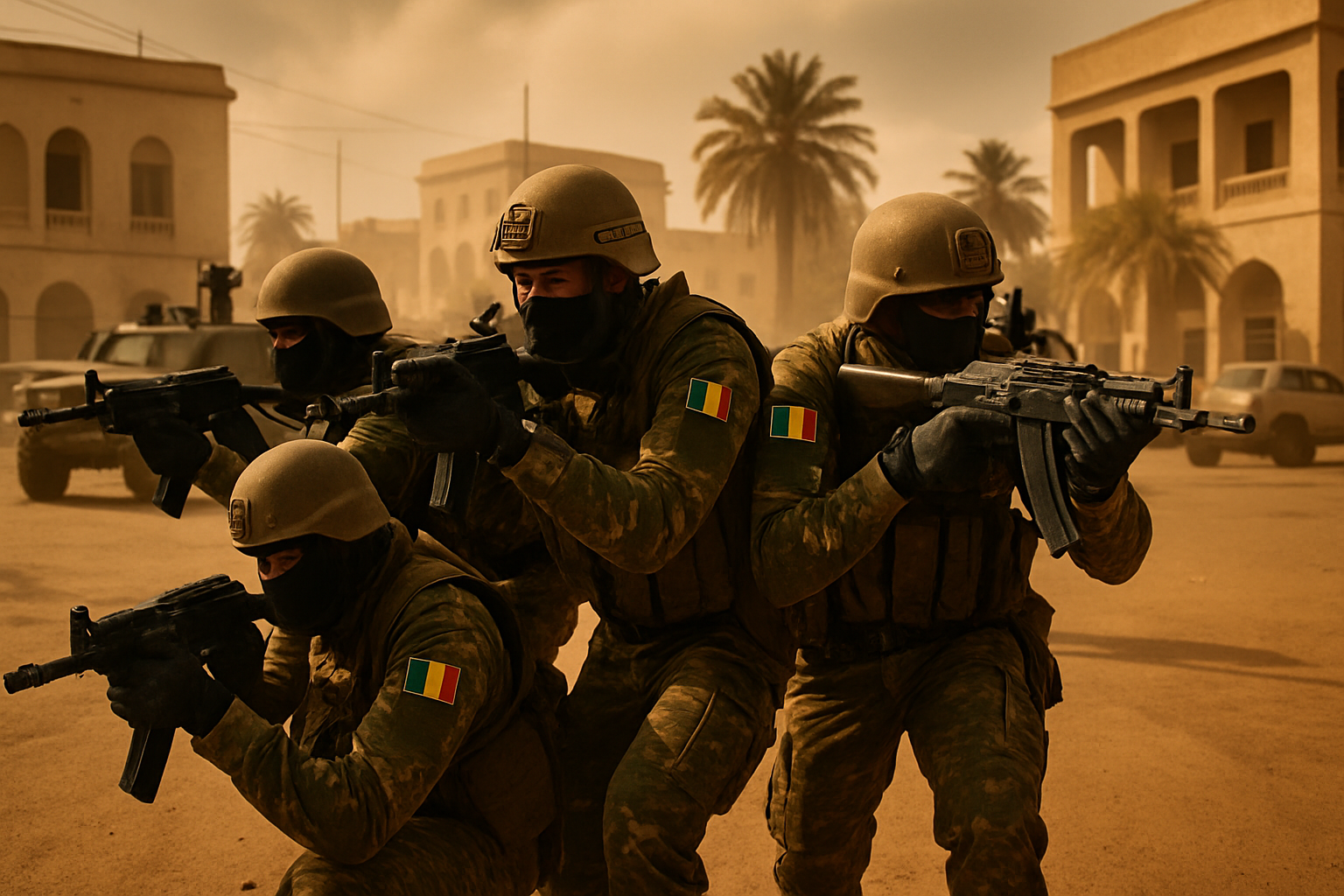
Mali's transitional government announced that 16 people, including civilians and military personnel, were injured in coordinated attacks launched by armed groups targeting multiple cities across the country on Saturday, before confirming that security forces had successfully regained control.
The sophisticated assault began Saturday morning, targeting the cities of Bamako, Kati, Sevare, Gao, and Kidal in what authorities described as a complex and coordinated operation by militant groups. Government forces responded swiftly to contain the threats, with official statements confirming the security situation was "under control" following successful counter-operations.
Multiple Cities Under Attack
According to a government statement, the attacks struck several urban centers simultaneously, resulting in injuries that were transported to medical facilities for treatment. The assaults also caused what officials described as "limited" material damage to infrastructure and property.
The Malian Armed Forces confirmed they had "successfully repelled the attackers" during their response operations, with military sources indicating that "several hundred armed elements" had been neutralized. However, authorities noted that field assessment operations were still ongoing to determine final casualty figures.
A comprehensive sweeping operation was immediately launched across the capital Bamako, the military hub of Kati, and several interior regions following the coordinated assault, which authorities classified as "terrorist" in nature.
International Condemnation and Support
Russia's embassy in Mali strongly condemned the attacks, describing them as "criminal acts" designed to undermine security and stability in the region. The diplomatic mission praised what it characterized as the "firm and coordinated response" of the Malian Armed Forces in countering the assault.
"The attacks that occurred on April 25, 2026, were successfully countered thanks to the decisive action of the Malian Armed Forces."
— Russian Embassy Statement
The Russian embassy expressed condolences to the families of victims while wishing swift recovery for the injured, though no official casualty count was provided in their statement.
Broader Regional Security Context
These attacks come amid escalating security challenges across the Sahel region, with Mali facing ongoing threats from various armed groups. The coordinated nature of Saturday's assault demonstrates the sophisticated planning capabilities of militant organizations operating in the area.
Recent months have seen similar security incidents across West Africa, including terrorist attacks in Nigeria that have expanded beyond traditional northeastern strongholds. The pattern suggests growing coordination among extremist networks and enhanced operational capabilities across the region.
Mali's security situation remains critical as the transitional government works to stabilize the country following political upheaval in recent years. The nation has been grappling with insurgent activities, particularly in northern and central regions, while international partners provide ongoing support for counter-terrorism operations.
Government Response and Security Measures
The Malian military's rapid response to contain the multi-city assault demonstrates the effectiveness of security coordination when properly executed. Military officials emphasized that the attackers had been "defeated" during the defensive operations, though evaluation of losses and damage assessment continues.
Enhanced security measures have been implemented across affected regions as authorities continue pursuit operations against fleeing militants. The government's ability to coordinate responses across multiple simultaneous attack sites represents a significant operational success against what appeared to be a carefully planned offensive.
Intelligence sources suggest the attacks may have been timed to test government response capabilities and potentially exploit perceived vulnerabilities in urban security arrangements. However, the swift military response appears to have thwarted the militants' broader objectives.
Regional and International Implications
The attacks underscore the persistent security challenges facing Mali and the broader Sahel region, where transnational terrorist networks continue to pose significant threats to stability. The coordinated nature of the assault raises concerns about the organizational capabilities of armed groups and potential intelligence sharing between different factions.
International partners, including Russia and other nations providing security assistance, have reaffirmed their commitment to supporting Mali's efforts to combat terrorism and maintain stability. The successful repelling of these attacks may serve to strengthen confidence in ongoing security partnerships and counter-terrorism cooperation.
Regional security experts note that such coordinated attacks require extensive planning, intelligence gathering, and logistical coordination, suggesting that militant groups retain significant operational capabilities despite ongoing military pressure from government forces and international partners.
The incident highlights the need for continued vigilance and enhanced security cooperation across the Sahel region to address the persistent threat posed by armed groups and prevent similar coordinated assaults in the future. Mali's successful response provides a template for effective counter-terrorism operations when security forces maintain coordination and rapid response capabilities.