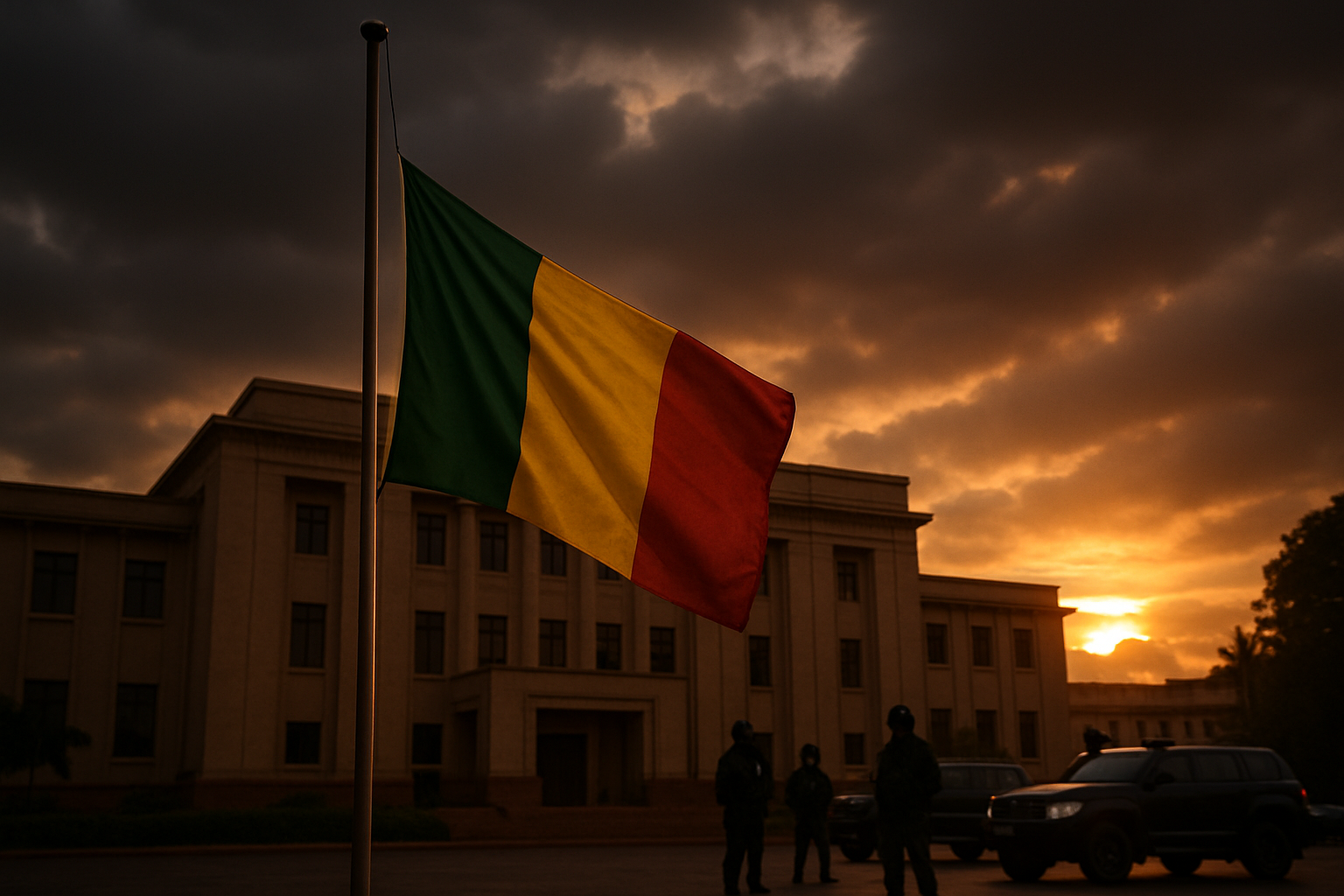
Mali's Defense Minister Sadio Camara was killed during a coordinated assault on his residence in Kati, the military stronghold where the country's ruling generals reside, in what security experts are calling the most significant attack on the Malian government since the 2020 coup.
The attack, claimed by the al-Qaeda-linked group Jama'at Nasr al-Islam wal Muslimin (JNIM), targeted multiple locations across Mali on Saturday, April 26, 2026, including the capital Bamako, the northern cities of Gao and Kidal, and the strategic town of Sevare. The successful penetration of Kati, located just 15 kilometers from Bamako, represents an unprecedented security breach that has sent shockwaves through Mali's military establishment.
Coordinated Multi-City Assault
According to government sources, the attacks began at approximately 6:00 AM GMT on April 26, with armed militants launching simultaneous operations across multiple provinces. The assault demonstrated a level of coordination and intelligence gathering that security experts describe as "sophisticated and unprecedented."
Family sources confirmed that Camara died alongside his second wife when attackers targeted their residence in Kati using what appears to have been a car bomb driven by a suicide attacker. The attack on the Defense Minister represents the highest-profile government casualty since the current military junta took power in 2020.
"This represents a dramatic setback for the junta government and their Russian security partners. The successful penetration of Kati exposes critical vulnerabilities in Mali's security apparatus."
— Andrew Lebovich, Security Expert at Clingendael Institute
Strategic Implications and Security Failures
The attack on Kati is particularly significant because it houses the residences of Mali's ruling military leaders and serves as the nerve center of the country's defense establishment. The fact that militants were able to successfully infiltrate this heavily guarded area raises serious questions about intelligence failures and the effectiveness of Mali's security arrangements.
Reports indicate that local communities had provided advance warnings about armed groups camping in nearby areas, but authorities failed to take effective action, highlighting what experts describe as a "reactive rather than proactive security pattern" that has plagued Mali's counter-terrorism efforts.
The Azawad Liberation Front (FLA), representing Tuareg separatist interests, claimed complete control over the northern city of Kidal with minimal resistance remaining, while JNIM forces coordinated attacks across the country's central and southern regions.
Humanitarian and Economic Impact
The coordinated attacks have exacerbated Mali's already dire humanitarian situation. According to the World Health Organization, emergency medical oxygen is available at only 23 hospitals nationwide, with hundreds of health centers closed due to security concerns and funding shortages. The World Food Programme reports that 88% of female-headed households are unable to meet minimum living requirements.
The security crisis threatens Mali's economic backbone, with the country achieving record gold production of 94 tons worth over $6 billion in 2025. Mining sector confidence is now under threat as violence spreads to key operational areas, potentially impacting the implementation of the African Continental Free Trade Agreement (AfCFTA) and regional economic integration efforts under the Alliance of Sahel States framework that includes Mali, Niger, and Burkina Faso.
International Response and Russian Partnership Questions
The Russian embassy in Mali condemned the attacks as "criminal acts" and expressed condolences while praising the Malian Armed Forces' "firm coordinated response." However, the successful assault raises questions about the effectiveness of Mali's security partnership with Russian forces, including the Wagner Group and its successor organization, Africa Corps.
Government forces, reportedly backed by Russian allies, regained control of Bamako by evening on April 26, and authorities have implemented enhanced security measures with ongoing pursuit operations against fleeing militants. Military sources claim "several hundred armed elements were neutralized" during comprehensive sweeping operations.
Jordan's Foreign Ministry condemned the terrorist attacks, emphasizing solidarity with Mali and supporting international counter-terrorism efforts. The international community has reaffirmed its commitment to supporting Mali's counter-terrorism operations, but the attacks demonstrate the need for enhanced regional cooperation mechanisms.
Template for 21st-Century Security Challenges
The coordinated nature of the attacks, involving unprecedented cooperation between JNIM's jihadist forces and the FLA's Tuareg separatists, represents a new tactical development that combines ideological extremism with ethnic separatist ambitions. This sophisticated coordination required extensive advance planning, intelligence capabilities, and organizational resources that suggest extremist networks retain significant operational capacity despite ongoing military pressure.
The success of the assault creates a significant defense leadership vacuum at a critical moment for Mali's security. The death of Defense Minister Camara removes a key figure from the military junta's leadership structure just as the country faces mounting security challenges across multiple fronts.
Regional and Global Implications
The attacks threaten to destabilize the broader Sahel region, where Mali serves as a crucial component of the Alliance of Sahel States alongside Niger and Burkina Faso. The sophisticated operational capabilities demonstrated by the attackers could serve as a template for similar operations across West Africa, where security forces are already stretched thin across vast territories with limited resources.
The crisis highlights the complex challenges facing 21st-century counter-terrorism efforts, where traditional military responses must address root causes including poverty, unemployment, weak governance, and competition for resources exacerbated by climate change. The success or failure of Mali's response will influence security strategies across the region and provide lessons for managing similar complex threats in other volatile environments.
As Mali grapples with this devastating blow to its leadership, the international community faces pressure to develop more effective frameworks for supporting African-led security initiatives while addressing the underlying conditions that enable extremist groups to operate and recruit. The death of Defense Minister Camara represents not just a personal tragedy, but a stark reminder of the ongoing security challenges facing the Sahel region and the need for sustained, comprehensive approaches to peace and stability.