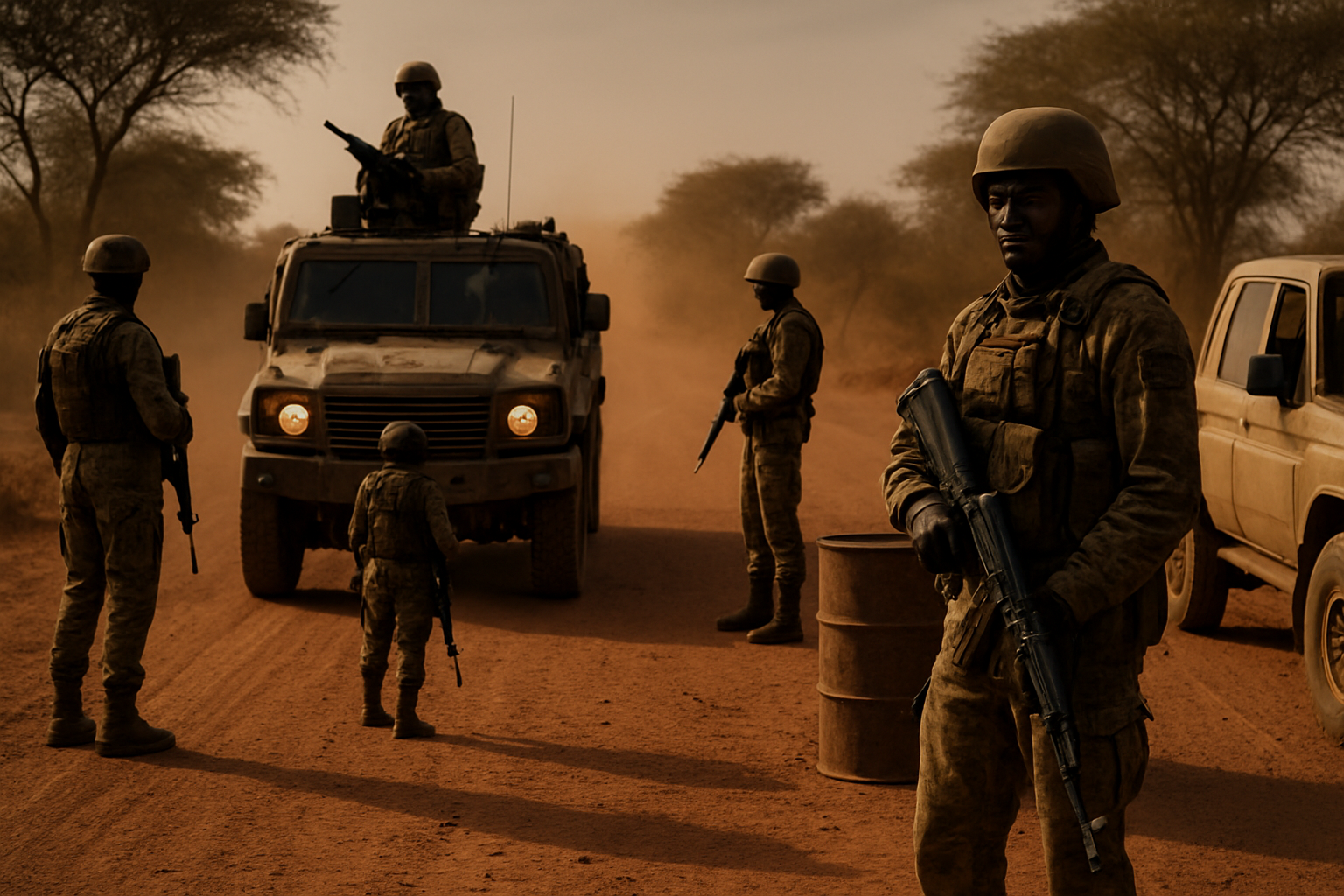
Jihadist forces and Tuareg separatist fighters launched an unprecedented coordinated assault across multiple Malian cities on April 25, 2026, directly threatening the heart of the military government's power structure in what security experts are calling the most serious challenge to the junta since it took power in 2021.
The sophisticated multi-front attack targeted several strategic locations including the capital Bamako and the military stronghold of Kati, where the country's ruling generals reside. By evening on Saturday, April 25, government forces backed by Russian allies had regained control of the capital, but the assault exposed significant vulnerabilities in the junta's security apparatus.
Coordinated Alliance of Armed Groups
French media reports indicate that the assault was carried out through an unprecedented coordination between jihadist forces from the Group for Support of Islam and Muslims (GSIM) and Tuareg independence fighters from the Azawad Liberation Front (FLA). This alliance represents a new tactical development in the Sahel's complex conflict landscape, combining ideological extremism with ethnic separatist ambitions.
The Azawad Liberation Front declared complete control over the northern city of Kidal in the early hours of April 25, according to Arabic media sources. The group announced that while they had established full control over the city, limited resistance pockets remained in military positions, including elements described as belonging to the "Africa Corps" and Malian forces within a former UN mission camp.
"This coordinated operation was carried out in coordination with the Support for Islam and Muslims group."
— Azawad Liberation Front statement
Government Response and Security Measures
In response to the attacks, Malian authorities imposed a strict nighttime curfew across the Bamako region for 72 hours, running from 9:00 PM to 6:00 AM. The emergency measure, announced by the Bamako regional governor, was described as necessary for "public security requirements" and could be extended as needed.
The curfew's immediate implementation demonstrated the government's recognition of the severity of the threat. Multiple sources confirm that government forces and their Russian partners successfully repelled the attackers in the capital by evening, but the scale of coordination required for simultaneous attacks across multiple cities has raised serious concerns about intelligence failures.
Strategic Implications for Regional Security
Security expert Andrew Lebovich from the Clingendael Institute described the attacks as a "dramatic setback" for both the junta-led government and its Russian security partners. The assault represents a significant escalation in organizational capabilities among extremist networks, demonstrating sophisticated intelligence gathering and logistical coordination across Mali's vast territory.
The attacks occurred against the backdrop of Mali's membership in the Alliance of Sahel States (AES), alongside Niger and Burkina Faso, which have distanced themselves from traditional West African cooperation frameworks since their respective military takeovers. This regional realignment has complicated security coordination efforts precisely when enhanced cooperation is most needed.
Historical Context and Recent Patterns
Mali has faced persistent insurgencies since 2012, when a combination of Tuareg rebellion and jihadist expansion led to the collapse of central government control in the north. Multiple international interventions, including French Operation Serval and the UN peacekeeping mission MINUSMA, failed to achieve lasting stability before their withdrawal.
The current military government, led by Colonel Assimi Goïta since the 2020 and 2021 coups, has emphasized security commitments while building partnerships with Russia's Wagner Group and other non-Western allies. However, recent attacks demonstrate that these new arrangements have not significantly improved the security situation.
Previous security incidents throughout 2026 have shown an escalating pattern of sophistication and coordination among armed groups. The April 25 attacks represent the culmination of this trend, with militants demonstrating the ability to threaten government centers that were previously considered secure.
Regional and International Implications
The United States strongly condemned the attacks as "terrorist acts," while African Union Chairman Moussa Faki expressed "deep concern" about the security situation. The international community's response reflects broader worries about Sahel stability and the potential for conflict spillover into neighboring countries.
The attacks threaten Mali's economic stability and could undermine confidence in the mining sector, which has become increasingly important for government revenues. The country achieved record gold production of 94 tons worth over $6 billion in 2025, providing crucial funding for the military government's operations.
Humanitarian and Economic Consequences
Beyond immediate security concerns, the attacks have disrupted humanitarian operations and economic activities across affected regions. The imposition of curfews and enhanced security measures will likely impact daily commerce and may strain relationships between security forces and civilian populations.
Mining operations, crucial to Mali's economy, face renewed questions about security guarantees. International companies operating in the extractive sector will reassess risk calculations, potentially affecting investment flows and government revenues.
Future Challenges and Strategic Questions
The successful coordination of the April 25 attacks raises fundamental questions about the effectiveness of Mali's security strategy. Despite ongoing military operations and Russian security assistance, armed groups retain significant operational capabilities and the ability to threaten core government installations.
The government's response in coming weeks will be crucial for maintaining domestic confidence and international support. Success in pursuit operations and prevention of similar attacks could restore some credibility, while continued security failures might encourage further coordination among extremist networks.
Regional observers note that the attacks demonstrate the persistent challenge of securing Mali's vast territory with limited resources. The country spans 1.24 million square kilometers, much of it desert and semi-arid terrain ideal for guerrilla warfare and difficult to monitor with conventional security forces.
Looking Ahead
The April 25 attacks mark a potential turning point in Mali's security crisis. The demonstrated ability of jihadist and separatist forces to coordinate sophisticated operations across multiple cities suggests that current security arrangements are insufficient to address evolving threats.
International partners will likely face pressure to reassess their engagement strategies, while the Malian government must address the intelligence failures that enabled such coordinated attacks. The coming months will be critical for determining whether the government can adapt its security approach to address these new tactical realities.
Success will depend not only on immediate military responses but also on longer-term strategies that address the underlying factors enabling extremist recruitment and territorial control. Without fundamental improvements in governance, economic opportunity, and security sector effectiveness, Mali risks further escalation of the violence that has plagued the country for more than a decade.