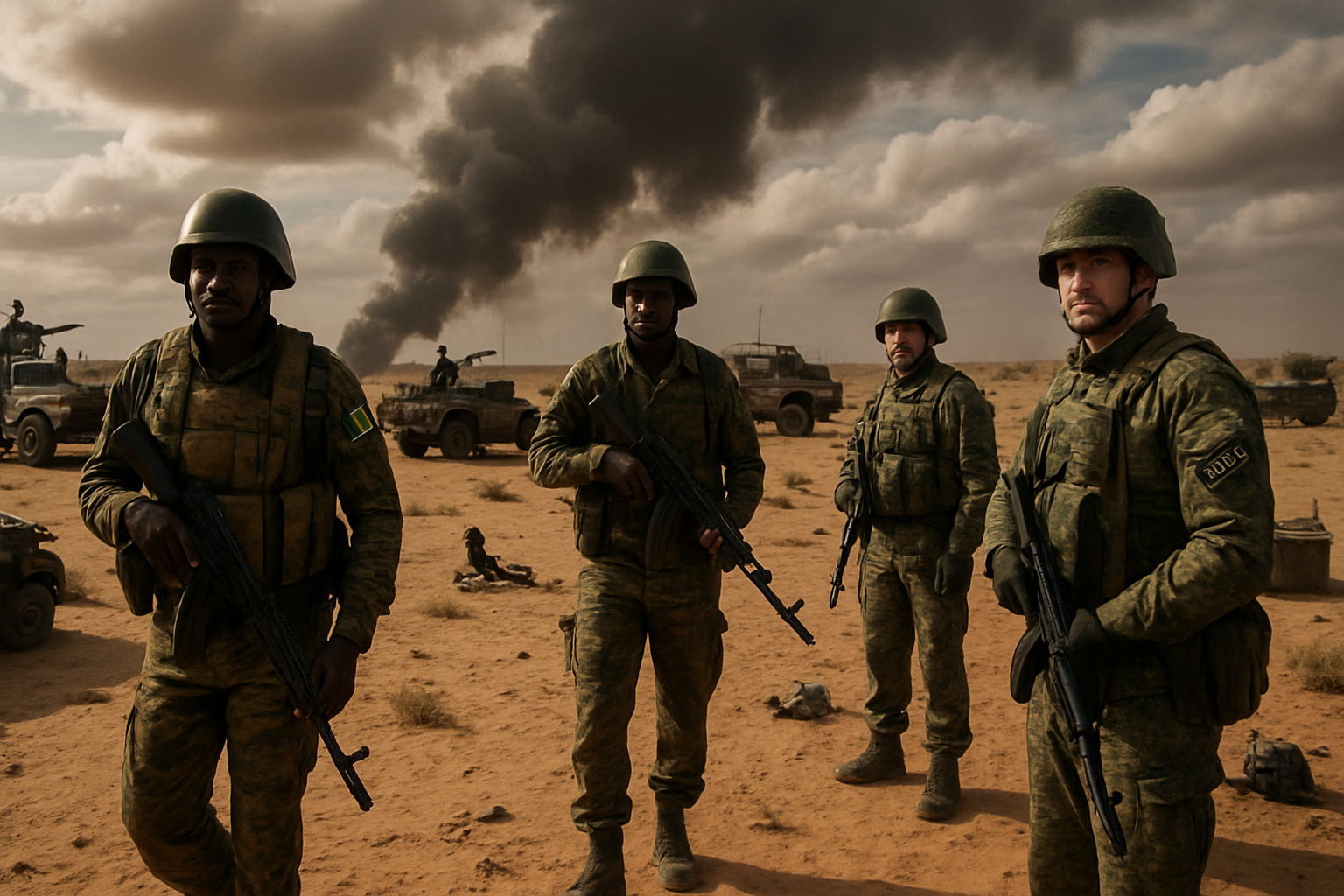
Mali's military junta is confronting its gravest political crisis since seizing power in 2020, following the death of Defense Minister Sadio Camara in coordinated attacks that exposed fundamental security vulnerabilities and raised questions about the regime's survival.
The 47-year-old Camara, a key junta member, was killed Saturday in a car bomb attack at his residence in Kati, according to a government statement released late Sunday. The attack was part of what analysts describe as Mali's most serious security crisis since 2012, involving coordinated strikes by jihadist groups and Tuareg separatists targeting positions near the capital Bamako and across the north of the country.
Strategic Assault Reveals Critical Weaknesses
The coordinated attacks beginning over the weekend represented an unprecedented collaboration between the Al-Qaeda affiliate Jama'at Nusrat al-Islam wal-Muslimin (JNIM) and Tuareg separatist groups, combining ideological extremism with ethnic territorial ambitions. The success of the assault in penetrating Kati—the heavily fortified military stronghold where the ruling junta generals reside—has exposed critical vulnerabilities in Mali's security apparatus.
"This could be a turning point for the junta in power since a 2020 coup"
— Security analysts quoted by RFI
The Tuareg rebels and their jihadist allies managed to take control of the strategic northern city of Kidal, with the Azawad Liberation Front claiming complete control after a series of large-scale attacks against military positions. The attacks extended to the outskirts of the capital, demonstrating a level of coordination and planning that has alarmed international observers.
Russian Forces in Retreat
Adding to the junta's woes, Africa Corps—a Russian paramilitary group controlled by Moscow's Defence Ministry—confirmed Monday that its forces had withdrawn from the northern town of Kidal after fierce fighting. This represents a significant setback for Russian influence in Mali, where Moscow has been supporting the military government since deploying forces in 2025.
The withdrawal highlights the limitations of the Russian security partnership that the junta has relied upon since distancing itself from traditional Western allies. Russia's presence in Mali stretches back to 2021, but the coordinated attacks have demonstrated that even sophisticated international support cannot fully address the complex security challenges facing the Sahel nation.
Junta Leadership Absent as Crisis Deepens
Perhaps most concerning for Mali's political stability is the conspicuous absence of junta leader General Assimi Goïta from public view since the attacks began. This silence has added to the country's deepening political crisis, with opposition groups seizing on the leadership vacuum to demand the military council's resignation and an immediate transition to civilian rule.
The Coalition of Forces for the Republic has called for immediate civilian transition, arguing that the attacks demonstrate the military government's inability to provide basic security for the population. The successful penetration of Kati, where ruling generals are based, has particularly damaged the junta's credibility as a security provider.
Regional and International Implications
The crisis in Mali has broader implications for the Alliance of Sahel States, the confederation formed by Mali, Niger, and Burkina Faso following their respective military coups. The alliance was positioned as an alternative to traditional regional organizations, but the Mali attacks raise questions about the viability of military-led governance in addressing the region's security challenges.
German analysis suggests the attacks show that "the fight in Mali has changed" and that the new tactics have caught not only the military junta but also international partners by surprise. The shift in militant strategy toward coordinated, multi-front operations represents an evolution in the threats facing the Sahel region.
Humanitarian and Economic Consequences
Beyond the immediate political ramifications, the security crisis threatens Mali's economic foundations. The country achieved record gold production worth over $6 billion in 2025, but continued instability jeopardizes mining operations and investor confidence. The attacks also compound an existing humanitarian crisis, with the World Health Organization reporting that emergency oxygen is available at only 23 hospitals nationwide, while hundreds of health centers have been forced to close due to security and funding concerns.
Historical Context and Future Uncertainty
Mali has experienced recurring political and security crises since 2012, when Tuareg separatists and jihadist groups first seized control of the country's north. Multiple international interventions, including French military operations and UN peacekeeping forces, have failed to bring lasting stability to the region.
The current junta came to power in 2020 following a military coup, promising to restore security and territorial integrity. However, the weekend's attacks suggest that despite partnerships with Russia and other international actors, the fundamental challenges underlying Mali's instability remain unresolved.
Security experts note that the successful coordination between historically rival groups—jihadist organizations and Tuareg separatists—represents a significant development that could serve as a template for similar operations across the broader Sahel region.
Looking Ahead: Critical Choices
As Mali grapples with this unprecedented crisis, the military junta faces critical decisions about its future. The death of Defense Minister Camara removes a key figure from the leadership structure at a moment when decisive action is needed. The absence of General Goïta from public view has only heightened uncertainty about the government's capacity to respond effectively.
The international community, including regional partners and global powers, will be closely watching how Mali's crisis unfolds. The outcome will have significant implications not only for Mali's 22 million people but also for broader regional stability and the effectiveness of international security partnerships in addressing 21st-century challenges in Africa's Sahel region.
With the situation remaining fluid and the full extent of the coordinated attacks still being assessed, Mali finds itself at a critical juncture that could determine its political trajectory for years to come. The test ahead will be whether the military government can adapt to these new realities or whether the pressure will ultimately force a fundamental change in Mali's governance structure.