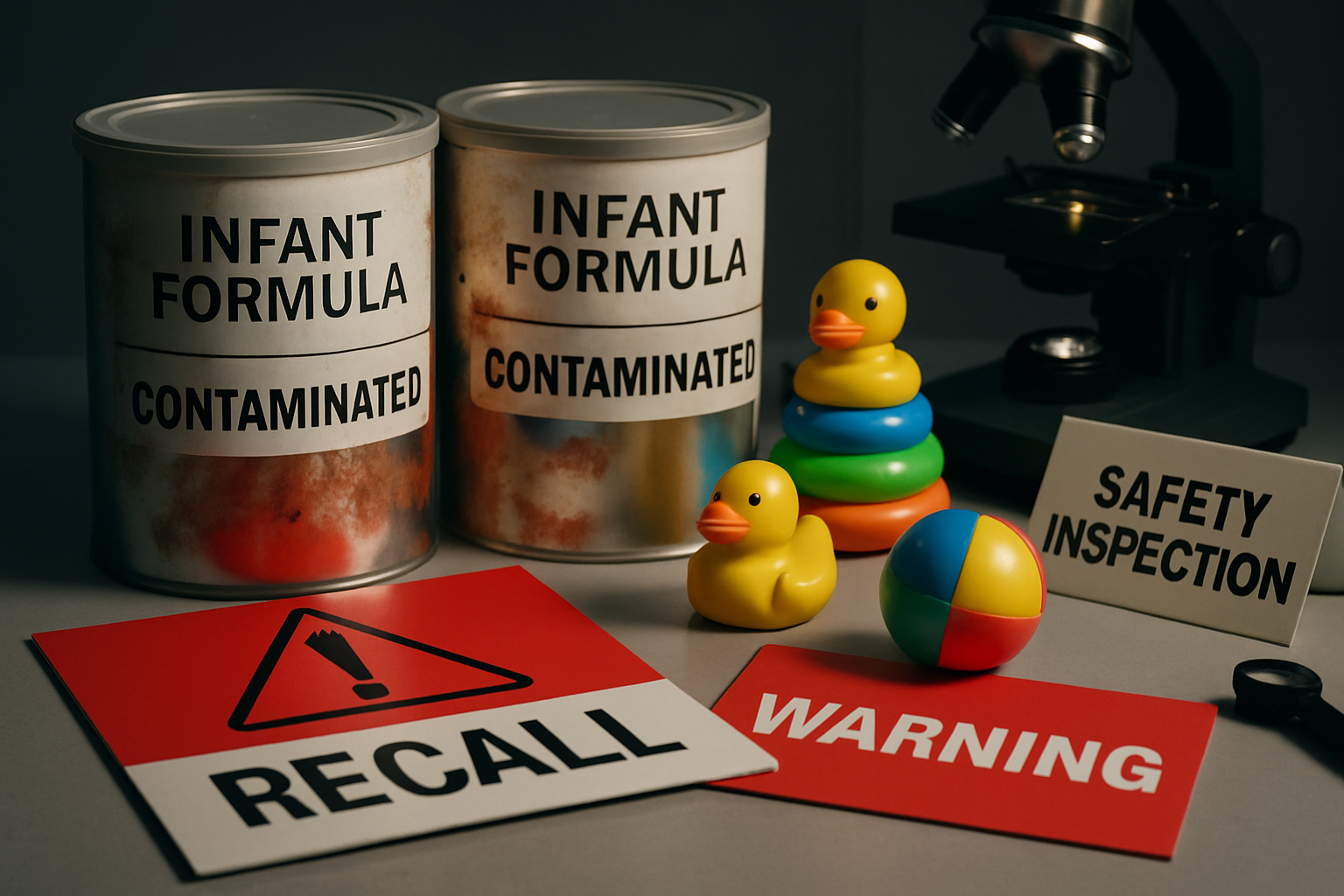
Malta's Food Safety and Security Authority issued urgent consumer warnings on March 13, 2026, targeting contaminated infant formula and asbestos-tainted children's toys, as the Mediterranean nation becomes the latest battleground in an escalating global consumer safety crisis that has already affected dozens of countries.
The dual warnings underscore the mounting vulnerabilities in international supply chains, particularly for products targeting vulnerable populations. Malta's authorities specifically warned against consuming Aptamil Nutribiotik 2 infant formula after European Rapid Alert System notifications indicated potential cereulide contamination—a dangerous toxin that can survive standard pasteurization processes.
Simultaneously, Malta's Consumer Affairs Authority recalled seven kinetic sand toys due to asbestos contamination, highlighting widespread quality control failures affecting children's products across multiple categories. The toys, popular recreational items designed for sensory play, were found to contain dangerous levels of the carcinogenic mineral.
European Infant Formula Crisis Spreads
The Malta warnings represent a significant geographical expansion of the devastating European infant formula crisis that began in early February 2026. According to our comprehensive analysis of related incidents, the cereulide toxin contamination has now affected over 36 infants across the United Kingdom, France, Luxembourg, Greece, and Austria, with cases ranging from severe gastrointestinal symptoms to hospitalizations.
Cereulide, produced by Bacillus cereus bacteria, presents unique challenges for food safety protocols because it remains heat-stable, surviving both pasteurization and typical formula preparation methods. The European Food Safety Authority (EFSA) has revised safety thresholds for the toxin, identifying previously acceptable contamination levels as dangerous to infant health.
"The heat-stable nature of cereulide makes it particularly insidious—conventional safety measures that eliminate most bacterial contamination are insufficient,"
— EFSA Safety Assessment Team
Major manufacturers including Nestlé and Danone have faced recalls across multiple European markets, affecting brands such as Blédilait, Gallia, Guigoz, Picot, Popote, and Babybio. The crisis has prompted legal proceedings in France and Austria, with parents demanding unprecedented transparency in ingredient sourcing and manufacturing processes.
Asbestos Contamination Exposes Toy Safety Gaps
The kinetic sand toy recalls in Malta illuminate broader systemic failures in children's product safety oversight. Asbestos, a known carcinogen banned in most consumer applications, has appeared in various toy categories worldwide, indicating inadequate pre-market testing and supply chain verification.
Industry experts note that kinetic sand products, marketed for their tactile and developmental benefits, have become particularly susceptible to contamination due to the complex mineral sourcing required for their unique texture properties. The presence of asbestos suggests either deliberate cost-cutting through use of contaminated raw materials or fundamental failures in supplier verification processes.
The contaminated toys were distributed through retail channels before detection, meaning numerous children may have already been exposed to carcinogenic materials during what parents believed to be safe recreational activities.
Climate Change Amplifies Safety Risks
These latest contamination incidents occur during the 19th consecutive month of global temperatures exceeding 1.5°C above pre-industrial levels, creating optimal conditions for pathogen growth and disrupting traditional food preservation methods. Climate scientists have identified sustained warming as a critical factor in food safety challenges, as elevated temperatures accelerate bacterial multiplication and toxin production.
The convergence of climate stress with supply chain complexities has created what food safety experts term a "perfect storm" for contamination events. Traditional safety protocols designed for stable climate conditions prove inadequate when environmental factors fundamentally alter pathogen behavior and product stability.
Global Supply Chain Vulnerabilities
Malta's dual warnings reflect broader vulnerabilities in multinational supply chains serving European markets. The infant formula contamination traces back to complex ingredient sourcing networks, with particular concerns raised about components sourced from China and other distant manufacturing centers.
Similarly, the toy contamination highlights the challenges of ensuring safety standards across international manufacturing and distribution networks. Products passing through multiple jurisdictions often face inconsistent oversight, creating gaps where contaminated goods can enter consumer markets undetected.
Social media platforms have emerged as critical early warning systems, with consumer reports and viral videos often exposing safety violations before official regulatory responses. This democratization of safety oversight has accelerated regulatory actions but also created new challenges for coordinated international responses.
Economic and Social Implications
The mounting consumer safety crisis carries substantial economic implications for both manufacturers and consumers. Insurance costs for food and toy manufacturers have risen dramatically, while enhanced molecular testing requirements demand significant infrastructure investments.
Consumer confidence in multinational corporations continues declining, driving a measurable shift toward local sourcing and simplified supply chains that offer greater transparency and traceability. This transformation affects entire market segments, with particular impact on the infant formula sector where trust proves essential for brand viability.
The economic burden extends to healthcare systems managing contamination-related illnesses and regulatory agencies implementing enhanced oversight protocols. Prevention-focused approaches demonstrate superior cost-effectiveness compared to reactive crisis management, but require substantial upfront investments in monitoring and enforcement capabilities.
Regulatory Response and International Cooperation
EFSA has accelerated development of standardized international protocols for detecting heat-stable toxins and coordinating cross-border contamination responses. Enhanced molecular testing procedures now extend beyond conventional bacterial screening to identify previously undetectable threats.
The crisis has prompted unprecedented cooperation between European regulatory agencies, with rapid alert systems facilitating near-real-time information sharing about emerging threats. However, coordination challenges persist due to varying national standards and enforcement capacities.
Industry experts identify 2026 as a critical transformation turning point requiring enhanced international coordination, climate-adaptive processing technologies, and prevention-focused approaches that integrate traditional safety wisdom with modern scientific capabilities.
Consumer Protection Measures
Maltese authorities have established comprehensive consumer guidance protocols, advising immediate disposal of affected products and medical consultation for any symptomatic exposures. The warnings extend beyond specific product recalls to include general guidance on identifying potentially contaminated goods and reporting safety concerns.
Parents face particular challenges navigating the complex safety landscape, with recommendations including increased scrutiny of product labeling, preference for locally-sourced alternatives where available, and heightened awareness of recall notifications across multiple channels.
The crisis has prompted renewed emphasis on consumer education, with authorities prioritizing proactive information sharing over reactive enforcement measures. This approach recognizes that informed consumers serve as crucial partners in maintaining product safety standards.
Future Outlook and Reform Imperatives
The Malta warnings represent a critical juncture in global consumer safety governance, with immediate responses potentially determining the trajectory of international safety standards for decades ahead. The window for building resilient, equitable consumer protection systems continues narrowing as climate pressures accelerate and supply chain complexities increase.
Success requires sustained political commitment, adequate funding for enhanced oversight capabilities, and unprecedented international cooperation addressing both immediate safety threats and underlying systemic vulnerabilities. The integration of traditional safety practices with advanced detection technologies offers promising pathways for comprehensive protection frameworks.
As consumer safety evolves into a recognized global public good, the choices made in 2026 regarding safety protocols, international cooperation frameworks, and prevention strategies will prove decisive for protecting vulnerable populations worldwide while maintaining the economic viability of essential consumer goods markets.
The Malta crisis serves as both a warning and an opportunity—highlighting critical vulnerabilities while demonstrating the potential for rapid, coordinated responses when consumer safety takes priority over commercial considerations.