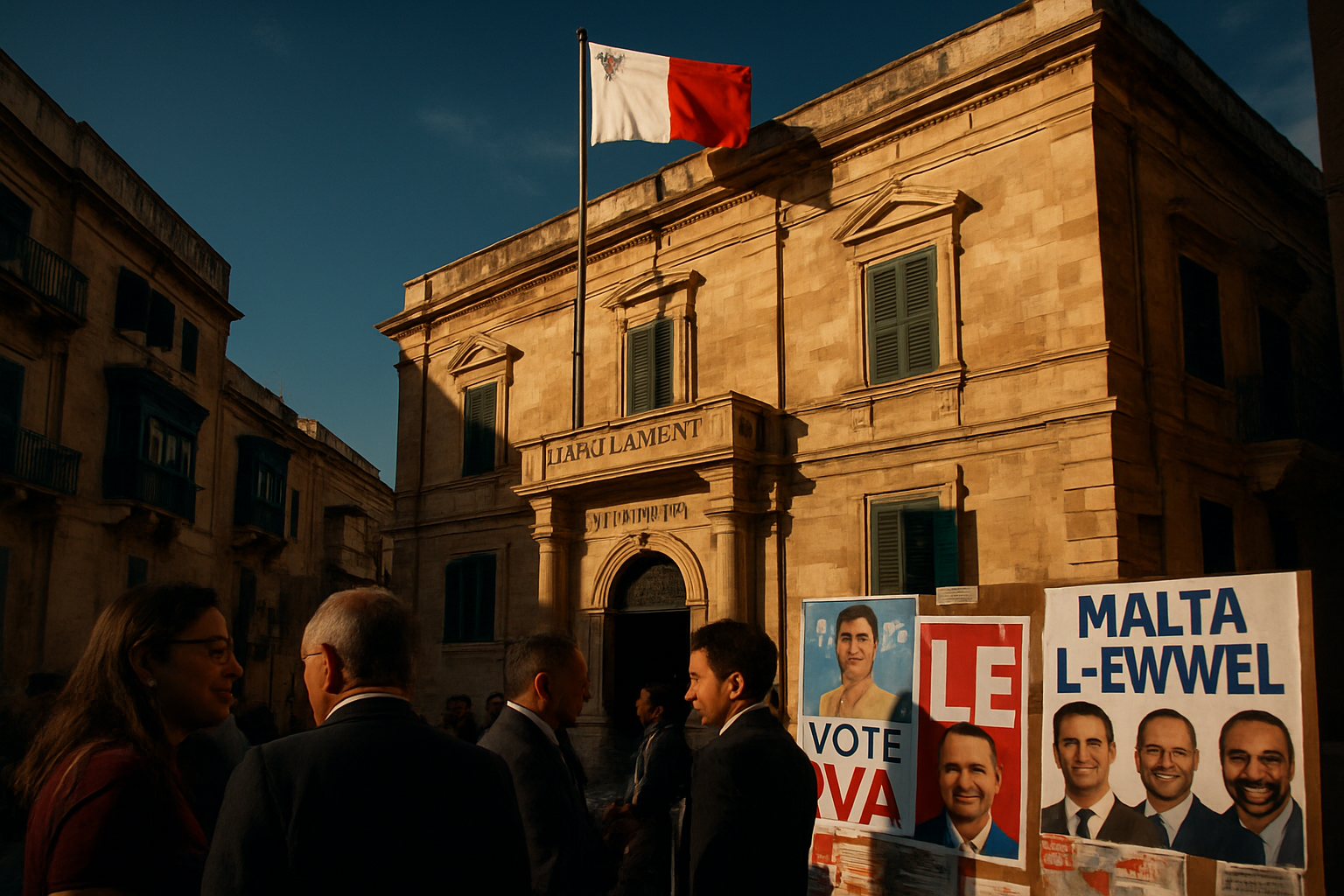
Prime Minister Robert Abela has called an early general election in Malta for May 30, 2026, marking a significant shift in the country's political landscape as the ruling Labour Party seeks to consolidate its position ahead of schedule.
The announcement, made on April 27, 2026, brings to an end months of intense speculation about the timing of Malta's next electoral contest. Originally scheduled for 2027, the early election call represents a strategic political gamble by Abela, who has consistently denied rumors of an early vote since November 2025.
Strategic Timing Amid Economic Confidence
The decision comes at a time when Malta's economy continues to show robust performance, with the International Monetary Fund projecting the country will maintain the fastest-growing economy in the European Union through 2031. Abela has attributed this economic success to Economy Minister Silvio Schembri's policies, which have positioned Malta's economy among the strongest in the European Union.
According to recent IMF projections released in April 2026, Malta is expected to maintain strong performance in real GDP growth while keeping unemployment levels low, providing the Labour government with a favorable economic backdrop for the electoral campaign.
Political Context and Opposition Readiness
The early election call comes against a backdrop of constitutional reforms and political developments that have shaped Malta's recent political discourse. Throughout 2025 and early 2026, the government successfully advanced significant judicial reforms, including anti-deadlock mechanisms for Chief Justice appointments, which gained rare cross-party support from the Opposition.
"Malta is heading into an early general election on 30th May 2026. With the election originally expected in 2027, the announcement marks a sudden shift in the political landscape."
— Political Analysis, Lovin Malta
Recent polling data from March 2026 showed that 51.9% of voters believed the Labour Party would win the next election, while only 8% expected a Nationalist Party victory, with 40.1% remaining uncertain. However, the same survey indicated that 44% of respondents believed the Nationalist Party was unprepared to govern, creating significant perception challenges for the opposition.
Campaign Focus and Key Issues
As the campaign period officially begins, attention turns to the key issues that will define Malta's political future. The Labour Party is expected to campaign on its economic record, pointing to Malta's sustained growth and EU integration achievements. The government has also emphasized its role in managing regional tensions, particularly regarding Middle East developments, while maintaining Malta's neutral status.
The Nationalist Party faces the challenge of presenting compelling alternatives to the established government amid questions about its readiness to govern. The party will likely focus on issues of democratic accountability, transparency, and constitutional governance.
Constitutional and Institutional Developments
The election occurs following significant constitutional progress during 2025-2026. The government's advancement of judicial appointment reforms, which addressed the prolonged deadlock over Chief Justice appointments, demonstrated rare bipartisan cooperation. The Chamber of Advocates had previously declared the appointment process as having "degenerated into a public farce," making the successful reform passage politically significant.
These institutional improvements, combined with Malta's strategic Mediterranean position and its role in EU migration policy, energy security, and regional diplomacy, add weight to the electoral outcomes for European partners.
Regional and International Implications
Malta's election comes during a period of heightened attention to democratic processes across Europe, with the country's strategic location amplifying the significance of political stability. The island nation's role as a neutral Mediterranean state has proven crucial during regional tensions, and electoral continuity is viewed as important for maintaining effective EU cooperation.
The timing of the election, occurring midway through the parliamentary term, reflects broader European patterns where political leaders are increasingly calling early elections to capitalize on favorable circumstances or to provide clarity during uncertain times.
Democratic Process and Voter Participation
With campaigns now officially underway, focus shifts to voter participation and democratic engagement. Malta's electoral system, with its single transferable vote mechanism, often produces coalition governments or requires careful coalition building, making the campaign period crucial for shaping post-election governance arrangements.
The high percentage of uncertain voters (40.1% in March polling) maintains democratic competitiveness despite current Labour advantages, demonstrating the institutional strength of Malta's democratic system through transparent opinion measurement and ongoing constitutional reforms.
Looking Ahead to May 30
As Malta prepares for its early election, the campaign will likely center on themes of economic stewardship, democratic governance, and Malta's role within European and international frameworks. The Labour Party's decision to advance the electoral timeline suggests confidence in its record and current political positioning.
For the Nationalist Party and other opposition forces, the shortened timeline presents both challenges and opportunities to present their vision for Malta's future direction. The presence of smaller parties, including ADPD and Momentum, adds additional dynamics to what promises to be a competitive electoral contest.
The May 30, 2026 election will ultimately serve as a referendum on the Labour government's performance and Malta's political direction as the country continues to navigate its role as a small but strategically important EU member state in the Mediterranean.