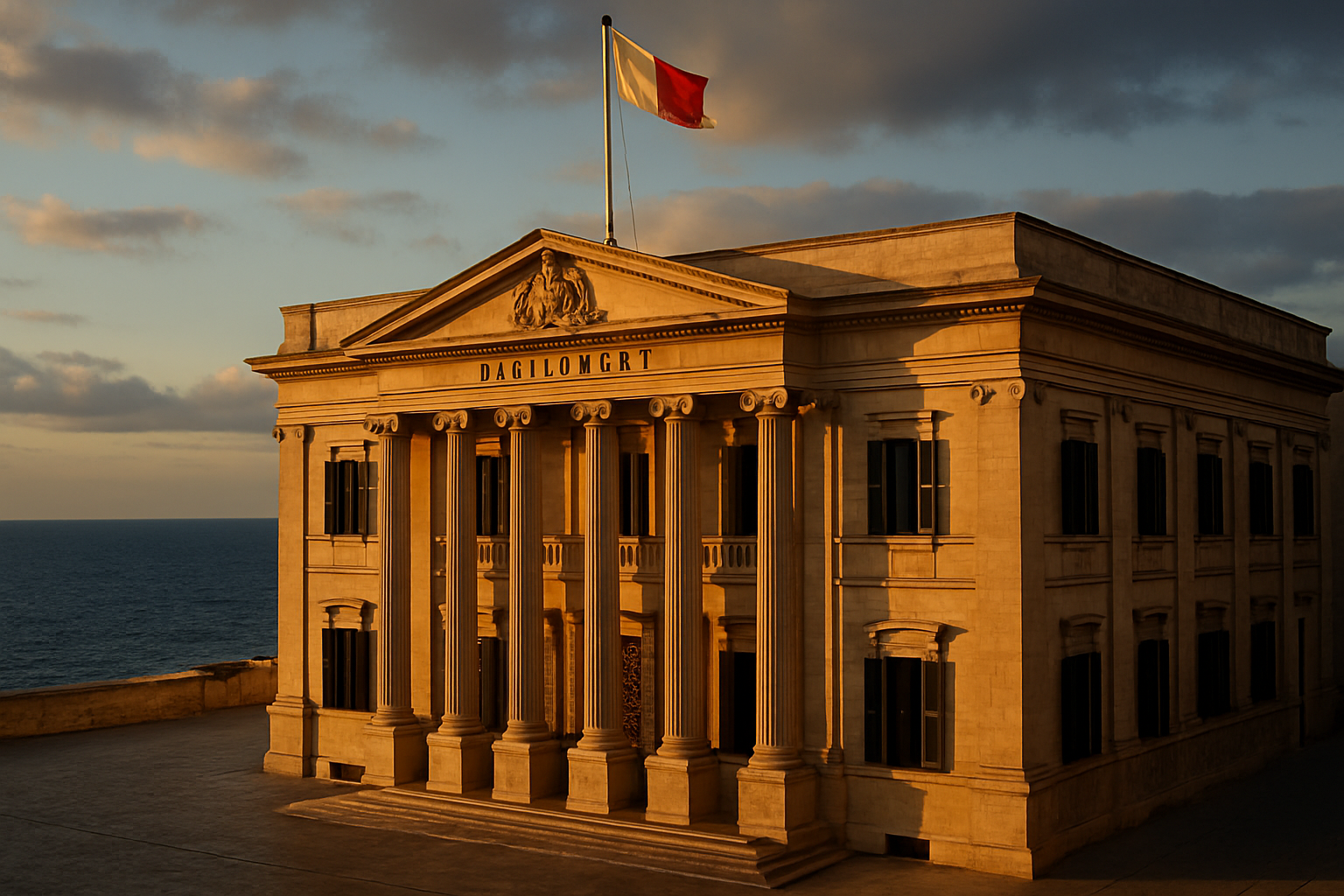
Malta faces mounting economic and judicial challenges as the government reported a €237.2 million deficit for the final quarter of 2025, while the appeals court upheld a prison sentence for former Labour Party general secretary Jimmy Magro in a high-profile corruption case.
The Mediterranean island nation's complex political and economic landscape has taken center stage as two major developments highlight the pressures facing Malta's institutions amid broader European challenges.
Government Deficit Reaches Critical Levels
According to the National Statistics Office, Malta's General Government recorded a deficit of €237.2 million during the fourth quarter of 2025, representing a significant fiscal challenge for the small EU member state. The deficit occurred despite an increase in total revenue of €311.0 million compared to the corresponding quarter in 2024, while total expenditure decreased by €156.4 million over the same period.
By December 2025, Malta's General Government debt had reached €11,397.1 million, marking an increase of €776.0 million compared to the same period in 2024. However, government-guaranteed debt showed improvement, decreasing by €79.8 million to €905.6 million when compared to the previous quarter.
The fiscal challenges come at a critical time for Malta, which has been navigating post-pandemic recovery while managing the economic pressures affecting small EU economies. The IMF has previously warned that Malta's labor-intensive growth model is approaching critical limits, with population density already 15 times the EU average.
Historic Corruption Conviction Upheld
In parallel judicial developments, the appeals court delivered a landmark ruling confirming former Labour Party general secretary Jimmy Magro's conviction in a major corruption case. The court upheld a sentence of four years and eight months, effectively bringing the case to a close and making Magro one of the most senior former political figures in Malta to be jailed in recent years.
Judge Consuelo Scerri Herrera dismissed Magro's appeal and reaffirmed the seriousness of abusing a public role for personal gain. The conviction represents a significant moment for Malta's ongoing efforts to combat corruption and strengthen institutional integrity.
"This ruling demonstrates that no one is above the law, regardless of their political position or past influence."
— Legal observers on the Magro conviction
The case has been closely watched as a test of Malta's judicial independence and commitment to fighting corruption at the highest levels of government. Magro's conviction comes amid broader European efforts to strengthen anti-corruption mechanisms and ensure accountability in public office.
Context of Democratic Resilience
These developments occur within the broader context of Malta's democratic evolution and its role within the European Union. The country has faced significant scrutiny over rule of law issues in recent years, including concerns about judicial appointments and media freedom following the murder of investigative journalist Daphne Caruana Galizia.
According to stored historical context, Malta's political landscape has been marked by ongoing constitutional reforms, including efforts to address the deadlock in Chief Justice appointments through anti-deadlock mechanisms that have gained rare cross-party support. Prime Minister Robert Abela has maintained strategic silence on electoral timing while advancing these crucial judicial reforms.
The economic challenges reflected in the deficit figures also highlight Malta's vulnerability as a small island economy heavily dependent on services and tourism. The nation's strategic Mediterranean position amplifies the significance of both its economic stability and democratic health, particularly given its role in EU migration policy and regional security.
European Integration Pressures
Malta's fiscal position comes under additional scrutiny as EU member states face increasing pressure to meet European fiscal requirements while addressing domestic spending needs. The deficit figures will likely attract attention from European institutions monitoring member state compliance with fiscal rules.
The corruption conviction, meanwhile, demonstrates the effectiveness of Malta's judicial system in prosecuting high-profile cases, potentially strengthening the country's standing with European partners who have emphasized the importance of rule of law mechanisms.
Regional observers note that Malta's challenges mirror broader European patterns where small member states must balance national sovereignty with European integration requirements while maintaining democratic institutions under various pressures.
Looking Ahead
The convergence of economic and political challenges presents Malta with a critical juncture. The government must address the significant deficit while maintaining public services and economic competitiveness. Simultaneously, the judicial system's handling of high-profile corruption cases will be closely watched as a measure of institutional strength.
For Malta's political establishment, these developments serve as both challenge and opportunity. The corruption conviction demonstrates judicial independence, while the economic pressures require decisive policy responses that balance fiscal responsibility with social needs.
As Malta navigates these complex challenges, the international community will be monitoring how this small but strategically important EU member state manages the intersection of economic pressures and democratic governance in an increasingly challenging European environment.