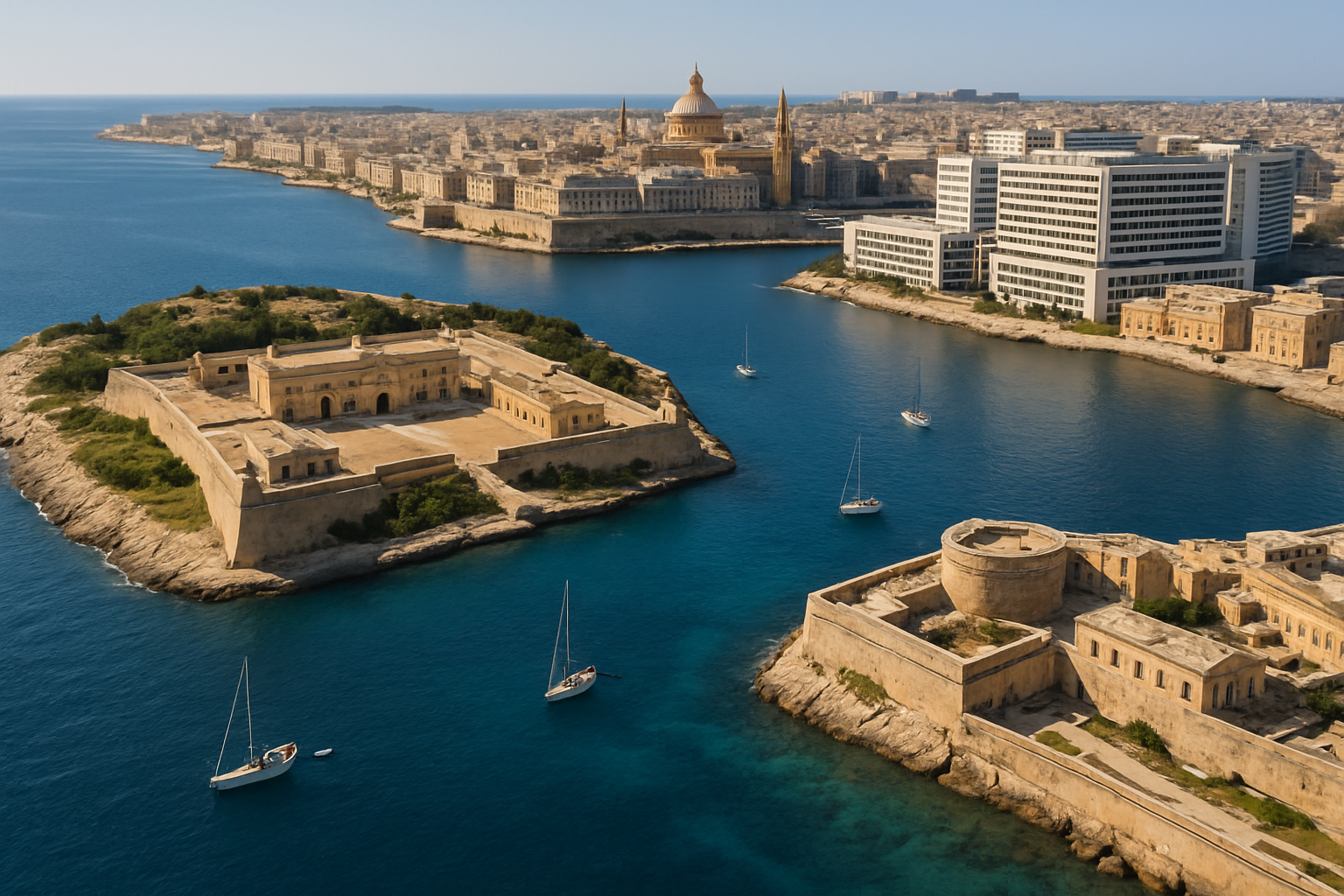
In a dramatic restructuring of Malta's property landscape, the government has moved to reclaim public control over prime assets with a €47 million deal to buy back the Manoel Island concession while simultaneously cancelling a €300 million luxury hotel project at Valletta's historic Evans Building.
The twin decisions, announced on March 13, 2026, represent the most significant government intervention in Malta's property sector in over two decades, potentially reshaping the balance between public ownership and private development on the Mediterranean island nation.
Manoel Island Returns to Public Hands
After more than twenty years of private control, Manoel Island and Fort Tigne are set to return to public ownership through a €47 million compensation deal with MIDI plc. Sources familiar with the negotiations revealed that the government has reached agreement with the consortium, though the deal still requires approval from MIDI's board and shareholders in the coming weeks.
The proposed compensation closely mirrors the value of a €50 million bond that MIDI must repay to investors in July 2026, according to reports from The Shift News. The strategic timing suggests the government may be providing a lifeline to the struggling developer while simultaneously achieving its public ownership objectives.
The buyback would mark the conclusion of months of negotiations between the government and the consortium that has held title to the island since the early 2000s. The deal represents a significant policy reversal from Malta's previous approach of transferring public assets to private developers for tourism and residential projects.
Evans Building Hotel Concession Scrapped
In a parallel development that has sent shockwaves through Malta's hospitality sector, the Public Contracts Review Board has scrapped a €300 million government concession to transform the Evans Building in Valletta into a luxury hotel. The project, awarded to Valletta Luxury Projects—a consortium between Eden Leisure and businessman Mark Weingard—was annulled after the company failed to "validly and unequivocally" state the total value of its bid.
The decision, issued on Thursday following a 15-hour marathon session extending past midnight, effectively cancels what would have been one of Malta's most prestigious hospitality developments. The tender covered the "regeneration, design, management, operation and maintenance of the Evans Building as a superior quality tourism" facility in the heart of the UNESCO World Heritage capital.
"The board ruled that the concession awarded to Valletta Luxury Projects must be annulled after the company failed to validly and unequivocally state the total value of its bid."
— Public Contracts Review Board Decision
Historical Context and Strategic Implications
These decisions come against a backdrop of growing scrutiny over Malta's property development policies and public asset management. The government's moves represent a notable shift from the previous decades' approach of privatizing public assets for tourism and residential development.
Manoel Island, in particular, has been a source of ongoing controversy. Recent developments included unauthorized padel court construction without proper planning permits, sparking broader debates about development oversight and environmental protection. The Post Għalina campaign demonstrated sophisticated community resistance, reflecting an evolution toward more nuanced community evaluation of development proposals.
The island's strategic location and historical significance as the site of Fort Tigne make it a valuable public asset. Its return to government control aligns with growing international trends toward reclaiming public spaces and assets from private developers.
Economic and Development Context
Malta's property decisions occur within a broader context of economic strength that sets the country apart from regional neighbors facing property crises. Bank of Valletta Chairperson Gordon Cordina recently dismissed property bubble concerns, emphasizing that Malta's market is driven by economic fundamentals rather than speculation.
The country approaches strategic planning from a position of solid growth, low unemployment, external surpluses, and contained inflation—factors that provide the government with flexibility to pursue property policies based on long-term strategic considerations rather than short-term financial pressures.
This economic foundation supporting property decisions contrasts sharply with restrictive measures implemented elsewhere in the Mediterranean, including Croatia's 600,000 empty homes conversion program and Cyprus's foreign investment restrictions on residential property.
Regulatory and Governance Implications
The Evans Building cancellation highlights the importance of proper procurement procedures and transparent bidding processes. The Public Contracts Review Board's decision to annul the concession due to unclear bid valuations demonstrates the effectiveness of Malta's regulatory oversight mechanisms.
The case serves as a cautionary tale for major development projects, emphasizing that even high-profile concessions with significant private investment can be terminated if proper procedures are not followed. This regulatory rigor may enhance Malta's reputation for transparent governance in international business circles.
Impact on Malta's Property Sector
The combined impact of these decisions sends a clear message about the government's evolving approach to public asset management. The Manoel Island buyback suggests a willingness to use public resources to reclaim strategic assets, while the Evans Building cancellation demonstrates that regulatory compliance takes precedence over investment value.
For investors and developers, these decisions may signal a more stringent regulatory environment but also one where clear rules are consistently enforced. This predictability, while potentially challenging for some projects, may actually enhance Malta's attractiveness for serious long-term investors who value regulatory certainty.
Future Development Strategy
The government's actions suggest a more selective approach to public-private partnerships, prioritizing projects that meet strict regulatory standards while maintaining public control over strategically important assets. This balanced approach reflects Malta's position as a small Mediterranean state seeking to maximize the benefits of development while preserving its cultural and environmental heritage.
The €47 million Manoel Island investment represents a significant commitment to public ownership of prime real estate. How the government develops and manages the island moving forward will serve as a test case for its broader property development philosophy.
With these major property decisions now in motion, Malta's government has signaled a more assertive role in shaping the country's physical development. The success of these initiatives will likely influence future public asset management strategies and provide valuable lessons for other small nations balancing development pressures with public interest considerations.