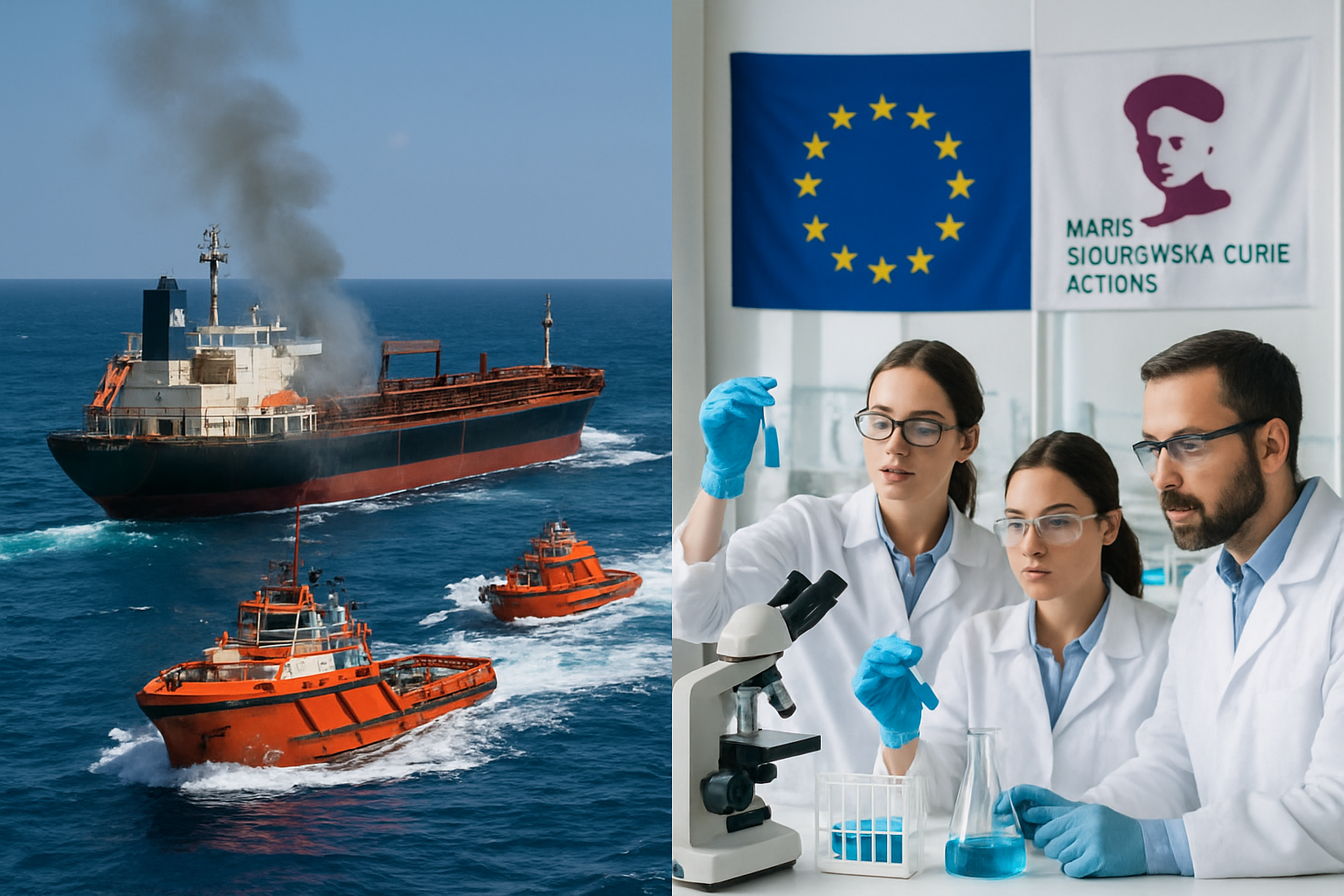
Malta is seeking international assistance to find a "permanent solution" to a damaged Russian gas tanker drifting near its search and rescue zone, while simultaneously celebrating unprecedented success in European research initiatives that position the Mediterranean nation as an emerging hub for scientific excellence.
Prime Minister Robert Abela announced that Malta has activated contingency plans to monitor the Arctic Metagaz, a Russian vessel carrying 61,000 tons of liquefied natural gas that has been drifting in international waters between the search and rescue zones of Malta, Italy, and Libya. The tanker sustained significant damage from what appears to be a maritime drone attack, marking yet another incident in the broader Mediterranean maritime crisis that has plagued the region throughout 2026.
Maritime Crisis Requires International Coordination
The situation with the Arctic Metagaz represents a complex challenge that extends beyond Malta's territorial capabilities. According to maritime security analysts, this incident marks the first successful drone attack on a Russian LNG tanker, highlighting the escalating nature of maritime warfare in the Mediterranean region.
"The vessel's proximity to Malta's territorial waters heightens concerns for this densely populated maritime region," officials noted, emphasizing the environmental risks posed by 61,000 tons of LNG aboard a damaged vessel. The economic implications include surging maritime insurance premiums and alternative routing costs affecting global supply chains.
Malta's response demonstrates the country's commitment to maritime safety despite the vessel operating in international waters. The government has been coordinating with European partners and international maritime authorities to ensure proper handling of the situation while maintaining strict adherence to international maritime law.
Research Excellence Through Marie Skłodowska-Curie Actions
While managing maritime challenges, Malta has achieved remarkable success in the European Union's flagship research program. The country has steadily strengthened its participation in Marie Skłodowska-Curie Actions (MSCA) under the Horizon Europe programme, with twenty-two Seal of Excellence awards granted to proposals submitted by researchers and institutions based in Malta during this cycle.
"The Seal of Excellence is awarded to high-quality research proposals that demonstrate exceptional scientific merit and potential for innovation."
— European Commission, Horizon Europe Programme
This achievement represents a turning point for Malta's scientific and innovation landscape, positioning the island nation as one of Europe's most dynamic hubs for research talent. The MSCA programme is specifically designed to promote excellence, mobility, and international collaboration among researchers at all stages of their careers.
Malta's growing success in securing these prestigious awards demonstrates the country's commitment to building robust research infrastructure and attracting top-tier scientific talent. The recognition extends beyond individual achievements to represent systemic improvements in Malta's capacity to contribute to European research excellence.
Strategic Positioning in Challenging Times
Malta's dual focus on maritime security and research excellence occurs against the backdrop of unprecedented regional challenges. The Mediterranean has experienced severe maritime disruptions throughout 2026, including the broader global energy crisis triggered by conflicts in the Middle East that have affected 40% of global oil transit through strategic chokepoints.
The island nation's approach to the Russian tanker crisis reflects its broader strategy of international cooperation and adherence to maritime law. Despite being unable to intervene directly in international waters, Malta's coordination with European partners demonstrates the kind of multilateral approach that has become increasingly important in addressing complex transnational challenges.
Similarly, Malta's research achievements through MSCA represent strategic positioning for long-term prosperity. By investing in scientific excellence and international collaboration, Malta is building the foundation for a knowledge-based economy that can provide resilience against global economic volatility.
Technology Integration and Maritime Innovation
Malta's handling of both challenges demonstrates sophisticated integration of modern capabilities with traditional strengths. The country's maritime monitoring systems utilize enhanced satellite tracking, AI-powered monitoring, and real-time analytics to provide unprecedented visibility into shipping patterns and potential threats.
These technological capabilities, combined with Malta's strategic location in the Mediterranean, position the country as a valuable partner in regional maritime security cooperation. The expertise gained through managing complex maritime situations like the Arctic Metagaz incident contributes to Malta's broader role in European security architecture.
In the research sector, Malta's success in MSCA reflects similar technological sophistication. The country's researchers are engaging with cutting-edge scientific methodologies while maintaining strong connections to European research networks, creating opportunities for knowledge transfer and collaborative innovation.
International Cooperation as Core Strategy
Both the maritime crisis response and research achievements highlight Malta's commitment to international cooperation as a core strategic approach. The government's handling of the Russian tanker situation exemplifies how smaller nations can play constructive roles in complex international challenges through coordinated action with partners.
The MSCA success demonstrates how participation in European programs can amplify national capabilities while contributing to broader continental objectives. Malta's researchers are not merely recipients of European funding but active contributors to scientific advancement that benefits the entire European Union.
This dual approach – combining immediate crisis management with long-term capacity building – reflects sophisticated strategic thinking that acknowledges both current challenges and future opportunities. Malta's experience provides a template for how smaller European nations can maintain relevance and influence in an increasingly complex international environment.
Implications for European Integration
Malta's achievements in both maritime security cooperation and research excellence contribute to broader discussions about European integration and strategic autonomy. The country's ability to coordinate effectively with partners during the tanker crisis while building indigenous research capabilities demonstrates the kind of balanced approach that strengthens both national and European capacities.
As Europe faces ongoing challenges including energy security, climate change, and geopolitical tensions, Malta's example shows how member states can contribute to collective resilience while building their own strategic advantages. The combination of immediate crisis response capabilities with long-term research investment creates multiple pathways for continued relevance and contribution.
The success in MSCA particularly positions Malta to play a larger role in European innovation ecosystems, potentially attracting additional investment and talent while contributing to solutions for continental challenges. This represents the kind of positive-sum development that strengthens both national and European interests simultaneously.
As Malta continues to navigate complex maritime challenges while building research excellence, the country's experience offers valuable insights into how smaller nations can maintain strategic relevance through international cooperation, technological innovation, and sustained investment in human capital. The convergence of immediate crisis management with long-term capacity building provides a model for resilient development in an uncertain global environment.