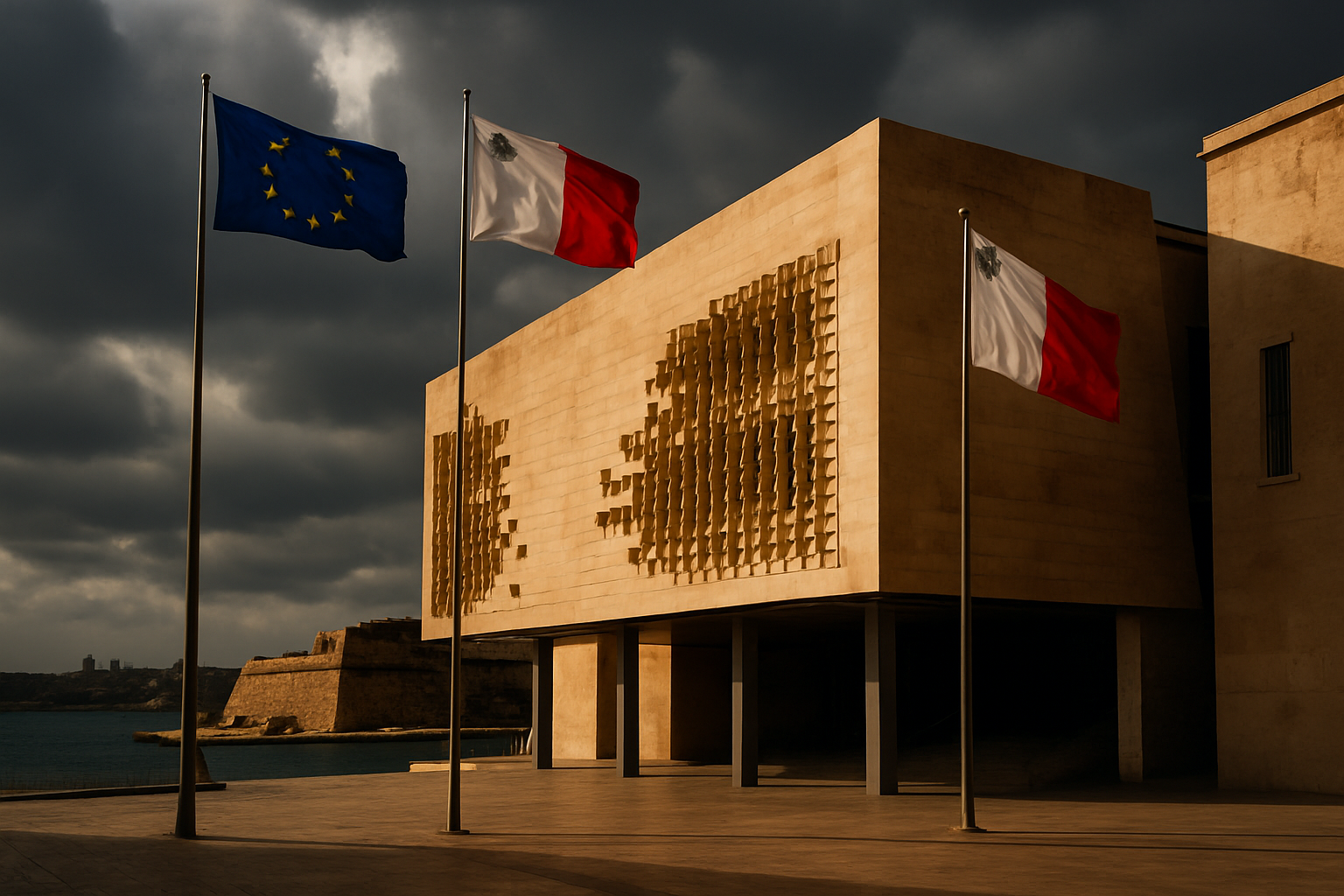
Maltese Prime Minister Robert Abela continues to maintain suspense over the timing of the next general election, laughing off speculation about potential May or June dates while simultaneously advancing significant constitutional reforms and addressing growing international tensions.
The uncertainty surrounding Malta's electoral calendar comes at a critical juncture for the Mediterranean nation, as Abela's Labour government navigates constitutional amendments, regional security concerns, and mounting political pressure following months of speculation about early elections.
Strategic Silence on Electoral Calendar
Speaking to reporters on Monday, Prime Minister Abela dismissed rumors circulating about potential spring elections, maintaining his characteristic reticence about revealing his electoral strategy. The Prime Minister's office has consistently refused to provide concrete timelines, despite growing pressure from opposition parties and political analysts seeking clarity.
The speculation intensifies as Malta approaches the midpoint of the current parliamentary term, with political observers noting that the timing of any potential election could significantly impact the government's ability to complete its ambitious reform agenda. Sources within the Labour Party suggest that Abela is carefully weighing multiple factors, including regional stability and domestic policy priorities.
Constitutional Reforms Gain Momentum
Parallel to the electoral speculation, the Maltese Parliament has advanced crucial constitutional changes, with the government successfully tabling legislation aimed at introducing an anti-deadlock mechanism for appointing a new Chief Justice. The Opposition agreed to the First Reading as a gesture of goodwill, marking rare cross-party cooperation on judicial reform.
This constitutional progress comes against the backdrop of an ongoing judicial crisis that has dominated Malta's political landscape. The Chamber of Advocates previously declared the Chief Justice appointment process had "degenerated into a public farce," highlighting the urgent need for institutional reform.
"These constitutional changes are essential for maintaining public confidence in our judicial system. The current deadlock serves no one's interests."
— Government spokesperson
The reforms represent a significant legislative achievement for Abela's government, potentially providing political capital that could influence the timing of any future electoral announcement. Constitutional experts suggest that completing these reforms before calling elections could strengthen the government's democratic credentials.
Middle East Crisis Demands National Unity
The Prime Minister's electoral calculations are further complicated by escalating international tensions, particularly the ongoing Middle East crisis involving Iran and regional powers. Abela has called for national unity to prevail in the wake of the regional conflict, emphasizing Malta's role as a neutral Mediterranean state.
Opposition Leader Alex Borg has promised the government full opposition support in addressing the impacts of what officials describe as the "Iranian crisis," demonstrating unusual cross-party consensus on foreign policy matters. This cooperation contrasts sharply with the typical adversarial dynamics of Malta's political system.
The regional instability has created additional complexity for Malta's electoral timing, as international crises traditionally benefit incumbent governments but also raise questions about the appropriateness of partisan campaigning during periods of global uncertainty.
Historical Context and Political Precedents
Malta's current political situation must be understood within the broader context of recent constitutional and judicial challenges. Earlier this year, NGO Repubblika filed formal complaints with the Standards Commissioner regarding allegations made under oath by Judge Lawrence Mintoff concerning Prime Minister Abela's conduct, creating additional pressure on the government.
The European Union has been closely monitoring Malta's rule of law compliance, with potential implications for future funding relationships and political standing within the bloc. This international scrutiny adds another layer of consideration to any electoral timing decisions.
Regional Democratic Trends
Malta's electoral uncertainty occurs amid a period of significant democratic transitions across Europe and beyond. Recent elections in Bangladesh, Japan, and Portugal have demonstrated varying approaches to timing electoral contests amid crises, providing potential lessons for Maltese political strategists.
The success of other small European nations in maintaining democratic stability during challenging periods may influence Malta's approach to balancing electoral politics with governance responsibilities.
Opposition Positioning and Public Expectations
The Nationalist Party opposition continues to pressure the government for electoral clarity, arguing that the uncertainty creates unnecessary economic and political instability. Business leaders have echoed these concerns, suggesting that prolonged electoral speculation could impact investment decisions and policy continuity.
Public polling suggests mixed reactions to the government's handling of various crises, with some voters appreciating the focus on governance over campaigning, while others demand electoral accountability sooner rather than later.
Economic and Strategic Considerations
Malta's small size and strategic Mediterranean location amplify the significance of electoral timing decisions. The nation's role in EU migration policy, energy security, and regional diplomacy means that governmental stability carries implications beyond domestic politics.
Economic indicators suggest mixed performance, with tourism recovery following the pandemic offset by inflation pressures and regional uncertainty. These economic factors likely feature prominently in the Prime Minister's electoral calculations.
Looking Forward: Key Factors in the Decision
Political analysts identify several critical factors that may influence Prime Minister Abela's eventual announcement: completion of constitutional reforms, stabilization of regional tensions, economic performance indicators, and internal Labour Party dynamics.
The success of the Chief Justice appointment mechanism reforms could provide a natural conclusion to one major governmental priority, potentially clearing the way for electoral considerations. Similarly, any resolution or escalation of Middle East tensions could significantly impact the political landscape.
As Malta navigates this period of uncertainty, the Prime Minister's strategic silence continues to generate speculation while allowing the government to focus on immediate governance challenges. The eventual timing announcement, when it comes, will likely reflect a careful calculation of domestic priorities, regional stability, and political advantage.
For now, Malta remains in a state of electoral anticipation, with citizens, opposition parties, and international observers all waiting for Prime Minister Abela to reveal his hand in what has become a high-stakes game of political timing in the heart of the Mediterranean.