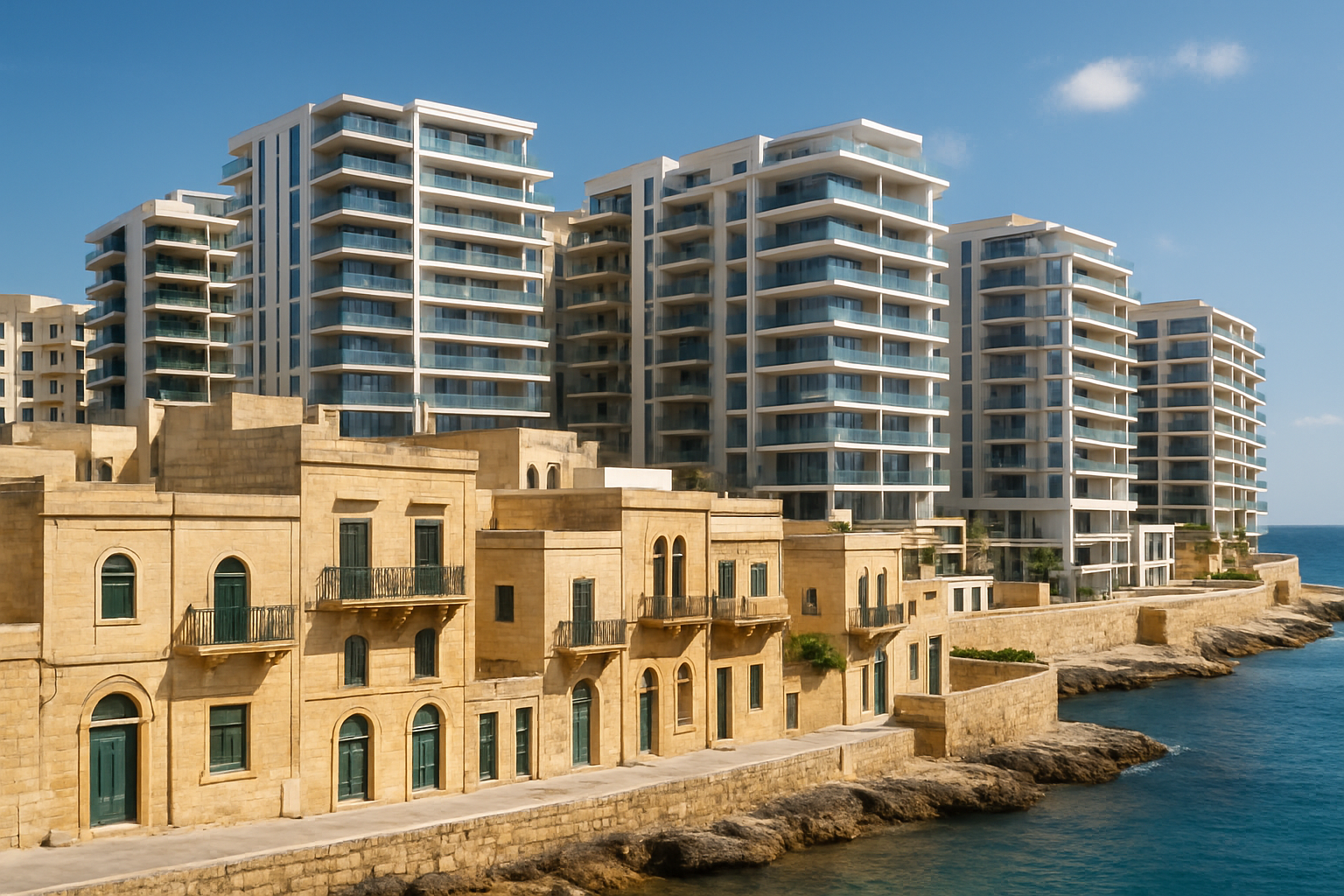
Malta is positioning itself for a new chapter of strategic economic growth, entering long-term planning from a position of economic strength rather than stress, according to leading financial experts who dismiss concerns about property market speculation driving recent growth patterns.
Bank of Valletta Chairperson Gordon Cordina has pushed back against mounting fears of a property bubble, emphasizing that Malta's current property market dynamics are fundamentally driven by genuine economic factors rather than speculative investment. Speaking to Nicole Meilak, Cordina outlined how Malta's economic model successfully balances robust growth with institutional resilience.
"Malta is not entering its long-term strategic planning phase from a position of economic stress," Cordina explained. "It is not grappling with recession or stagnation. It is approaching the next chapter from a platform of strength: solid growth, low unemployment, external surpluses and contained inflation."
Economic Foundation Supporting Property Growth
The assessment comes amid broader analysis of Malta's economic trajectory, which stands in stark contrast to many global markets experiencing various forms of distress. Unlike economies struggling with recession or stagnation, Malta has achieved what economists describe as a rare combination of sustainable growth metrics.
The country's economic indicators paint a picture of fundamental strength: unemployment remains at historically low levels, while external trade balances show consistent surpluses. Inflation, a critical concern affecting property markets globally, has remained within manageable parameters despite international pressures.
This economic foundation provides crucial context for understanding Malta's property market dynamics. Rather than speculative investment driving artificial price pressures, the market reflects genuine demand supported by employment growth, population dynamics, and infrastructure development.
Property Market Fundamentals vs. Speculation
Cordina's analysis directly addresses growing international concern about property bubbles affecting small economies. His emphasis on "fundamentals, not speculation" represents a significant intervention in policy debates about Malta's development trajectory.
The distinction between fundamental-driven and speculation-driven property markets has become increasingly important as global real estate faces various pressures. Malta's case demonstrates how strong underlying economics can support property market growth without creating the dangerous dynamics typically associated with speculative bubbles.
Evidence supporting this fundamental-based analysis includes consistent employment growth across multiple sectors, infrastructure investments creating genuine utility improvements, and demographic trends supporting housing demand from both domestic and international residents.
"Modern banks now battle cybercrime and climate risk as much as financial shocks."
— Gordon Cordina, Bank of Valletta Chairperson
Banking Sector Evolution and Risk Management
Cordina's perspective reflects broader evolution within Malta's banking sector, which has adapted to contemporary challenges beyond traditional financial risk management. Modern banking institutions now must address cybersecurity threats, climate-related risks, and technological disruption alongside conventional economic volatility.
This comprehensive risk management approach provides additional stability for property market development. Banks' enhanced capacity to assess and manage diverse risk categories contributes to more sophisticated property lending decisions and market stability.
The evolution represents significant institutional maturation, with Malta's banking sector demonstrating capabilities comparable to larger European financial centers while maintaining the agility advantages of smaller institutional frameworks.
Regional and Global Context
Malta's position contrasts sharply with property market challenges affecting other regions. While global construction costs have created negative developer margins across multiple markets, and memory chip shortages have increased building technology costs, Malta's economic foundation provides resilience against these external pressures.
International context includes European policy coordination addressing housing challenges through various mechanisms. Croatia targets conversion of 600,000 empty homes, Cyprus implements foreign investment restrictions, and Greece analyzes regional price variations. Malta's approach, emphasizing fundamental economic strength, offers an alternative model for sustainable property market development.
The Mediterranean region's coordinated responses to housing challenges highlight Malta's unique position. Rather than implementing restrictive measures, Malta's strategy focuses on strengthening underlying economic conditions supporting genuine property demand.
Strategic Planning for Continued Growth
The transition to "strategic planning phase" represents recognition that Malta's rapid development period requires more sophisticated governance approaches. Moving from reactive growth management to proactive strategic development positions the country for sustainable long-term prosperity.
Strategic planning encompasses infrastructure development, workforce planning, environmental sustainability, and international competitiveness. Property market development occurs within this broader framework, ensuring market growth serves comprehensive national development objectives.
Planning considerations include balancing growth with quality of life preservation, managing population density increases, and maintaining Malta's attractiveness for both residents and businesses while preserving cultural and environmental characteristics.
Technology and Modern Banking Challenges
Cordina's reference to cybercrime and climate risk reflects banking sector transformation addressing 21st-century challenges. These considerations directly impact property market stability through improved risk assessment and institutional resilience.
Cybersecurity measures protect property transaction systems and financial infrastructure supporting real estate development. Climate risk assessment ensures property investments account for long-term environmental sustainability, creating more robust market fundamentals.
The integration of technology considerations into banking operations provides additional market stability layers while supporting innovation in property development and financing mechanisms.
Future Development Trajectory
Malta's economic model appears positioned for continued success through the combination of institutional stability, strategic planning capacity, and fundamental economic strength. The property market's role within this broader development framework emphasizes utility and genuine demand over speculative investment.
Success factors include maintaining employment growth, managing infrastructure development effectively, and preserving the balance between economic opportunity and community character. The approach provides templates for other small economies seeking sustainable development without creating speculative market dynamics.
International cooperation and knowledge sharing remain important components, with Malta's experience potentially informing similar development challenges faced by other Mediterranean and island economies pursuing growth while maintaining stability.
As Malta enters this new strategic phase, the emphasis on fundamental economic drivers rather than speculative forces positions the country for sustainable property market development aligned with broader national development objectives.