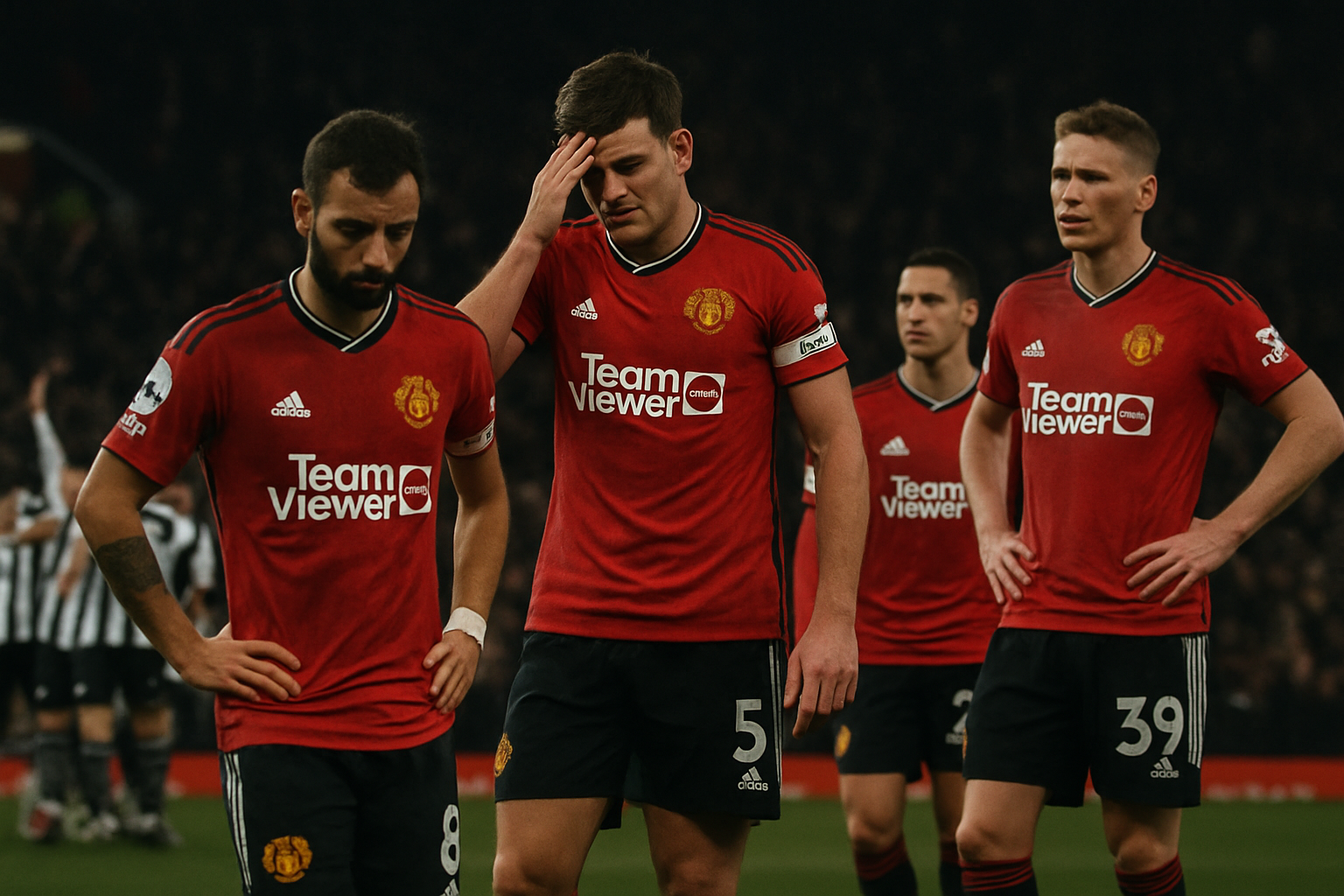
Manchester United's tumultuous season took another damaging turn as they suffered a crushing 2-1 defeat to Newcastle United on March 4, 2026, despite their opponents being reduced to ten men before halftime, ending interim manager Michael Carrick's impressive unbeaten streak.
The defeat at St. James' Park represents one of the most shocking results of the Premier League season, with William Osula's dramatic late winner sealing a historic victory for the Magpies. The result has sent shockwaves through Old Trafford and raised serious questions about United's direction under Carrick, who had previously overseen four consecutive victories since replacing Ruben Amorim.
The Match That Defied Logic
Newcastle's victory defied all conventional football wisdom, with the hosts managing to overcome both United's theoretical numerical advantage and their own tactical limitations. The turning point came before halftime when Newcastle was reduced to ten men, yet rather than capitalize on their superior numbers, United appeared to lose their tactical discipline and attacking coherence.
Danish striker William Osula emerged as the unlikely hero, scoring what sources describe as a "Euro goal" that effectively ended Michael Carrick's remarkable unbeaten run. The goal represented the culmination of Newcastle's resilient defensive display and their ability to exploit United's vulnerabilities on the counter-attack.
"It didn't help that Newcastle was reduced to 10 men before halftime. This was supposed to be our advantage, but we couldn't capitalize on it."
— Sources close to the Manchester United camp
Carrick's Golden Run Comes to an End
The defeat marks the end of what had been a remarkable transformation under Michael Carrick's interim management. Since taking over from Portuguese coach Ruben Amorim, Carrick had overseen four consecutive victories, including a crucial 2-0 win over Tottenham that had temporarily lifted spirits at Old Trafford.
That victory over Spurs, featuring goals from Bryan Mbeumo and Bruno Fernandes, had seen United climb to 44 points from 25 games, maintaining their fourth-place position and keeping them four points ahead of Chelsea. The momentum had suggested that Carrick might be the steady hand needed to guide United through their crisis period.
However, the Newcastle defeat has exposed the fragility of United's recent improvement and highlighted the underlying structural problems that continue to plague the club. The inability to capitalize on a numerical advantage against a well-organized but depleted Newcastle side raises questions about the players' tactical understanding and mental resilience.
Historical Context of United's Struggles
This latest setback adds to what has been a season of profound disappointment for Manchester United. The club's struggles extend far beyond individual results, representing a broader malaise that has seen them fail to establish any consistent identity or playing style under multiple managers.
The departure of Ruben Amorim, who himself had replaced previous management, illustrates the instability that has characterized United's approach to team building. Each managerial change has brought promises of renewal, yet the fundamental issues persist: defensive frailties, attacking inconsistency, and a concerning inability to manage games effectively.
Recent memory provides stark context for United's current predicament. While Arsenal battles Manchester City for the Premier League title, with the Gunners currently enjoying a seven-point lead, United finds itself struggling to maintain European qualification. The contrast is particularly painful for fans who remember the club's dominant years under Sir Alex Ferguson.
Newcastle's Tactical Masterstroke
Credit must be given to Newcastle United for their tactical discipline and mental fortitude in securing this remarkable victory. Playing with ten men for the majority of the match, Eddie Howe's side demonstrated the kind of resilience and tactical intelligence that has been conspicuously absent from United's recent performances.
The Magpies' ability to maintain their defensive shape while threatening on the counter-attack showcased superior game management. Osula's winning goal was not a moment of individual brilliance but rather the product of a well-executed team strategy that exploited United's tendency to become disorganized when chasing games.
This victory continues Newcastle's impressive development under Howe, who has transformed the club into a genuine force in English football. Their ability to secure results in challenging circumstances demonstrates the kind of character and tactical sophistication that United currently lacks.
The Broader Premier League Context
Manchester United's struggles stand in stark contrast to the compelling title race developing at the top of the Premier League table. Arsenal's recent victories, including crucial wins over Chelsea and Brighton, have established them as genuine title contenders for the first time since their 2003-04 'Invincibles' season.
Meanwhile, Manchester City's occasional stumbles, including dropped points against Nottingham Forest, have created genuine uncertainty in the championship race. The fact that United finds itself as a peripheral figure in these discussions, rather than a central protagonist, speaks to how far the club has fallen from its traditional position.
The Premier League's competitive balance has never been more evident, with teams like Newcastle, Brighton, and Aston Villa all capable of securing impressive results against traditional 'Big Six' opponents. United's inability to adapt to this new reality has left them vulnerable to exactly the kind of upset they suffered at St. James' Park.
What This Means for United's Season
The defeat to Newcastle represents more than just three dropped points; it signals a potential crisis of confidence that could derail United's season entirely. With European qualification looking increasingly uncertain, the pressure on both players and management will intensify significantly.
Michael Carrick, who had appeared to stabilize the situation during his unbeaten run, now faces the challenge of regrouping his squad and restoring their belief. The psychological impact of losing to ten men cannot be understated, particularly for a group of players already lacking confidence in their collective ability.
The remaining fixtures will be crucial in determining whether this defeat represents a temporary setback or the beginning of a more serious collapse. United's squad depth and individual quality should, in theory, provide sufficient resources to recover, but the evidence suggests deeper issues that transcend personnel changes.
Looking Ahead: Challenges and Opportunities
As Manchester United attempts to process this latest disappointment, the focus must shift quickly to their remaining fixtures and the urgent need to secure European qualification. The club's financial resources and global reputation depend heavily on maintaining their presence in continental competition.
The Newcastle defeat has highlighted several areas requiring immediate attention: defensive organization, tactical discipline, and mental resilience under pressure. These are not issues that can be resolved overnight, but they represent the foundation upon which any recovery must be built.
For Michael Carrick, the challenge is to use this setback as a learning opportunity rather than allowing it to undermine the progress achieved during his unbeaten run. The interim manager's experience as a player at Old Trafford should provide him with the perspective needed to navigate this difficult period.
Ultimately, Manchester United's struggles continue to reflect broader institutional challenges that extend beyond any single result or managerial appointment. Until these fundamental issues are addressed, defeats like the one suffered at Newcastle are likely to remain a recurring theme in the club's ongoing narrative of underachievement.