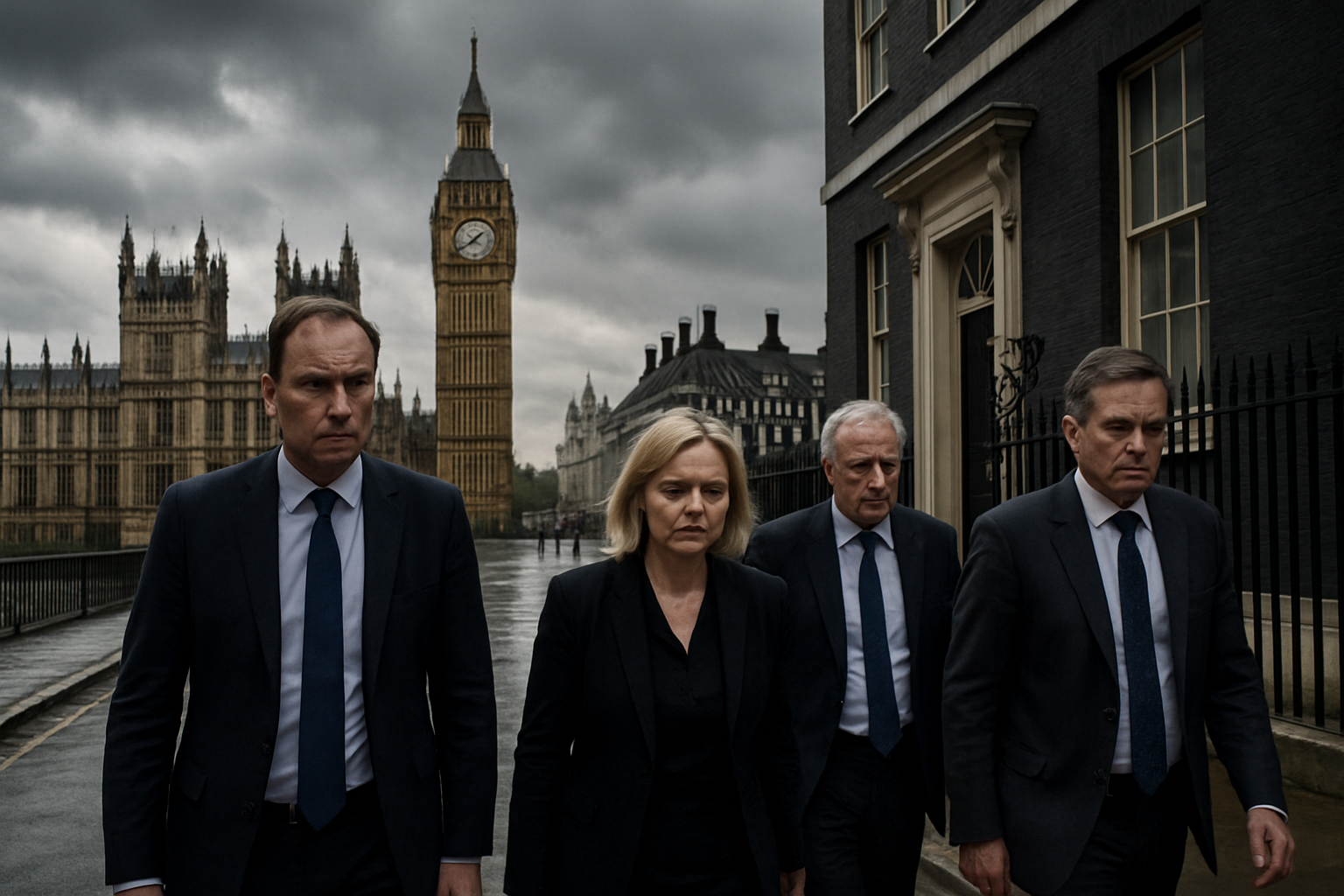
Prime Minister Keir Starmer faces his gravest political crisis yet after the government admitted on Thursday that former US ambassador Peter Mandelson failed his security vetting but was granted developed clearance against official recommendations, with senior ministers claiming they were unaware of the override decision.
The extraordinary revelation has sent shockwaves through Westminster, intensifying pressure on Starmer's embattled government and raising fundamental questions about diplomatic appointment procedures and political accountability. The disclosure marks the latest chapter in what experts are calling the deepest constitutional crisis in modern British political history.
The Security Vetting Override
"Neither the Prime Minister, nor any government minister, was aware that Peter Mandelson was granted developed vetting against the advice of UK Security Vetting until earlier this week," a government spokesperson said in a statement released Thursday evening. The decision to override the security recommendation was taken by officials in the Foreign Office without ministerial knowledge or approval.
The revelation immediately triggered renewed calls for Starmer's resignation from opposition parties, who described the situation as evidence of either a massive failure of government oversight or deliberate deception. The fact that such a critical security decision could be made without the Prime Minister's knowledge has raised serious concerns about the effectiveness of current vetting procedures.
Sir Olly Robbins, the UK Foreign Office's most senior civil servant, has been forced out of his post in connection with the vetting row. Robbins was the department's top official in late January 2025 when the controversial decision was made to override the security failure, paving the way for Mandelson's appointment to the crucial Washington post.
The Mandelson Scandal Deepens
The security vetting failure compounds the existing crisis surrounding Mandelson's appointment. The 72-year-old Labour grandee is currently under Metropolitan Police investigation for allegedly leaking government documents to convicted sex offender Jeffrey Epstein during the 2008 financial crisis. These connections had already created what sources describe as a "toxic atmosphere" within the Labour parliamentary party.
"The disclosure of the vetting failure increases pressure on Starmer over his appointment of Mandelson, who is under police investigation for allegedly leaking government documents to the sex offender Jeffrey Epstein, and led to renewed calls for him to resign."
— Government Officials
Former Prime Minister Gordon Brown has characterized Mandelson's alleged actions as "economic crime" and "betrayal," demanding the return of his £75,000 severance package and testimony before the US Congress. The unprecedented attack from within Labour ranks demonstrates the severity of the scandal and its impact on party unity.
Government Casualties Mount
The Mandelson affair has already claimed several high-profile casualties within Starmer's government. Morgan McSweeney, the Prime Minister's chief of staff and most trusted political strategist, resigned in February taking "full responsibility" for the ambassador appointment. Chris Wormald was forced out as Cabinet Secretary "by mutual consent," while Matthew Doyle was suspended from the Labour whip.
The departure of McSweeney was particularly damaging for Starmer, as he was the architect of Labour's electoral comeback and the PM's most trusted advisor. His resignation removed a crucial political buffer at the height of the crisis, leaving Starmer increasingly isolated within his own government.
Scottish Labour leader Anas Sarwar's unprecedented public call for Starmer's resignation represents the most serious breach of party unity, with sources describing the atmosphere within the parliamentary party as "toxic." The rebellion extends beyond traditional factional divides, suggesting widespread concern about the Prime Minister's judgment and leadership.
International Context and Implications
The UK crisis forms part of what European law enforcement describes as the "largest international elite criminal network exposure in recent memory." The Epstein scandal has triggered investigations across six countries, with enhanced cooperation setting new precedents for transnational criminal prosecution.
In Norway, Crown Princess Mette-Marit faces potential criminal proceedings after being mentioned over 1,000 times in Epstein documents. France has established specialized prosecutors to analyze millions of documents, while Baltic states coordinate investigations into systematic trafficking networks. The scope and coordination of these international investigations demonstrate the global reach of the scandal.
The failure of UK vetting procedures at such a critical time has damaged Britain's international reputation and raised questions about the effectiveness of security oversight in other allied nations. The fact that such a senior diplomatic appointment could proceed despite security concerns highlights systemic weaknesses that extend beyond individual cases.
Parliamentary and Legal Responses
The Parliamentary Intelligence and Security Committee has demanded "maximum transparency," threatening to publish documents "even if embarrassing to No 10." This represents an unusual escalation in parliamentary oversight, with cross-party support for investigating the vetting failure and subsequent cover-up allegations.
Opposition parties have called for urgent reform of diplomatic appointment procedures, with particular focus on ministerial accountability and oversight mechanisms. The case has exposed significant gaps in the current system, where critical security decisions can apparently be made without proper political authorization.
Legal experts suggest that the override of security vetting recommendations without ministerial knowledge may constitute a breach of constitutional conventions governing the relationship between civil servants and elected officials. The precedent set by this case could have lasting implications for the balance of power within the British system of government.
Political Survival and Future Implications
Starmer's political survival now depends on his ability to restore confidence in his leadership while the Metropolitan Police investigation continues. The Prime Minister's admission that he was "lied to" by Mandelson has only intensified criticism of his judgment, with opponents arguing that such naivety disqualifies him from high office.
The scandal has already contributed to Labour's catastrophic defeat in the Gorton and Denton by-election, where the party finished third behind the Green Party and Reform UK in a seat it had held for nearly a century. This historic loss demonstrates the electoral consequences of the ongoing crisis and raises questions about Labour's ability to maintain its traditional support base.
"Starmer has apologised for the appointment but defended his own actions, accusing Mandelson of creating a 'litany of deceit' about his Epstein connections."
— Government Sources
The timing of the revelations, coming just months before crucial local elections, could prove fatal to Starmer's leadership if the pattern of electoral decline continues. Party sources suggest that further defeats could trigger a formal leadership challenge, with Health Secretary Wes Streeting and Deputy Leader Angela Rayner mentioned as potential successors.
Systemic Reform Demands
The scandal has prompted calls for fundamental reform of the UK's diplomatic appointment and security vetting systems. Current procedures allow for significant decisions to be made by civil servants without proper ministerial oversight, creating opportunities for abuse and cover-up.
Constitutional experts argue that the case demonstrates the need for stronger parliamentary scrutiny of senior appointments, particularly those involving national security implications. The ability of Foreign Office officials to override security recommendations without political authorization represents a dangerous precedent that undermines democratic accountability.
Reform proposals include mandatory parliamentary approval for ambassadorial appointments, independent oversight of security vetting decisions, and whistleblower protection for officials who witness inappropriate override decisions. These changes would represent the most significant reform of diplomatic procedures since the creation of the modern Foreign Office.
International Ramifications
The UK crisis has broader implications for international efforts to address elite criminal networks and strengthen vetting procedures. Allied nations are reviewing their own systems in light of the British failures, with particular focus on preventing similar security breakdowns.
The case demonstrates how individual appointment scandals can escalate into broader constitutional crises, threatening the stability of democratic institutions. The international coordination of investigations shows both the global reach of elite networks and the enhanced cooperation required to address them effectively.
As the crisis continues to unfold, its resolution will establish crucial precedents for 21st-century democratic governance and the balance between political accountability and administrative independence. The stakes extend far beyond individual careers to fundamental questions about democratic oversight and the rule of law in modern constitutional systems.