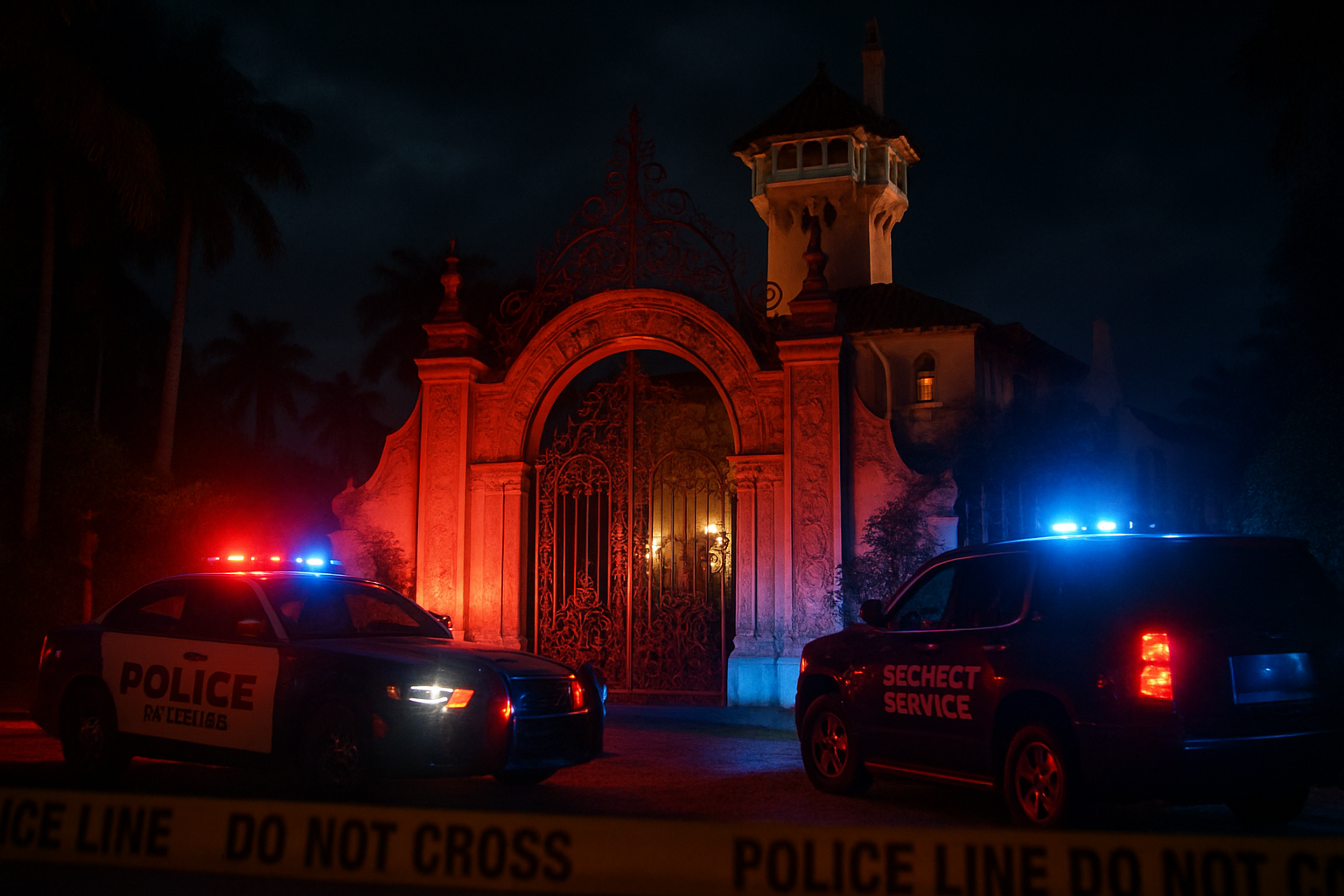
US Secret Service agents and Palm Beach County Sheriff's deputies shot and killed a 21-year-old armed intruder who breached the security perimeter at President Donald Trump's Mar-a-Lago resort in Palm Beach, Florida, at 1:30 AM Sunday morning, in the second major security incident at the property in recent years.
The suspect, a white male from North Carolina, was carrying a shotgun and fuel canister when he was confronted by law enforcement officers at the resort's north gate. According to multiple law enforcement sources, the intruder initially complied with orders to drop his weapons, placing the gas canister on the ground, but then raised the shotgun "to a shooting position," prompting officers to open fire.
The man was declared dead at the scene. No law enforcement officers were injured during the incident, and President Trump and First Lady Melania Trump were at the White House at the time of the breach, according to Secret Service officials.
Investigation Reveals Troubling Background
Investigators have determined that the deceased had been reported missing by his family several days prior to the incident. Law enforcement sources believe he traveled south from North Carolina, acquiring the shotgun along the way before attempting to breach the heavily fortified resort's security.
The incident is currently under investigation by the Secret Service and local Palm Beach County authorities. While officials have not released the suspect's identity pending family notification, they confirmed he acted alone and there is no ongoing threat to the public.
Context of Rising Security Threats
This incident occurs against a backdrop of heightened security concerns surrounding Trump properties, following a series of assassination attempts and security breaches. Most notably, Ryan Wesley Routh was sentenced to life in prison without parole just weeks ago on February 4, 2026, for his September 15, 2024 assassination attempt at Trump's West Palm Beach golf course.
In that earlier incident, Routh, 60, had hidden in bushes with a semi-automatic rifle before being spotted by Secret Service agents. Federal Judge Aileen Cannon called Routh's plot "deliberate and evil" during sentencing, noting that he had left a letter offering reward money for anyone to complete the assassination if he failed.
"This represents one of the most serious threats against a U.S. president in recent history."
— Federal security expert, speaking on condition of anonymity
Security Protocols Under Review
The successful interception of Sunday's intruder demonstrates the effectiveness of the multi-layered security systems in place at Mar-a-Lago, which serves as both a private club and frequent presidential retreat. The resort has been designated as a "Winter White House" and maintains Secret Service protection year-round.
However, the breach of the outer perimeter raises questions about potential vulnerabilities in the security setup. The fact that the suspect was able to approach the north gate with weapons suggests possible gaps in the early warning systems or perimeter monitoring.
Law enforcement officials emphasized that the suspect never gained access to the main resort buildings and was stopped at the first security checkpoint. The response time and coordination between Secret Service and local deputies was described as "textbook" by one official familiar with the incident.
Pattern of Targeted Threats
Security experts note a troubling pattern of individuals specifically targeting Trump properties and associates. The Mar-a-Lago incident follows not only the Routh assassination attempt but also various other security concerns that have emerged since Trump's return to the presidency.
The involvement of a fuel canister alongside the shotgun has prompted investigators to examine whether the suspect planned a more devastating attack involving fire or explosion. Arson investigators are working with federal authorities to determine the full scope of the intended assault.
Enhanced Protection Measures
In response to this latest incident, Secret Service officials indicated they would be reviewing and potentially enhancing security protocols at all Trump properties. This includes examining perimeter defenses, access control systems, and coordination with local law enforcement agencies.
The Palm Beach County Sheriff's Office has increased patrols in the area surrounding Mar-a-Lago, while the resort itself has implemented additional security measures for guests and staff. These changes come as Trump continues to use the facility for both official presidential business and personal retreats.
Ongoing Investigation
Federal and local investigators are working to piece together the suspect's movements in the days leading up to the incident, including how he acquired the weapons and what motivated him to target the presidential retreat. The FBI's Joint Terrorism Task Force has been brought in to assist with the investigation, given the nature of the threat against a sitting president.
Authorities are examining the suspect's digital footprint, including social media accounts and online communications, to determine whether he was inspired by extremist ideologies or acted as a lone wolf. They are also investigating any potential connections to other individuals who might have encouraged or assisted in planning the attack.
The incident serves as a stark reminder of the ongoing security challenges facing high-profile political figures and the dedicated law enforcement professionals who work around the clock to protect them. While this particular threat was successfully neutralized, it underscores the persistent and evolving nature of security risks in the current political climate.