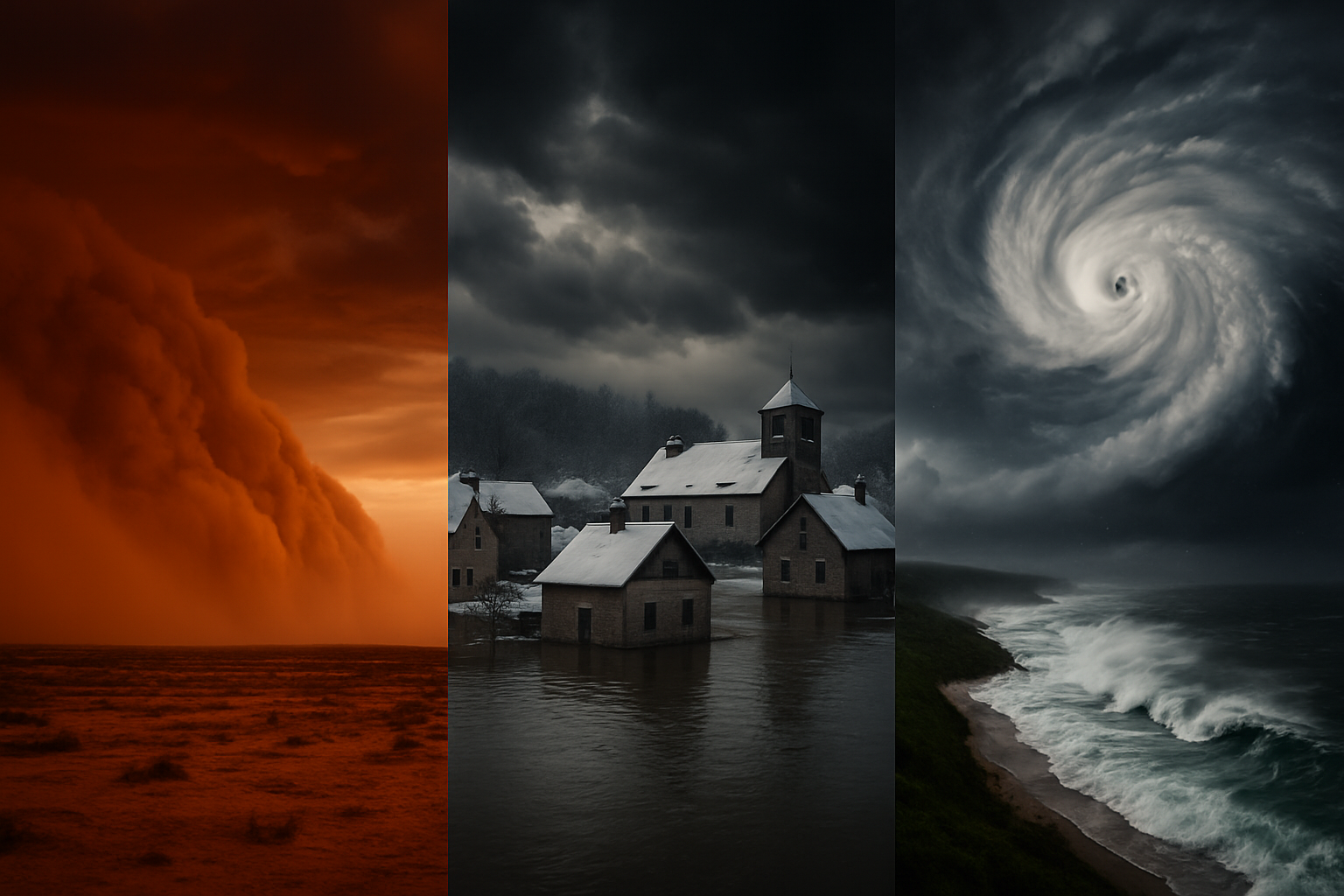
Multiple continents face simultaneous weather emergencies as nine nations struggle with devastating storms, flooding, and extreme temperature variations, marking another milestone in the ongoing global climate crisis that has now exceeded critical temperature thresholds for 21 consecutive months.
From the tropical shores of Barbados to the frozen landscapes of Iceland, a complex pattern of extreme weather is testing infrastructure limits and emergency response capabilities worldwide. The current crisis represents the continuation of unprecedented climate volatility that has characterized 2026, with emergency services reaching capacity limits across multiple regions simultaneously.
North American Ice Storm Emergency
Environment and Climate Change Canada has issued warnings for "potentially critical" freezing rain conditions across Quebec, with meteorologists predicting dangerous ice accumulation that poses significant risks to power infrastructure and transportation networks. The ice storm warnings come as the region braces for conditions that could lead to widespread power outages and tree branch failures.
Canadian authorities are positioning emergency response teams as communities prepare for what weather officials describe as a "critical" weather event. The timing coincides with ongoing recovery efforts from previous winter storms that have already strained provincial resources throughout the season.
Nordic Blizzard Conditions Threaten Safety
Iceland's Meteorological Office has issued yellow weather warnings for blizzard conditions expected to strike the northwest regions within 24 hours. The warnings affect Breiðafjörður, the Westfjords, and Northwest Iceland, with authorities predicting snowfall, drifting snow, and severely reduced visibility that will create hazardous driving conditions, particularly on mountain roads.
"The warnings take effect tomorrow morning: in the Westfjords at 6 am, then in Northwest Iceland at 7 am and finally around Breiðafjörður at 8 am,"
— Veðurstofan (Icelandic Meteorological Office)
Norwegian authorities have delayed two major Birken ski races due to challenging weather conditions involving precipitation and strong winds, demonstrating how extreme weather continues to disrupt planned activities across Scandinavia.
European Flooding and Wind Warnings
Ireland faces a dual threat as Met Éireann has issued both wind and flood warnings for Donegal. A Status Yellow rain warning will remain in effect from Thursday morning through Friday, with meteorologists warning that heavy rainfall could lead to localized flooding, poor visibility, and dangerous traveling conditions.
The Irish weather service has also implemented a status yellow wind warning covering the entire country, reflecting the broad scope of the current weather system affecting the region. Periods of heavy rain are expected to create challenging conditions for both residents and emergency services.
Baltic Region Experiences Temperature Extremes
Latvia is experiencing unusual weather patterns with forecasters predicting light rainfall across much of the country. The conditions represent part of broader regional instability affecting the Baltic nations, where traditional seasonal patterns continue to show significant variability.
Middle Eastern Weather Disruption
Kuwait's Meteorological Department has forecast significant weather changes beginning tonight, with rainfall expected to continue through Friday afternoon. The forecast includes thunderstorms across multiple regions, accompanied by active winds and fog conditions expected during the weekend.
According to Meteorological Administration Director Dherar Al-Ali, the weather system represents the extension of a surface low-pressure system accompanied by warm, humid air masses coinciding with cold upper-level atmospheric conditions. This combination is generating increased cloud formation and thunderstorm activity across various areas of the country.
Tropical Stability Amid Global Chaos
In contrast to the extreme conditions elsewhere, Barbados continues to experience more typical weather patterns under the influence of the Atlantic high-pressure system. The Barbados Meteorological Services forecasts a mix of sunshine and clouds with brief scattered light to moderate showers, demonstrating the stark contrast in conditions across different global regions.
Marine conditions around Barbados show moderate easterly to east-northeasterly breezes from 30 to 35 km/h, with higher gusts expected near shower activity. This relatively stable pattern highlights how some regions maintain normal weather while others face extreme conditions.
Historical Context and Climate Implications
The current weather crisis builds upon devastating conditions that have characterized much of 2025 and early 2026. Historical data reveals this period represents the continuation of unprecedented global weather volatility, with multiple regions experiencing record-breaking events throughout recent months.
Memory of previous extreme weather events shows this crisis follows patterns established during the exceptional weather events of February and March 2026, when European storm successions claimed dozens of lives and required massive emergency responses across Portugal, Spain, and France.
Infrastructure Vulnerabilities Exposed
The simultaneous nature of current weather emergencies exposes critical vulnerabilities in infrastructure designed for historical rather than current climate conditions. Transportation networks, power grids, and communication systems across affected regions are operating beyond their intended parameters.
Emergency services report reaching capacity limits as traditional mutual aid mechanisms become strained when multiple countries face disasters simultaneously. This represents a fundamental shift from sequential regional emergencies to concurrent multi-national crises.
Economic and Social Impact
The economic implications of simultaneous extreme weather events extend far beyond immediate emergency costs. Agricultural sectors face mounting losses during critical growing seasons, while tourism industries experience extended disruptions and infrastructure damage.
Transportation disruptions create cascading effects throughout supply chains, affecting global commerce. Recovery timelines have shifted from weeks to months and years, representing a fundamental change in disaster response approaches.
Mental health services report increased demand as communities experience repeated climate-related trauma, while vulnerable populations require extended emergency support. Families risk losing generational properties, and small businesses face potential extinction from repeated extreme weather impacts.
Adaptation and Resilience Strategies
Climate scientists emphasize that current conditions provide a preview of routine circumstances expected throughout the 2030s without significant climate adaptation investment. The choice between reactive crisis management and transformative infrastructure adaptation becomes increasingly critical.
International cooperation frameworks require fundamental restructuring to address multi-continental simultaneous disasters, as traditional bilateral assistance proves inadequate when multiple regions face emergencies concurrently.
"The window for effective climate action is narrowing rapidly, while the costs of both adaptation and inaction continue to escalate as extreme weather frequency and intensity increase beyond current response capabilities."
— Climate Adaptation Researchers
Building Climate Resilience
The concept of "building back better" has evolved from an optional enhancement to an essential survival strategy for communities worldwide. Climate-resilient infrastructure must be designed for future rather than historical weather patterns.
Enhanced early warning systems, improved cross-border coordination, and expanded emergency response capabilities represent essential investments for managing the permanent climate volatility that characterizes the current era.
Looking Forward
As additional weather systems continue developing across multiple ocean basins, authorities maintain high alert status globally. The persistence of extreme weather conditions may establish what experts describe as the "new normal" of increased frequency and intensity that challenges traditional emergency response frameworks.
March 2026 represents a potential watershed moment in global climate preparedness, forcing fundamental reconsideration of how societies prepare for and respond to environmental challenges. The tools, knowledge, and cooperation mechanisms exist for comprehensive environmental protection, but success depends on unprecedented speed and coordination.
The current crisis demonstrates that environmental protection has become essential infrastructure for human prosperity and planetary sustainability, requiring sustained international cooperation, political commitment, and recognition that climate adaptation represents one of the most critical challenges of the decade.