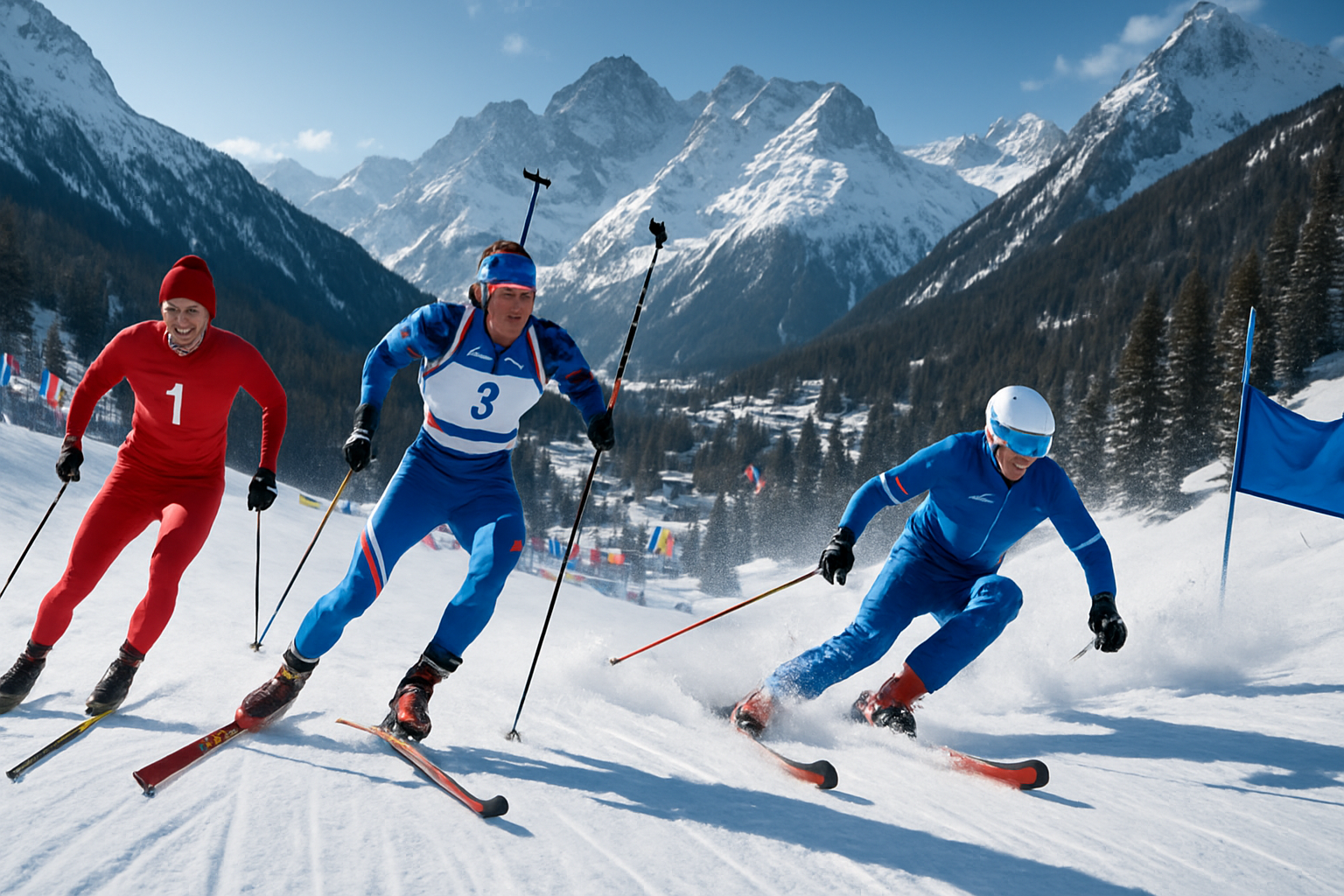
Winter sports competitions across Europe in March 2026 have delivered extraordinary achievements from Paralympic medal ceremonies to World Cup podiums, demonstrating the lasting competitive impact of the Milano-Cortina 2026 Olympic Games while showcasing the continuing global expansion of winter athletics.
Paralympic Excellence at Milano-Cortina
The Milano-Cortina 2026 Winter Paralympics (March 6-15) proved to be a watershed moment for adaptive winter sports, utilizing the same revolutionary dual-city hosting model that spanned over 400 kilometers across northern Italy. The Games successfully maintained the technological innovations and sustainable practices established during the February Olympics, including AI integration through Alibaba Qwen systems and bilingual Alto Adige/South Tyrol place names.
Italy's Jacopo Luchini captured gold in snowboard banked slalom in the upper limb category, contributing to the host nation's impressive Paralympic medal tally of 11 total medals. The 35-year-old athlete from Prato delivered a masterful performance that exemplified the high competitive standards maintained throughout the Games.
"This victory represents not just personal achievement but the strength of Italian Paralympic sport on home soil"
— Jacopo Luchini, Paralympic Gold Medalist
International Paralympic Breakthrough
Latvia's skeleton team delivered historic performances at the junior world championships in Germany, with Kamila Krustiņa and Renārs Jumiķis claiming silver in the pairs relay. The achievement was complemented by Dāvis Valdovskis's individual silver medal, marking Latvia as an emerging force in winter sliding sports.
Despite significant international controversy over Russian and Belarusian participation under national flags, the Paralympic competition maintained its focus on athletic excellence. Notable performances included Denmark's sole representative Adam Nybo competing in giant slalom, though he was unfortunately eliminated in the first run alongside many other competitors.
Nordic Skiing World Cup Dominance
The post-Olympic World Cup circuit has witnessed continued Norwegian dominance, with Johannes Høsflot Klæbo extending his remarkable season following his historic six gold medals at Milano-Cortina. The 29-year-old Norwegian secured his tenth consecutive 10-kilometer cross-country victory at various venues, a performance described by experts as "completely insane" and positioning him to secure all available World Cup titles.
Sweden's Frida Karlsson continued to challenge Norwegian supremacy, winning the women's 10km classical race in Lahti, Finland, defeating compatriot Linn Svahn by 4.1 seconds. This Swedish challenge represents a significant shift in the traditional Nordic power balance.
Alpine Skiing Breakthrough Moments
Italy's Elena Curtoni achieved a stunning Super-G victory in Val di Fassa, with the surprise third-place finish of Asja Zenere marking a breakthrough moment for Italian alpine skiing. Zenere's previous best World Cup result was 20th place, making her podium finish all the more remarkable.
Norway's Atle Lie McGrath bounced back from Olympic disappointment to claim slalom victory in Kranjska Gora, Slovenia, defeating the favored Henrik Kristoffersen in a performance that restored his confidence after setbacks at Milano-Cortina.
Biathlon World Cup Excellence
Estonian athletes have emerged as significant forces in international biathlon competition. The Otepää Biathlon World Cup, which opened Thursday and ran through Sunday, showcased the depth of Estonian talent with two out of four competing men advancing to the pursuit stage. This success builds on Estonia's growing reputation in Nordic disciplines following impressive performances at both the Milano-Cortina Olympics and Paralympics.
The continued strength of biathlon programs across the Baltic states reflects the systematic development that has characterized the region's approach to winter sports, with Latvia also contributing to medal tallies at various international competitions throughout March.
Global Expansion and Emerging Nations
The lasting impact of Milano-Cortina 2026's unprecedented global participation continues to resonate in March competitions. The revolutionary dual-city hosting model proved that winter sports excellence transcends traditional geographic boundaries, inspiring systematic development programs across six continents.
Australia's winter sports revolution, begun during their most successful Winter Olympics ever, has established new programs and expectations. The nation's achievement in moguls skiing and snowboard cross has created a template for other non-traditional winter sports nations to follow.
"Milano-Cortina showed that winter sports dreams have no geographic limits. We're seeing this philosophy continue in competitions worldwide"
— Sports Development Expert
Technical Innovation and Sustainability
The technological innovations introduced at Milano-Cortina continue to influence competition standards across European venues. The successful integration of AI systems for performance analysis and spectator services has been adopted by other major competitions, while the sustainable venue practices established in Italy serve as a model for environmental responsibility in winter sports.
Natural snow conditions throughout March have been favorable across most European venues, reducing reliance on artificial snow production and supporting the environmental sustainability goals that characterized the Milano-Cortina Games.
Looking Ahead: The Paralympic Legacy
Despite political controversies surrounding Russian and Belarusian participation, the Milano-Cortina Paralympics successfully demonstrated the resilience of international adaptive sport. The competition maintained its focus on Paralympic values of determination, inspiration, courage, and equality, with athletes transcending political divisions through sporting excellence.
The success of veteran competitors like Norway's 59-year-old Jostein Stordahl, competing in his tenth Paralympics nearly four decades after his initial accident, exemplifies the enduring spirit that defines Paralympic competition.
Estonia's wheelchair curling duo Kätlin Riidebach and Ain Villau, despite facing challenges in their competition against Latvia, represented the growing global reach of Paralympic winter sports and the continued expansion of competitive opportunities for adaptive athletes worldwide.
Championships Setting New Standards
The March 2026 winter sports calendar has established new benchmarks for international competition. The combination of Olympic legacy momentum, technological innovation, and unprecedented global participation has created the most competitive environment in winter sports history.
From the snowy slopes of Italian Paralympic venues to the demanding courses of Scandinavian World Cup stops, athletes are pushing performance boundaries while embracing the sustainable and inclusive philosophies that defined Milano-Cortina 2026.
As these championships conclude, they leave a lasting impact on the international winter sports landscape, demonstrating that the revolutionary changes introduced at Milano-Cortina have fundamentally transformed how the world approaches winter athletic competition, creating new opportunities for excellence across all disciplines and geographic regions.