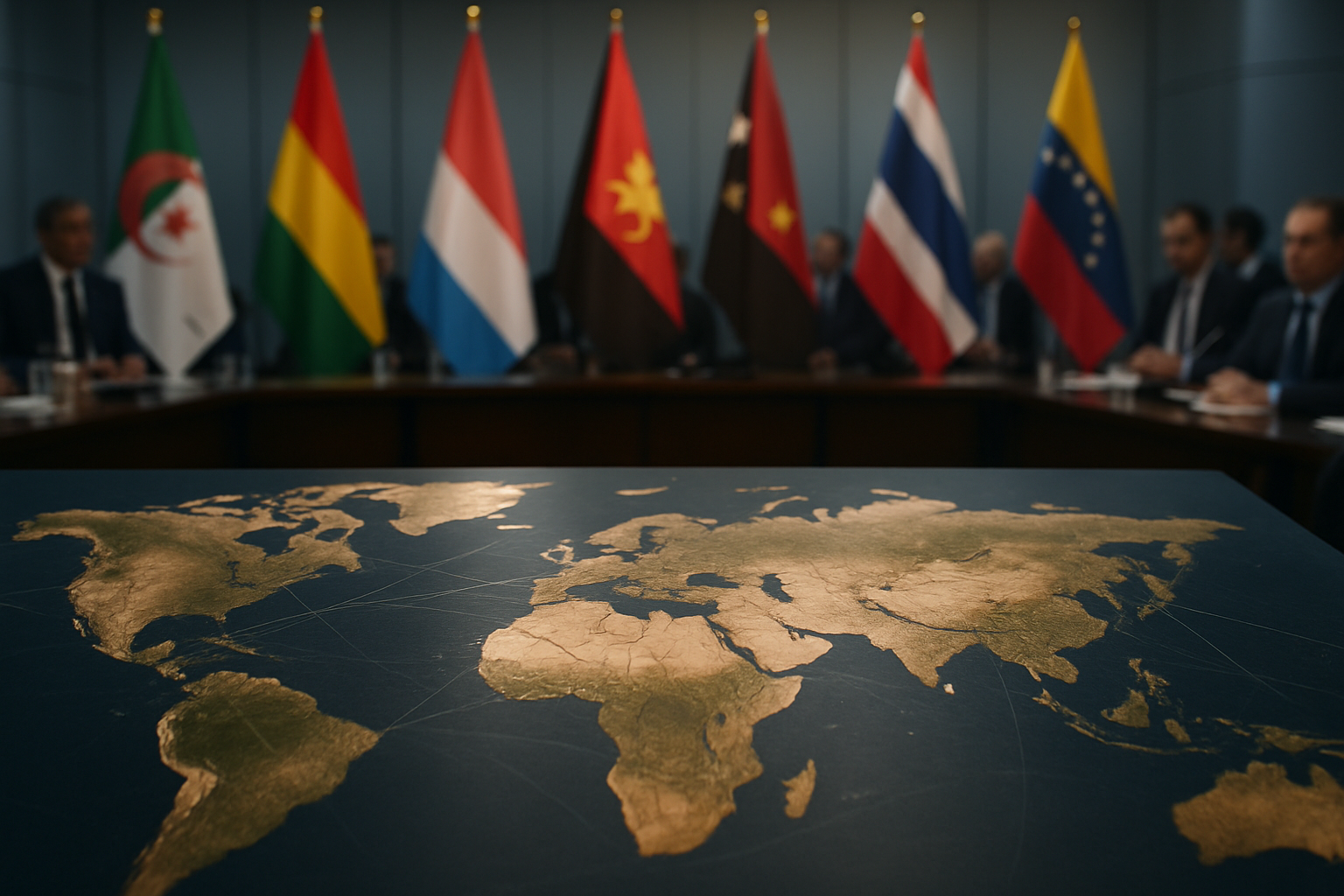
March 2026 is proving to be a pivotal month for international politics as governments across multiple continents navigate significant diplomatic transitions, coalition adjustments, and strategic realignments that reflect the complex geopolitical landscape of the modern era.
From diplomatic protocol changes in North Africa to coalition dynamics in the Pacific, this month's political developments demonstrate how nations are adapting their governance approaches amid evolving international pressures and domestic challenges.
North African Diplomatic Transitions
In Algeria, a notable diplomatic milestone occurred as Indonesian Ambassador Syalif Akbar Tajuddinnegrat concluded his mission with a farewell meeting with Foreign Minister Ahmed Attaf. The ambassador's departure marks the end of a significant diplomatic tenure during a period of enhanced Algeria-Indonesia cooperation.
According to the Foreign Ministry statement, Ambassador Tajuddinnegrat's tenure has been characterized by strengthened bilateral relations between the two nations, particularly in areas of economic cooperation and cultural exchange. The formal farewell ceremony underscores the diplomatic protocol that maintains international relationships even during personnel transitions.
Latin American Economic Diplomacy
Bolivia's Foreign Minister Fernando Aramayo declared the government's recent international agenda "very successful" following extensive diplomatic engagement with Brazil and other regional partners. The comprehensive diplomatic push included meetings with United States officials, Brazilian counterparts, and a historic visit from Spain's King Felipe VI.
"We have had a really successful journey. In just eight days, Bolivia held meetings with the United States and Brazil, plus received the visit from Spain's King, in an intense diplomatic agenda that included at least eight bilateral meetings with presidents and foreign ministers."
— Fernando Aramayo, Bolivian Foreign Minister
This diplomatic offensive reflects Bolivia's strategic approach to economic reactivation through international cooperation. The meetings focused on investment opportunities, regional integration, and security cooperation—critical areas for Bolivia's economic recovery and regional positioning.
Strategic Regional Partnerships
Aramayo emphasized that these diplomatic efforts are oriented toward reactivating Bolivia's economy and strengthening bilateral cooperation. The intensive eight-day period of meetings represents a coordinated effort to position Bolivia as an active participant in regional economic integration while maintaining balanced relationships with major powers.
European Political Realignments
A significant development emerged from Luxembourg's reporting on Thailand's political landscape, where conservative leader Anutin Charnvirakul was confirmed to continue as Prime Minister following successful legislative elections. The 59-year-old politician secured his position with 293 votes out of 498 in parliament, representing a strong mandate for continued conservative governance.
Anutin's victory came after his party's success in snap elections, driven by a nationalist campaign that resonated with Thai voters. His statement to parliament emphasized inclusive governance despite the conservative mandate:
"I will be a Prime Minister who will work with every representative for the good of the country and the Thai people."
— Anutin Charnvirakul, Thai Prime Minister
Pacific Coalition Politics
Papua New Guinea's political landscape witnessed significant developments as Prime Minister James Marape welcomed legislative progress and coalition adjustments. Two major political initiatives dominated the country's recent parliamentary activities.
Legislative Achievements
Prime Minister Marape celebrated the passage of the Vagrancy Act, designed to restore order in Port Moresby. This legislation represents a significant step toward addressing urban security challenges that have affected the capital's stability and economic development.
The Vagrancy Act passage demonstrates Papua New Guinea's commitment to addressing domestic security concerns through legislative measures, reflecting a comprehensive approach to urban governance challenges.
Coalition Expansion
In a parallel development, Prime Minister Marape officially welcomed the People's Progressive Party (PPP) into the government coalition. This expansion strengthens the ruling coalition's parliamentary position and reflects the dynamic nature of Pacific Island politics, where coalition building remains essential for stable governance.
The PPP's integration into the coalition provides additional legislative support for the government's agenda while ensuring broader representation in the parliamentary system. This move demonstrates Papua New Guinea's commitment to inclusive governance despite the challenges of managing diverse political interests.
Caribbean Political Evolution
Venezuela experienced a significant governmental transition as Acting President Delcy Rodríguez appointed Gustavo González López as the new Defense Minister, replacing Vladimir Padrino López after more than a decade in the position.
The transition represents a substantial change in Venezuela's security leadership structure. Former Defense Minister Padrino López had served since October 2014 and successfully navigated numerous challenges, including what Venezuelan officials describe as U.S.-backed coup attempts, most notably the May 2020 "Operation Gideon" incident.
"We thank General Vladimir Padrino López for his loyalty and for having been the first soldier in the defense of our country for so many years."
— Delcy Rodríguez, Acting President of Venezuela
In response, outgoing Defense Minister Padrino expressed gratitude for his tenure, stating that "serving the Homeland" had been his "highest honor." This transition occurred in 2025 during a period of significant internal governmental restructuring under Acting President Rodríguez.
Regional Security Implications
The defense ministry transition reflects broader political adjustments within Venezuela's government structure. González López's appointment signals potential shifts in security policy approaches and military leadership priorities during a critical period for the country's international relations.
Global Context and Historical Significance
These political developments occur against a backdrop of complex international dynamics that have characterized early 2026. Recent memory includes major democratic transformations, such as Bangladesh's historic transition following student-led uprisings, significant diplomatic breakthroughs in various regions, and ongoing efforts to address global security challenges.
Patterns of Democratic Adaptation
The political movements observed in March 2026 demonstrate several key patterns in contemporary governance:
- Coalition flexibility and adaptation to changing political circumstances
- Emphasis on economic diplomacy and regional integration
- Peaceful transitions in leadership positions
- Commitment to legislative processes for addressing domestic challenges
- Balancing of international relationships amid complex geopolitical pressures
International Cooperation Frameworks
The diplomatic activities across these nations reflect a broader trend toward multilateral engagement and regional cooperation. From Bolivia's intensive diplomatic calendar to Algeria's maintenance of international protocols, these developments suggest continued commitment to international cooperation despite global tensions.
Economic and Strategic Implications
The political developments of March 2026 carry significant implications for economic policy, regional security, and international cooperation. Bolivia's economic reactivation agenda through diplomatic engagement provides a model for how smaller nations can leverage international relationships for domestic development.
Similarly, Papua New Guinea's legislative focus on urban security while expanding coalition representation demonstrates the complex balance between governance effectiveness and political inclusivity that characterizes democratic systems in diverse societies.
Regional Integration Trends
These developments collectively point toward enhanced regional integration and cooperation, with nations seeking to address domestic challenges through international partnerships while maintaining sovereignty and democratic governance principles.
Looking Forward
As March 2026 progresses, these political developments will likely influence broader regional dynamics and international relationships. The emphasis on diplomatic engagement, legislative achievement, and coalition building suggests a period of constructive political evolution across multiple continents.
The success of these various political initiatives—from diplomatic transitions to coalition adjustments—will provide important indicators for democratic resilience and adaptive governance in an increasingly complex international environment.
These March 2026 political developments demonstrate that while global challenges persist, nations continue to pursue democratic processes, international cooperation, and peaceful transitions that strengthen both domestic governance and international stability. The coming weeks will reveal how these political movements contribute to broader patterns of regional cooperation and democratic consolidation worldwide.